Analise Kandasammy On Why Women Must Rethink Their Value In An AI-Shaped World


When artificial intelligence (AI) began reshaping her industry, Analise Kandasammy found herself confronting an uncomfortable question: how much of her professional value could a machine replicate? Working in financial services, she estimates AI could take over 50% to 60% of her job within the next few years. Instead of allowing that uncertainty to define her future, she began exploring how to work alongside the technology, using it to build new skills, launch a book, and even code her own website.
Now, as a Guyanese-born author based in Trinidad and Tobago, Analise is bringing that question to the page in her debut book, Human, Still: Strengthening Your Mind for an AI-Shaped Future. In a sit-down interview with Her Agenda, her message is not to compete with machines, but to protect the human qualities that make us valuable, including curiosity, judgment, and self-awareness.
Her Agenda: In your book,Human Still: Strengthening Your Mind for an AI-Shaped Future, you explore how AI is changing the way we think about our own value. Why do you believe women in particular may be questioning their professional relevance as AI becomes increasingly capable?
Analise Kandasammy: First of all, AI is actually targeting a lot of tasks and roles that women traditionally handle. If we’re looking at executive assistance, if we’re looking at middle management, if we’re looking at HR, those are a lot of roles that women typically occupy.
AI is quickly taking those over. That’s a big one. Another one was referenced in Forbes. [The article] said that the majority of AI hires in the United States are men as opposed to women. That’s another problem that women are currently facing. Additionally, in the workplace, it’s really more of the guys who are taking on AI rather than the women.
Women, from what I understand from a cultural perspective, and just speaking to colleagues where I work, women seem to think AI is cheating. However, men are like, ‘I’m amazing. I’m more productive.’
Those are three major mental cultural shifts that women are facing right now, and so I understand why they’re scared.
For me personally, I was super scared because I realized, again, with the acceleration of AI, with the adoption of AI globally, I work in financial services. That’s my day job, my bread and butter. I realized AI could probably do 50 to 60% of my job in two to three years, especially if it’s trained properly. I got really scared about what my relevance would be. How am I going to continue working for the next 10 years, 15 years?
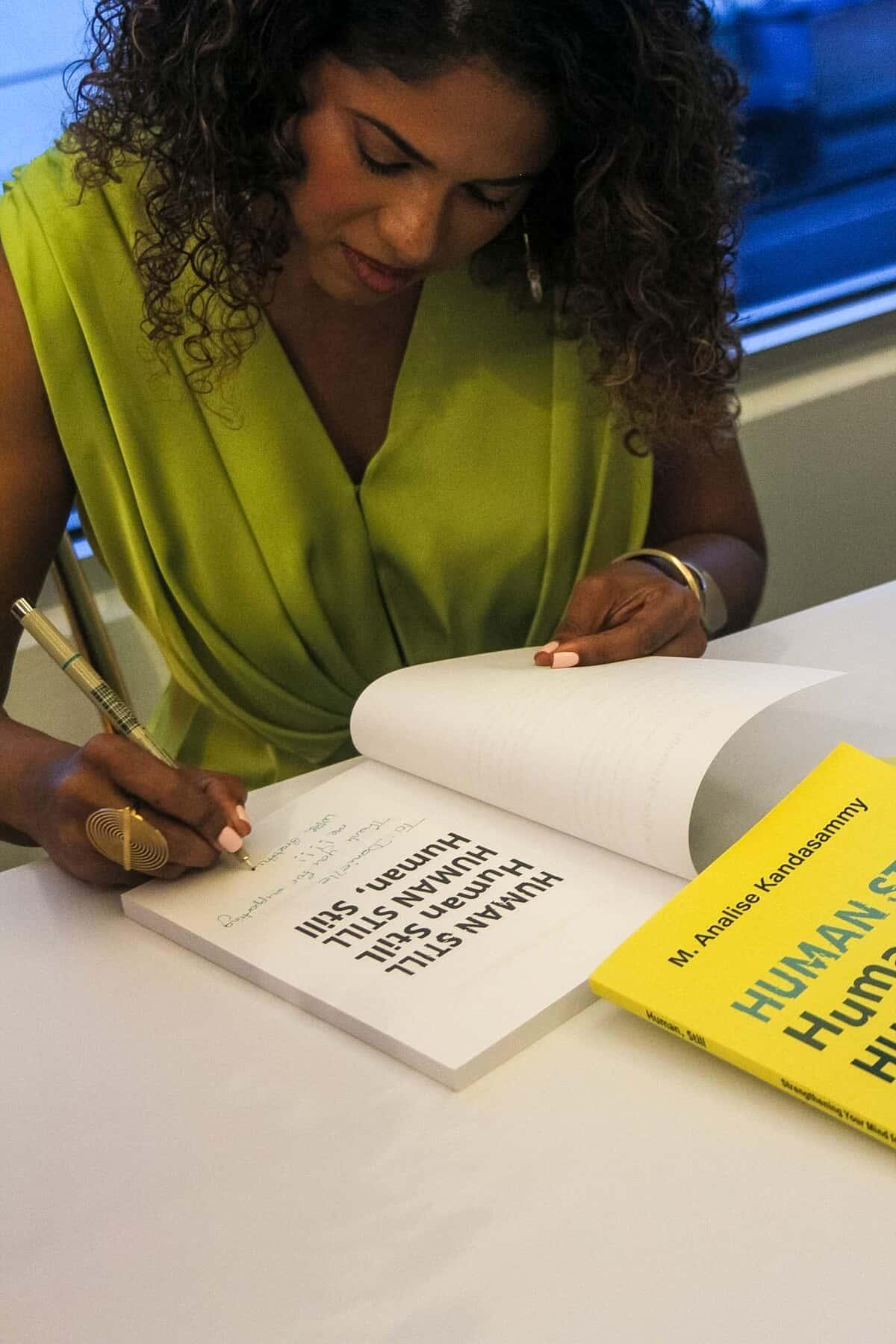
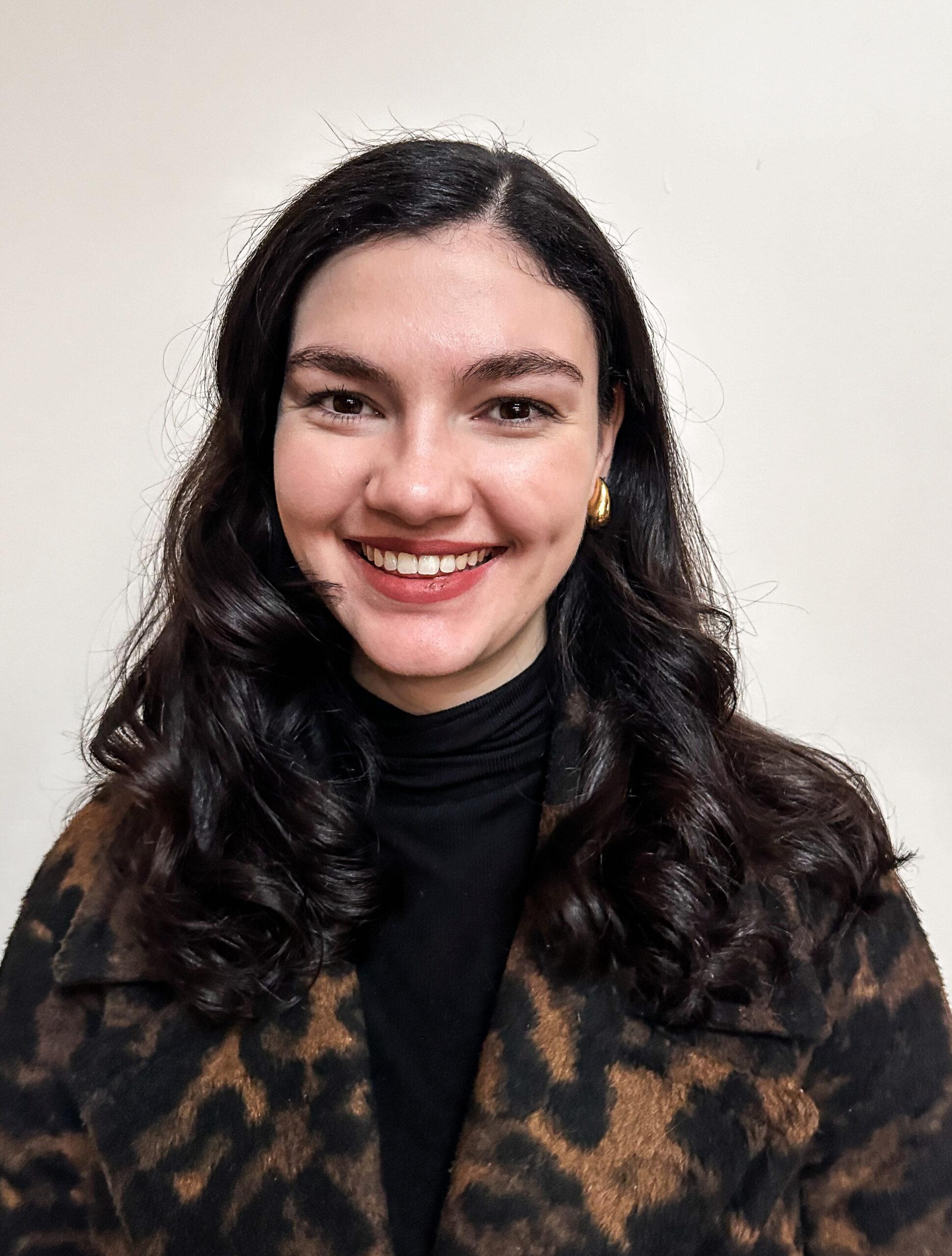
SOURCE: COURTESY OF ANALISE KANDASAMMY
Her Agenda: As you’ve said, we’ve seen AI take on tasks across industries that once required years of experience or specialized skills. How can we distinguish between a changing job market and a perceived loss of our own professional value?
Analise Kandasammy: I had to make that switch mentally, because I was actually opposed to it.
I made the switch from not wanting to use AI. I used to think I wasn’t using it because I didn’t want to train it to take me over. Eventually, though, I had to make the switch in my brain to: how do I collaborate with AI? If I were to collaborate with AI, what would that look like? How would that challenge me to evolve as a professional and as a human being? I really think it’s really about, like anything in life, it’s about perspective.
It’s about being optimistic. It’s also about really understanding that at every crossroads in life, you’re being asked to level up, or in some cases, shed some old beliefs. A lot of my relevance, because I’m a millennial, is actually around how fast you remember. How can I bring the data to life? How great does my PowerPoint look? Now AI does a way better PowerPoint than I ever could, in less than three minutes.
It really is about knowing how I can pivot my skills on what’s really going to be important and set me apart from what was required two years ago.
Her Agenda: As you’ve also said, women are often encouraged to embrace AI, learn new tools, and adapt to remain competitive. Do you think this pressure is creating a fear of falling behind? If so, how might that affect women’s confidence overall in their careers?
Analise Kandasammy: First of all, it does create pressure of falling behind, because again, I have felt it. I’m not a technologist.
I’m not the person who was raised as an IT, but I’m a knowledge worker who is being asked to now work intimately with technology. I say intimately because this is a technology that talks back to you.
It’s not like Word or Excel, where my input determines what happens. This is actually a technology that now interacts with me, so that’s the big thing.
I think it’s important to acknowledge that fear and to, in a way, embrace it. I think that’s the only way to move forward in terms of what my next steps are.
I think there would be a hit to confidence, but it’s also very important, and something I really talk about in the book is self-awareness and self-knowledge. If you double down on your self-knowledge, like really knowing what you have been good at throughout your career, that is not a technical skill.
What are the skills that are required going forward? Where do I rate myself on that? Can I improve on that? How do I put a system in place to improve on that? I think in terms of this year, I’ve really had to embrace confidence as action.
Really treat it like a measurable skill, like 10 minutes a day, and just do the little micro actions. That’s really what’s going to build your confidence in this new AI world.
Her Agenda: What does self-knowledge look like in a conversation when you’re not only getting a job, but when you’re looking at a promotion, or when you’re looking at furthering your career?
Analise Kandasammy: Let’s talk about skills that are really important going forward. I think going forward, the people who have worked the longest in the organization and think that that’s what’s going to help them are going to have a big issue, because that’s not what’s going to propel you forward, right? For example, let’s just say judgment.
Judgment is something I talk about in the book; it’s crucial going forward. Judgment was something that was typically associated with senior professionals. Now, judgment is being required for everybody.
You could be 22, and people are assessing your judgment, right? So what does self-knowledge look like when you go for a promotion? Self-knowledge looks like, ‘Hey, I’m good at judgment. These are the calls that I’ve made over the last six months. These are the results from those calls.
‘And this is how it’s benefited the organization from a talent development perspective. I’ve helped to improve processes.’ That’s really where self-knowledge comes from.
It’s really being able to articulate these key skills, showing the results from it, and why you’re good. It’s about having the data points.
I would also say things like being honest about your capacity.
I think especially for women, we go over capacity, and I’m guilty of this. I’ll have 12 things juggling, and my manager will come over and say, ‘Hey, here’s a 13th thing.’ And I’m thinking, okay, sure, I’ll get it done.
Do I actually have the capacity to get it done? That’s something I’ve had to learn: to say no. How are we going to rearrange priorities? How are we going to rearrange deadlines? I can’t do 13 things at once. I think it’s really important for women to get realistic about what your current level of capacity is, so that you don’t burn out and you don’t get frustrated.
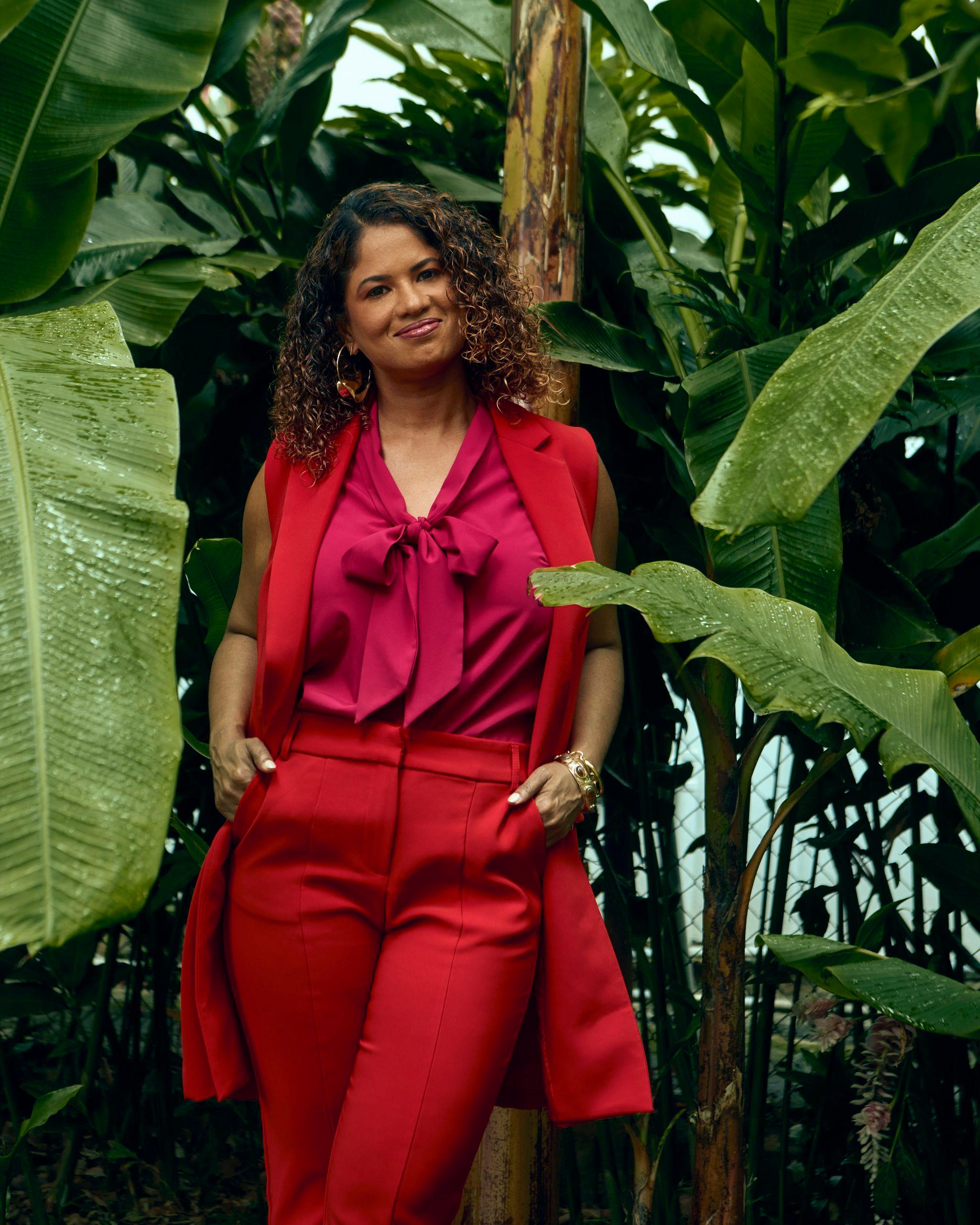
Principle photography for short film
Her Agenda: How do you think AI can be leveraged in that sense to help with capacity and use it as more of a partner than someone that is a rival?
Analise Kandasammy: I think AI is really good for two things. One of the things I look at in the Caribbean, which can range between 85 and 95, on average. We’re looking at the whole population. I remember looking at that, and I’m thinking to myself, I think AI is a great way to extend your IQ.
If you’re someone who has an IQ of 90, right, which is not pretty high up on the scale, but if you were to work with AI, collaborate with AI, to use AI to learn about topics that you typically wouldn’t have access to information about, or to teach yourself, like a new subject area that you can combine with something that you’re currently doing. That’s a great way to extend your intellectual capacity.
I think if we were to approach AI that way, I think we would have more appreciation for it and less fear.
The other side of it is: how do you not let AI overtake you intellectually? That’s because you’re collaborating; you’re not just copy-pasting. The other thing as well, in terms of capacity, is I’ve lived this year in terms of having to use AI as a partner to actually launch my book. In terms of planning a book launch, planning an ARC campaign, dealing with the lead-up in terms of how do I network with people, sending out emails.
I don’t think I would have gotten all that done if it were not for collaborating with AI, even coding my website. Typically, five years ago, six years ago, I probably would have had to pay somebody to do that for me.
I was actually able to code my website this year because of AI. I’m learning all these different skills. I’m learning all of these different things.
Her Agenda: What advice would you give to women entering the workforce or changing careers at a time when AI is reshaping the traditional path?
Analise Kandasammy: I think it’s important to understand how organizations are changing now. I’m going to address this widely. It doesn’t matter whether you’re a consultant, whether you’re a creative, whether you’re doing fractional work; you’re going to have to butt up against an organization.
Depending on the industry that you’re in and the type of organization, whether it’s a corporation, a small-to-medium-sized business, or a mid-market, you really need to understand how both are changing structurally and politically because of AI. In understanding that, then you are now able to see where it is you can actually fit in the structure, or how do you add value to the structure. The other thing as well is that we must never lose our curiosity.
Curiosity and wonder are the birthplace of innovation and problem-solving. It doesn’t matter how great AI gets; problem-solving is always going to be incredibly valuable.
The only way you could do that is to get deeply curious about what the problems are for your clients. Don’t ever lose that. Even if you’re trying to pivot to another industry, you still need to understand what the pain points are, and whether you can create a solution for that. At the end of the day, that’s all people want to know.
Can you give me a solution to my problem? Can you help me to get better? How do you make my life easier? I could also say things like upskill on the AI tools, learn Cloud Code, learn Grok, learn all of those things. I would say it’s probably not the most important thing that we need to be focused on, though. And yes, I am learning AI tools, and I do incorporate AI into my work processes.
But it wasn’t the first thing that I realized that I needed to develop and to focus on. So develop your AI tools, but if you’re not curious about the problems and the pain points, if you’re not understanding how your environment is changing, if you are not able to walk into a room and build trust with other people, then those AI tools are not going to get you very far.
Her Agenda: Looking ahead, what concerns you most about the impact of AI on women’s professional confidence and sense of identity? And what gives you hope that human capabilities will remain essential in the workplace?
Analise Kandasammy: I think one of the things I’m most worried about for women in terms of the impact of AI is the belief. This is going to sound radical, but it’s the belief that we don’t have enough time to learn about it. If you are a mom, have two children, and have a husband, especially if you’re Gen X and have spent your whole life in your career, now AI is coming, you still have a good 10 years left in your career or more, and you’re being asked to upskill. I’m actually worried that women might sit down and be like, I don’t have the time to do this.
I don’t know if I could carve out time in my day to learn a whole new area, like if I’m going back to school. I’m coming back to my point that confidence is action. The only way you’re going to get confident in an AI-shaped world is by taking the necessary action.
In terms of identity, I think we’re being called to strip away what we think we know about ourselves. Yes, but I don’t think I was an author. There I am.
AI forced me to evaluate myself, and then, because I got deeply curious, I came up with an answer in my book. AI was the catalyst for all of this happening. I think women as well should be deeply brave, and that’s what I’ve had to learn this year: to really be brave, embrace this new world, and think about who I believe I am now.
Who can I become using AI? Who do I want to become, and can AI get me there? What are the other skills that I need to really develop to work with AI to get me there? I love that. Yeah. I just want to make a small plug.
If you could check it out. There’s this book called Confidence Is Action by Tricia Conyers that was launched this year, and it’s really about how women build confidence. That book has really helped me this year as well. I understand the overwhelm. Like, I’ve been there; I was there, but I really had to sit down and think about who I want to become. What are the skills that are required, and how can I use AI to get me there? You can actually transform and pivot your whole career into something entirely different because of AI.
AI is an opportunity for building capacity and gaining exposure to different skill sets that you may never have had before. I was reading something about someone who, in Jamaica, wasn’t able to get a good job because she had to look after her parents. She was working in a call center.
She eventually started learning about AI. She was able to actually use AI to do something like assist her with writing her book. So her book is AI-enabled, right? But the point is, she never thought it would have been possible for her to do something like that. Additionally, she has been able to open her own company, and now she’s certified in training other women in how to use AI. So her income bracket just catapulted, you know, from just working in a call center to having a whole different career in technology.
So we really have to be open-minded about what the possibilities are, and fear doesn’t help that because what that does is actually narrow your prefrontal cortex, where all of your intellect happens. It narrows this down, like it makes you dumber. And so if we treat it that way and look at things with curiosity, just like, what is possible for me? I think that’s really what it is.