
Black Wellness Movements That Predate Modern Self-Care





Before self-care became a billion-dollar industry, Black communities were building wellness systems out of necessity. Long before “protect your peace” became a caption, Black organizers, church leaders, artists, and activists were designing structures to sustain our communities under extraordinary pressure.
Understanding Black wellness movements helps reframe modern self-care. What is marketed today as individual optimization was once collective protection. Here are six Black wellness movements that predate modern self-care culture.
1. The Black Women’s Club Movement (Late 1800s–Early 1900s)
In 1896, Black women leaders, including Mary Church Terrell and Josephine St. Pierre Ruffin, founded the National Association of Colored Women. Their motto, “Lifting as We Climb,” reflected a philosophy of shared advancement.
At a time when Black women were excluded from mainstream healthcare and social services, club women organized maternal health education, childcare initiatives, anti-lynching campaigns, and housing support. Historian Anne Firor Scott notes in Natural Allies: Women’s Associations in American History that these clubs functioned as parallel institutions of care and civic engagement.
2. Mutual Aid Societies
Throughout the 19th and early 20th centuries, Black mutual aid societies provided health coverage, burial insurance, and emergency relief when discriminatory policies barred access to formal systems, and they helped stabilize Black families financially and socially. More recently, scholars have described these societies as early forms of community-based health security. This goes on to show us how interdependence is a form of wellness.
3. The Black Church As A Psychological Anchor
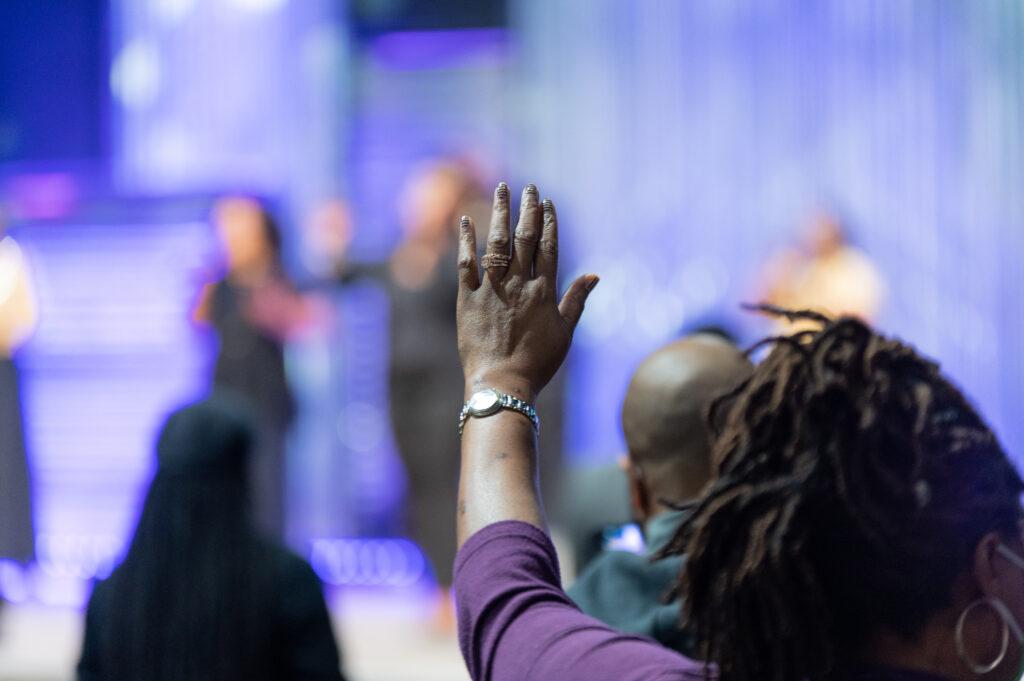
For generations, the Black church has served as both spiritual and mental health support. Research has found that religious participation among Black Americans is strongly associated with resilience and coping in the face of racial stressors. Sociologist C. Eric Lincoln famously described the Black church as the “central institution” of Black community life in The Black Church in the African American Experience.
Choirs, prayer circles, and fellowship weren’t just rituals. They were nervous-system regulation long before we had language for trauma-informed care.
4. Civil Rights Organizing And Sustainable Activism
The Civil Rights Movement is often remembered for its visible courage. But behind the scenes, organizers structured movements to prevent collapse. Leaders like Ella Baker emphasized shared leadership to prevent burnout. Baker resisted charismatic, single-leader models, advocating instead for distributed responsibility. Nonviolence training also included emotional regulation strategies to withstand physical and psychological stress, a principle later studied in trauma and resilience research.
5. The Black Panther Party’s Free Breakfast Program
In 1969, the Black Panther Party launched its Free Breakfast for Children Program. By the early 1970s, it was feeding tens of thousands of children across the United States daily. Historian Alondra Nelson documents in Body and Soul: The Black Panther Party and the Fight Against Medical Discrimination how the Panthers framed food, healthcare, and screenings as political and health interventions.
Their logic was simple: you cannot focus, learn, or organize while hungry. Today, the CDC and public health research consistently link food insecurity to cognitive stress and poorer long-term health outcomes.

6. The Black Arts Movement And Creative Healing
The Black Arts Movement centered art as liberation. Writers like Nikki Giovanni and Sonia Sanchez treated poetry as both political and psychological resistance. Modern psychology now recognizes expressive writing and art therapy as tools for trauma processing and emotional regulation. Black artists were modeling creative wellness decades earlier.
What Modern Self-Care Often Misses

Modern self-care frequently centers on the individual: optimize your routine, protect your energy, fix your burnout alone. However, Black wellness movements were collective. They built systems where people did not have to self-regulate in isolation. They addressed food insecurity, economic exclusion, social isolation, spiritual depletion, and emotional trauma.
For ambitious women today, burnout often feels personal, like a discipline problem, a time-management issue, a failure of boundaries. History suggests otherwise.
Black wellness movements show that rest, nourishment, creativity, and shared labor were always survival strategies, not indulgences. If modern self-care feels insufficient, perhaps it’s because it asks women to solve systemic pressure individually. Wellness, as Black history shows us, has always been communal.
And maybe that’s the lesson we need most.