
The ‘Boy Jobs’ Trend: Is This Professional And Financial Liberation For Women Or Obligated Survival?





If you’ve been scrolling career conversations on TikTok, Instagram, or Lemon8 lately, you may have come across people talking about “boy jobs.” The phrase itself feels like a slightly ironic and somewhat archaic way to describe careers traditionally dominated by men or blue-collar roles. While the term is quite problematic and indeed stereotypical, the trend of highlighting women in blue-collar roles does lend to a vital question: Are women now being pushed into blue-collar or manual labor roles, or is this a movement of empowerment and choice for job security and financial stability?
I can remember a time when my mother would come home from work with burn holes in her jeans and weathered hands. My mother had experience in administrative services and office management, but had to take an untraditional route and become a welder on a naval ship. My uncle had worked at the same shipyard and referred her.
It was a job she hated, but it paid well and was a saving grace after a prolonged period of unemployment. “Mom, you’re so strong. Aren’t those jobs for men? It’s dirty and not safe,” I remember saying to her back then.
“Well, I have to do what I have to do. And women can do any job,” she replied.
Today, as a broader wave of online discussions is sparked about how women are reexamining work, money, and power, professionals are pursuing occupations that were once thought only for men, and that empowering sentiment of my mother still rings true.
Starting The ‘Boy Jobs’ Conversation
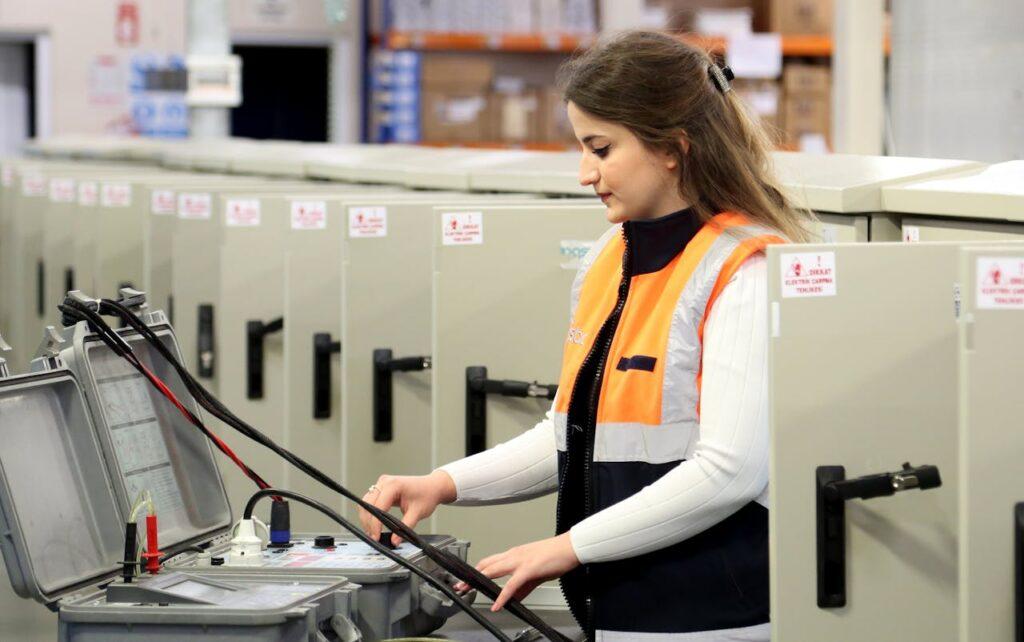
The concept of “boy jobs” taps into something that has existed for decades: the informal labeling of certain careers as feminine, such as teaching, caregiving, and administrative work. For many, engineering, finance, construction, and tech have been framed as male territory. Recent research has shown that today, construction and repair roles, protective services, and technical roles remain overwhelmingly male, while healthcare and teaching have a declining share of men.
However, there’s a growing number of millennials and Gen Zers who have taken these outdated labels and turned them into social commentary, sharing “day in the life” videos of themselves working as engineers, mechanics, analysts, or construction project managers, sometimes jokingly referring to their roles as “boy jobs.” One Lemon8 post celebrating women entering male-dominated fields frames it as part of a broader workplace evolution, reclaiming a stereotype to expose how arbitrary it is.
This conversation is unfolding in the same ecosystem that popularized terms like “quiet quitting” and “job hugging.” These phrases might feel trendy, but they’re rooted in real economic anxiety. With job losses have been disproportionately high for women—especially in government, leisure and hospitality, and educational and health services industries—it’s no wonder that many are looking for alternative careers. Add to that the fact that 61% of women in blue-collar roles surveyed by Pew Research last year describe their jobs as “something just to get them by,” pointing to an aspect of doing the necessary to pay the bills, not necessarily a fulfilling chosen career.
Finding Financial Freedom And Fulfillment In Blue Collar Roles
Social media platforms like Salary Transparent Street have showcased career routes in trades that are not only high-paying but, according to some women, are very fulfilling.
One woman shared how her salary doubled to $40 per hour after becoming a maintenance technician with training in HVAC, plumbing, and carpentry. Another steamfitter shared that she earns $71 per hour.
“I joined an apprenticeship program, and I fell in love with the electrical aspect of it. I was a surgical office coordinator, actually, and I always wanted to do something with my hands,” a Boston-based union electrician told the platform. “Then COVID happened, and I was like ‘Let me look into that once more.’ When I started, I was about $20 an hour. Currently, my full wage with my benefits is $73.85. I do feel extremely well-compensated. It’s a wage most people wouldn’t get paid in a lifetime, so I’m really grateful.”
Industrial Work: Career Liberation Or Survival For Women?
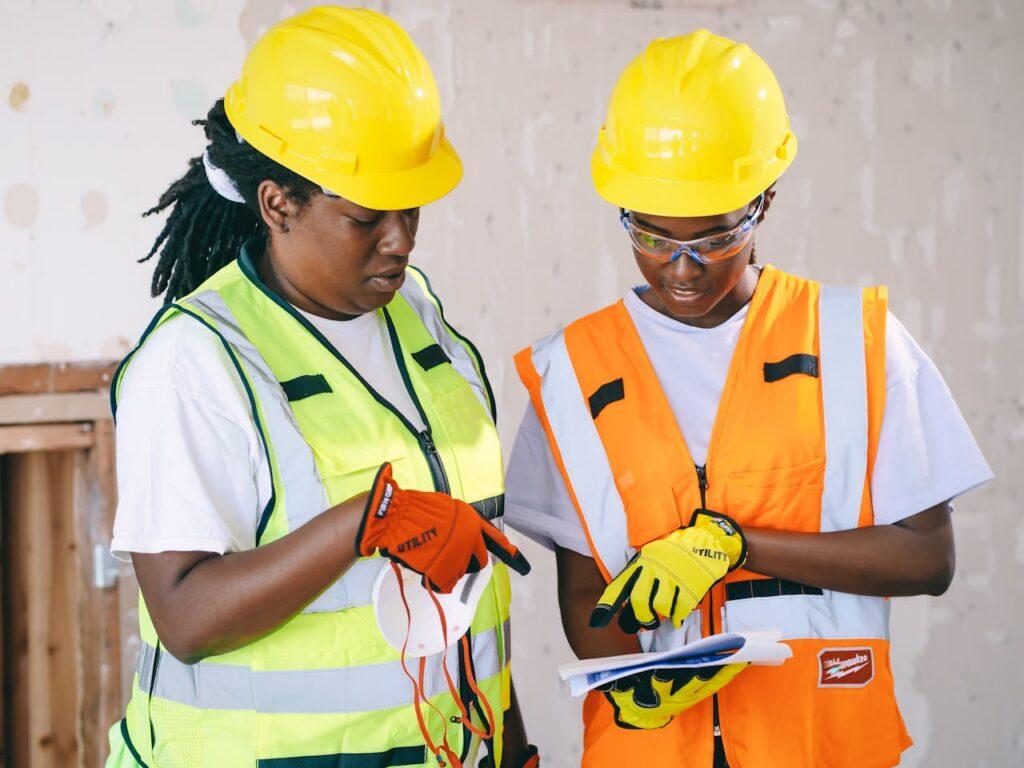
On one hand, women claiming space in blue collar workplaces represents measurable progress since male-dominated trade professions often offer higher median wages and clearer advancement pathways—-even while the gender pay gap exists. According to the Bureau of Labor Statistics, women electricians, for example, earned a median annual wage of $61,044. This is considerably higher than the median wage for women in many other industries. In fact, women in construction and extraction occupations earned a median salary 20% higher than women working in other industries. Several roles come with real earning power and long-term growth, with a higher potential for financial independence, bigger retirement savings, and stronger overall security for the future.
In an era of rising rent, inflation, and student loan debt, higher-paying industries are necessary. Choosing a lucrative field may be less about smashing the patriarchy and more about covering monthly expenses. When framed through that lens, “boy jobs” start to look less like a playful badge of honor and more like strategic survival.
There’s also the reality that male-dominated workplaces aren’t always inclusive. Women often navigate bias, heightened scrutiny, and the pressure to prove competence in environments that weren’t originally built with them in mind. Financial access doesn’t automatically eliminate cultural barriers.
Perhaps the real goal isn’t to celebrate “boy jobs,” but to eliminate the need for the phrase entirely. When jobs are no longer gendered — socially or economically — the trend will fade. Until then, it remains a revealing snapshot of how young women are navigating power, pay, and possibility in 2026