




Leading a national organization is more than just handling the day-to-day operations. For Carla Gamble, Executive Director of the National Black McDonald’s Operators Association (NBMOA), it not only means showing up for the entrepreneurs she represents while helping guide what the future of Black business ownership can look like. But there’s a responsibility to make decisions that move an organization forward, and the empathy needed to understand people who look to you and work with you. And that responsibility comes with an acknowledgment that leadership can look different in the moment based on what’s required at that time.
That responsibility also comes with a commitment to the many entrepreneurs and business owners she serves, and even the personal call that comes with being a woman in leadership.
The National Black McDonald’s Operators Association (NBMOA) is an organization to support Black McDonald’s Owner/Operators with their businesses. This organization has prided itself on ensuring financial growth, education, mentorship, advocacy, and more when it comes to business success and navigating the path of being an entrepreneur. And through this, the organization has been able to create opportunities and access for Black business owners, their employees, and communities they serve.
Almost a year into her role, Carla oversees the daily operations and works with the Board of Directors to advance NBMOA’s mission, implement its priorities, and support its long-term goals. However, her journey with McDonald’s began long before stepping into this leadership position.
Carla began her career with McDonald’s Corporation in 1994, holding various roles in Creative Services in which she supported meetings and event production for NBMOA. Then in 2012, she left McDonald’s and led creative production teams in marketing and communications. But Carla still supported NBMOA’s annual meetings and events. Her association with NBMOA gave her experience and insight before she even became responsible for leading the organization.
Her Agenda spoke with Carla on leadership, empathy, and creating space for the next generation.
Her Agenda: You’re leading an organization that represents Black business owners across the country. What has being in this leadership position taught you about the kind of leader you want to be?
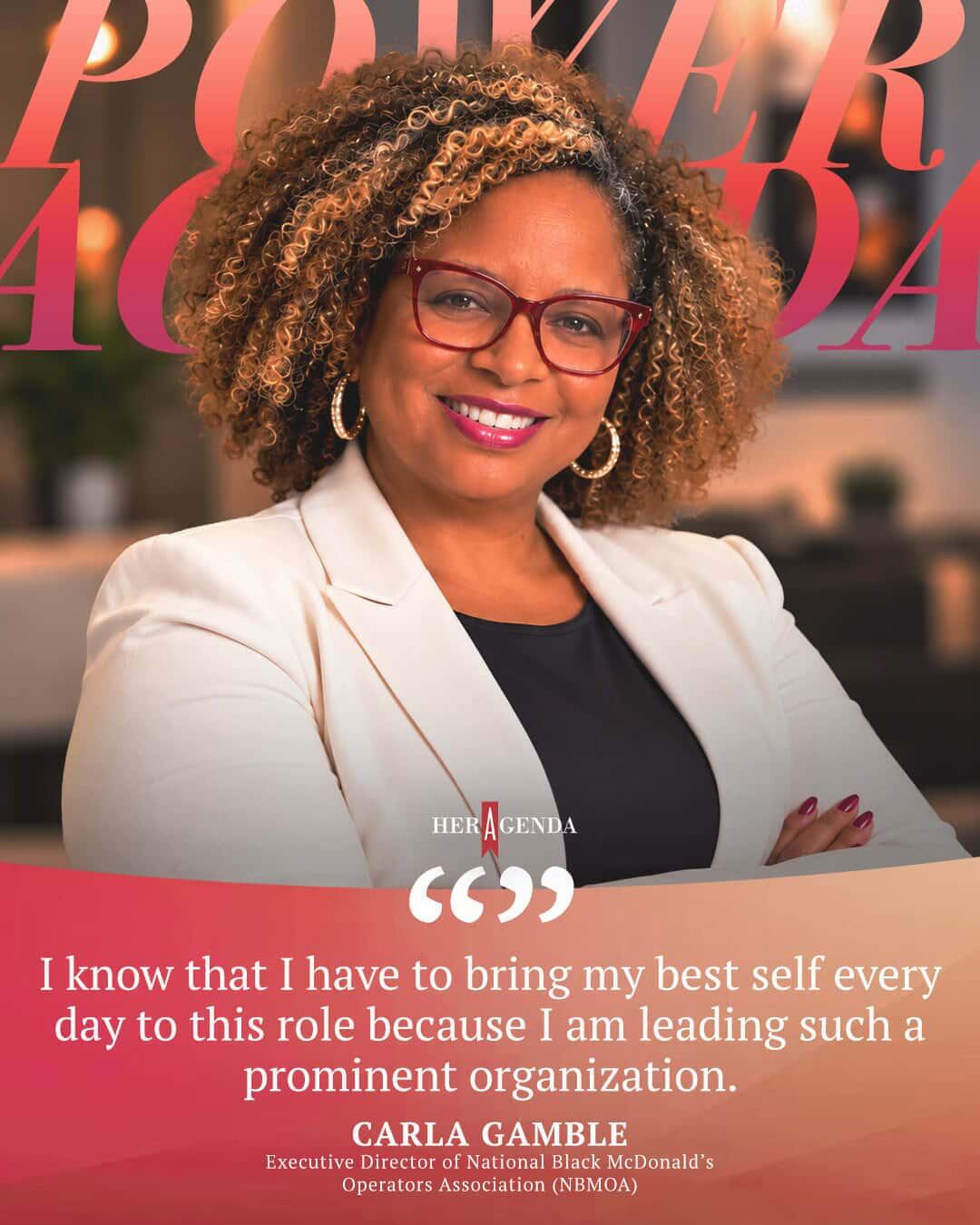
Carla Gamble: I am actually a hands-on leader. I am forward-thinking. So because I’m dealing with operators, entrepreneurs who are always trying to figure out that next thing and how [do] we get there, I’m always trying to just anticipate where we should go, what we should do, what’s that next big thing. I know that I have to bring my best self every day to this role because I am leading such a prominent organization and, I don’t want to say the words, but most of them are millionaires. So it brings a certain level that I have to [bring] every day to the role.
Her Agenda: What has been one of the biggest challenges you’ve had to navigate as a woman in leadership, and how has that experience changed the way you lead today?
Carla Gamble: The biggest challenge is being on all the time, being available, and also juggling. I have four boys, three boys and my bonus son, in my home. And so trying to still be available to them, whereas the way that I lead with this organization is the fact that I am available. And so it’s that balance of both of those.
Her Agenda: When you think about the people and businesses NBMOA represents, what responsibility do you feel comes with having a seat at the table and being able to influence those conversations?
Carla Gamble: The [NBMOA] pillars and what they stand for, being a self-help, recognizing and understanding that although they are an organization of entrepreneurs who, in other words, would be very successful, it’s still understanding that every day for us, and even the way that I work with them, we still have struggles. There’s still unfairness that we see, or inequities and [inequalities].
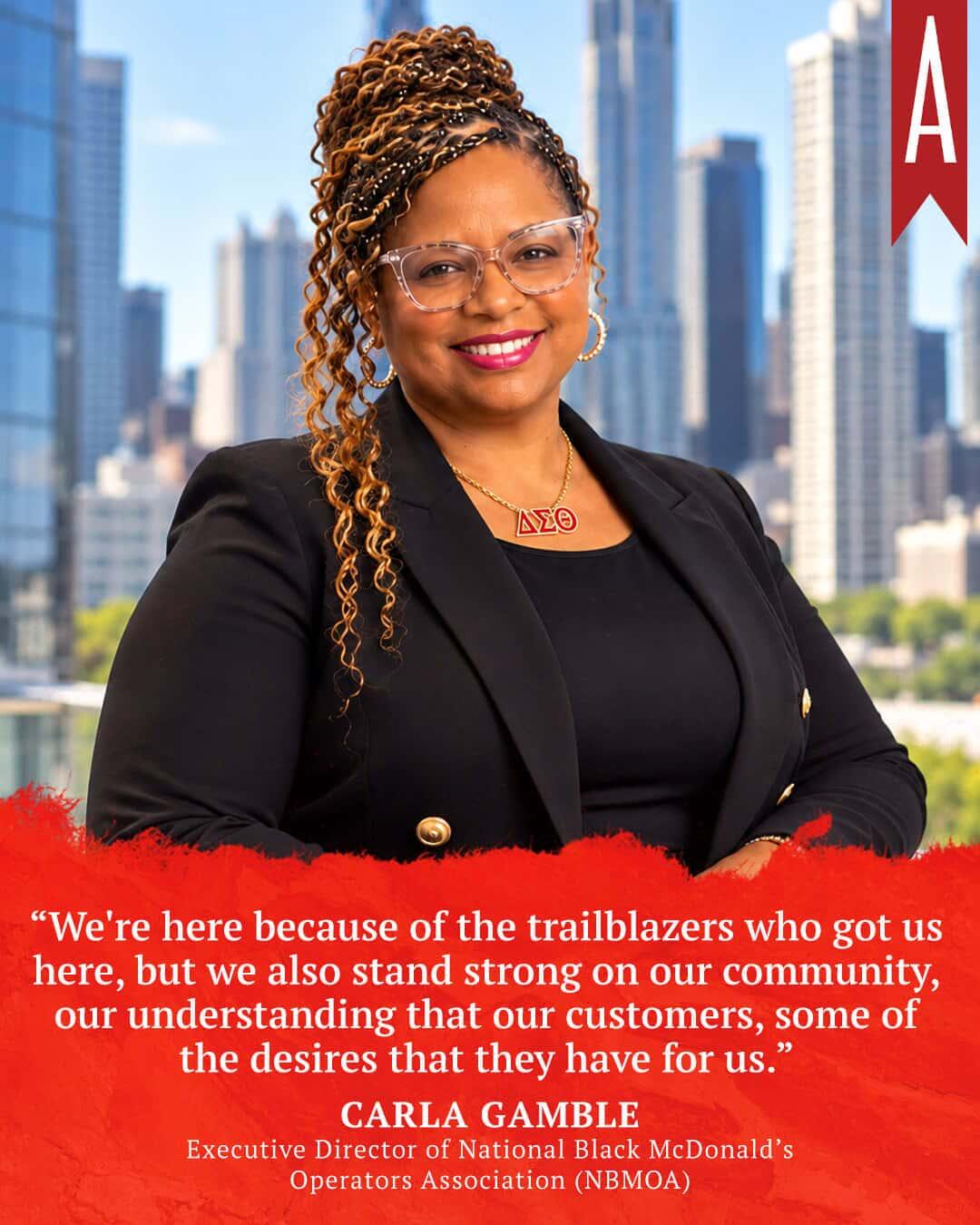
We’re trying to be a part of the community and community-facing, showing that we, in our role, we understand that this organization — we’re here because of the trailblazers who got us here, but we also stand strong on our community, our understanding that our customers, some of the desires that they have for us. And so that’s why we give a lot.
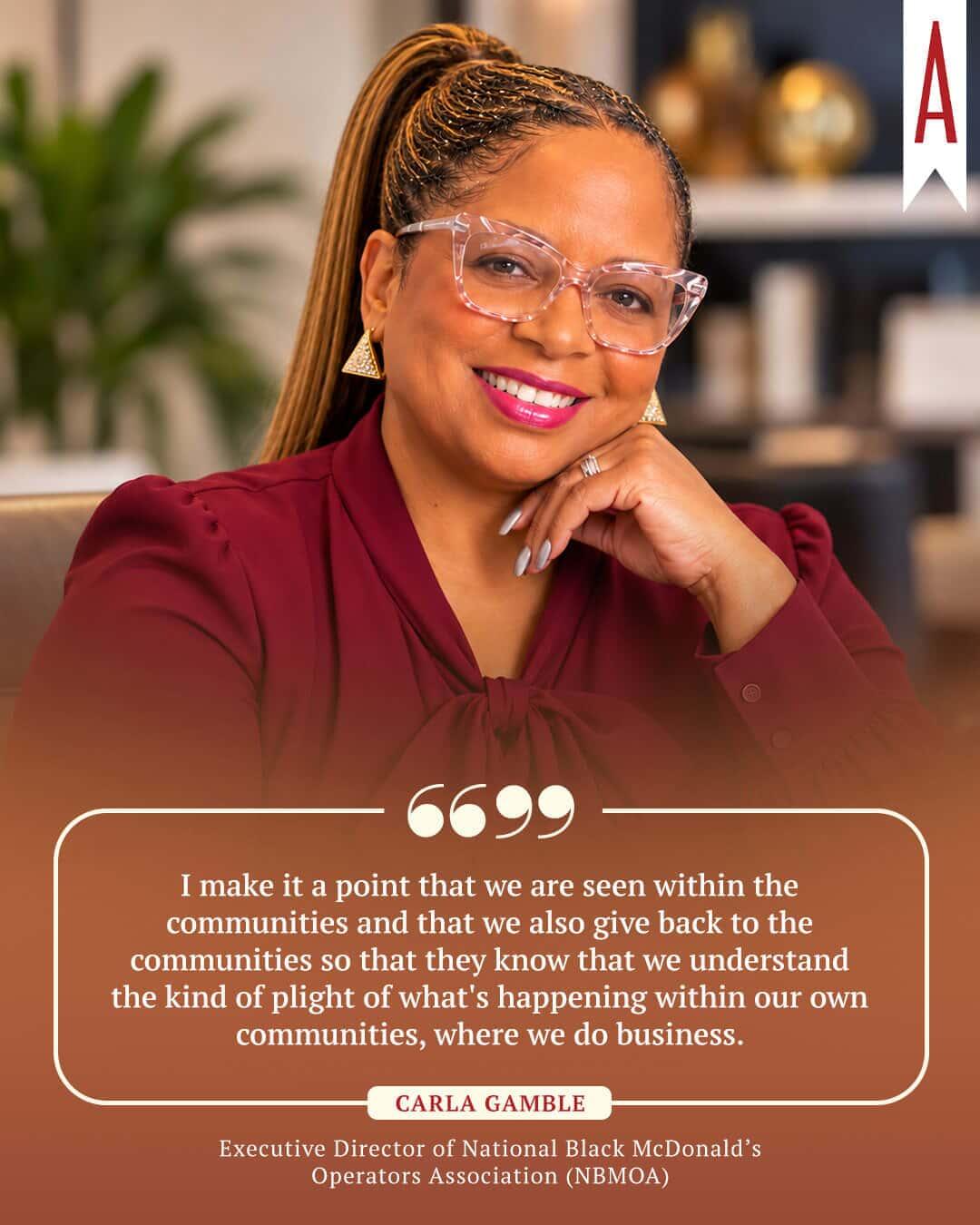
So in my role, I make it a point that we are seen within the communities and that we also give back to the communities so that they know that we understand, maybe a McDonald’s-only operator, but we understand kind of the plight of what’s happening within our own communities, where we do business and have our businesses.
Her Agenda: What’s something about leadership you had to learn through experience that you wish someone had told you earlier in your career?
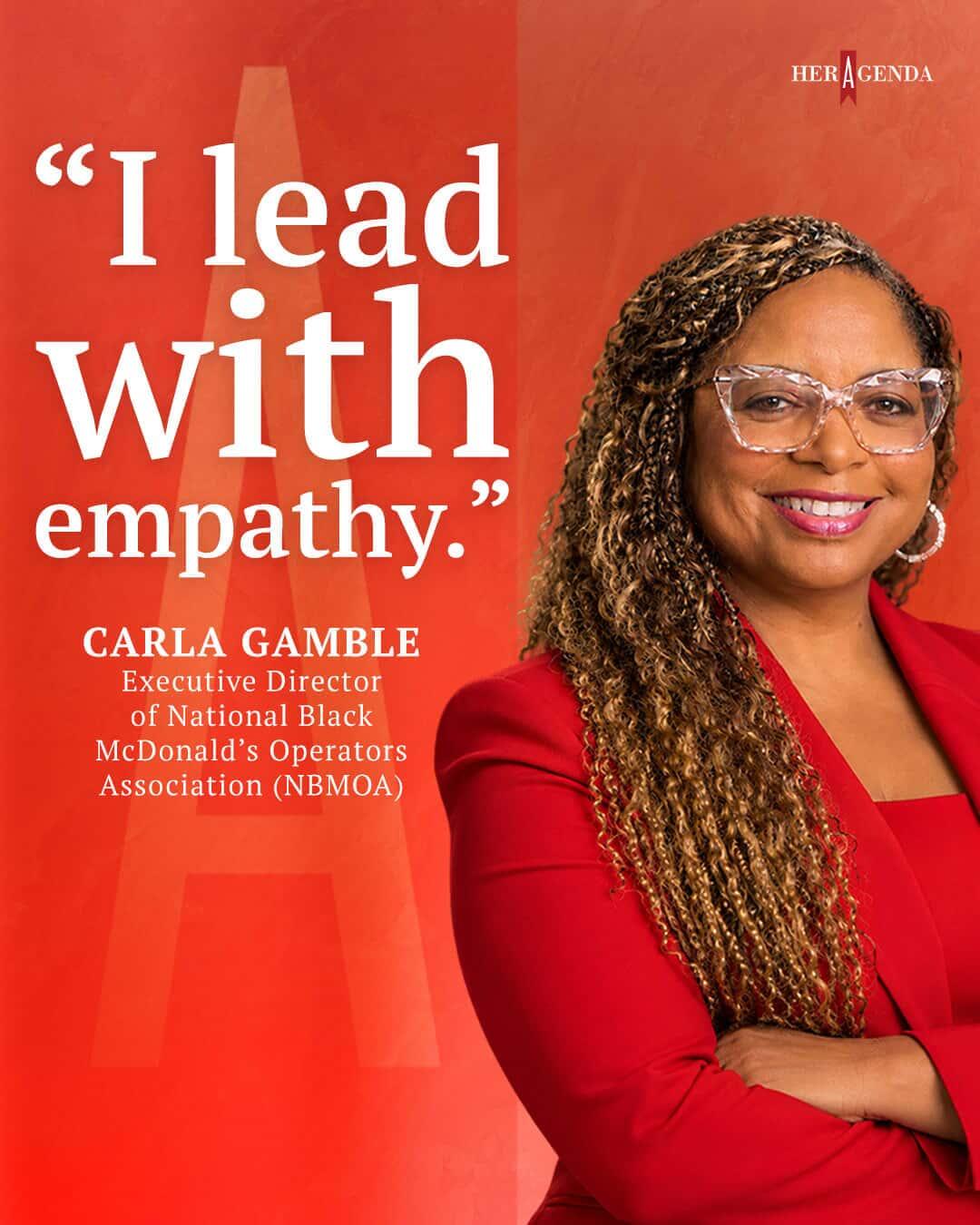
Carla Gamble: I lead with empathy. And so I wish someone would have told me how emotionally taxing being a leader could be, especially in this role, because you’re trying to juggle this entrepreneur, these entrepreneurs, and as well as, keep this organization strong and thriving while still looking and understanding that they have some things that they’re dealing with. So I think the emotional toll that it takes on you, because I feel like I’m strong in executing, but every day [can be] a struggle, though.
Her Agenda: As you look at the next generation of Black women coming into leadership, what do you hope they understand about taking up space, creating opportunities and leading in their own way?
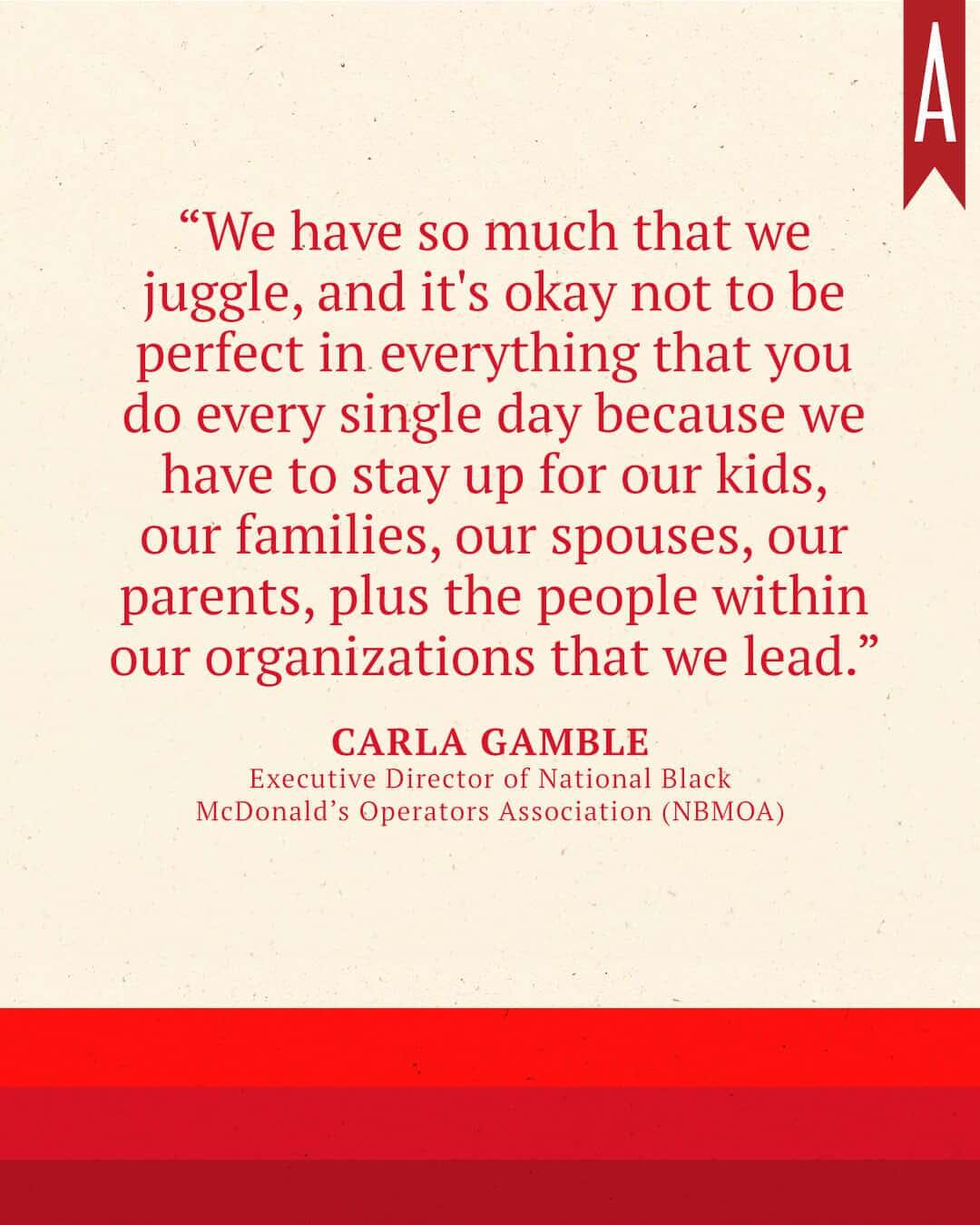
Carla Gamble: To stay confident. We are such a strong people, especially the women. We have so much that we juggle, [and] it’s okay not to be perfect in everything that you do every single day because we have to stay up for our kids, our families, our spouses, our parents, plus the people within our organization[s] that we lead. And so we try to do it all, and we try to do it all perfect, especially being Black women. And we feel like we hold every other Black woman up in the way that we execute every day. And it’s okay not to be perfect because while we smile and we go through, when we get by ourselves, it’s that release that we need. And it’s okay to do that and not try to just hold the whole world up on our shoulders.
[Editor’s note: This interview has been edited for length and clarity.]