How Black STEM Pioneers From 1926 Built The Foundation For 2026 AI





Artificial Intelligence has sprung up rather exponentially in the past few years, and this is especially possible because of the previous innovations and achievements in computer science, engineering, and technology.
From as early as the 1900s, Black STEM pioneers were already laying critical foundations for what would eventually become modern artificial intelligence. These innovators’ core concepts include high-performance computing, computer science, mathematics, information systems technology, security technology, and semiconductor engineering. Their contributions shaped the model and algorithms that created today’s AI systems.
In this article, we recognize these pioneers and their achievements, accomplished in an untoward and adverse environment.
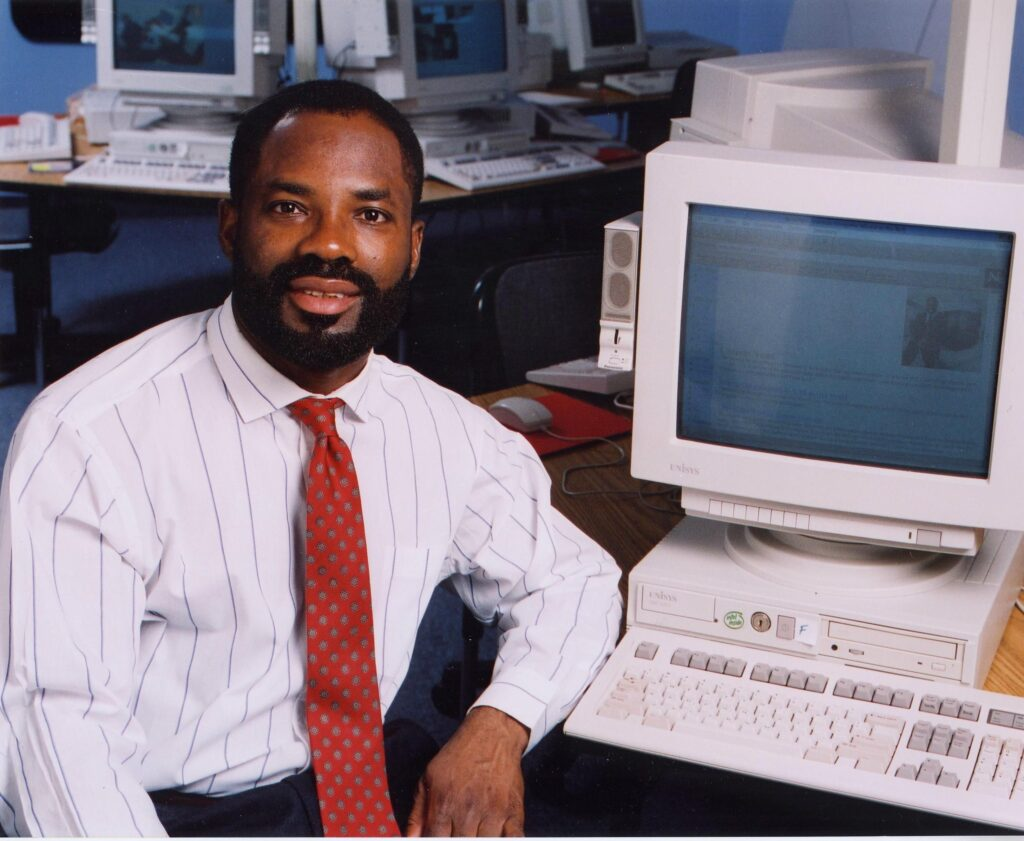
1. Philip Emeagwali
Phillip Eneagwali is a Nigerian whose education was disrupted by the civil war. He joined the army at 13 and later moved to the United States, where he studied mathematics at Oregon State University.
Emeagwali is distinguished by his grand inventions in computer science. He saw an innate efficiency in the way bees operate with honeycomb, determining that computers that use this process could be the most efficient and powerful. Emulating this model, Emeagwali used 65,000 processors to invent the world’s fastest computer, which performs computations at 3.1 billion calculations per second.
Emeagwali won the Gordon Bell Prize for price-performance and high performance in a computing application for contributing a novel mathematical equation to oil-reservoir modeling. His computers are currently being used to forecast the weather and to predict the likelihood and effects of future global warming.
Together, his work supports AI by enabling the parallel computing power needed for tasks like pattern recognition and large-scale data analysis.
Wikimedia Commons / Creative Commons 4.0
2. Marie Van Brittan Brown
Marie Van Brittan Brown developed the first home security system. Her invention was the first closed-circuit television security system and paved the way for modern home security systems used today. Working irregular hours in a high-crime area, she invented a way to see who was at her door.
She invented a security system which consisted of four peepholes, a sliding camera, television monitors, and two-way microphones. These items created a closed-circuit television system for surveillance, also known as CCTV. The two-way microphones allowed Brown to communicate with the person outside. She also had a remote that would allow her to unlock the door from a safer distance. Lastly, she could press an emergency button that would send an alarm to the police or security.
Brown’s contribution to home security led to her invention being cited in 32 subsequent patent applications. Her invention formed a system that is still relevant in today’s society.
Brown’s invention influenced AI by laying the foundation for intelligent surveillance systems, enabling today’s AI-powered tools such as facial recognition, motion detection, and automated threat alerts used in modern security technologies.
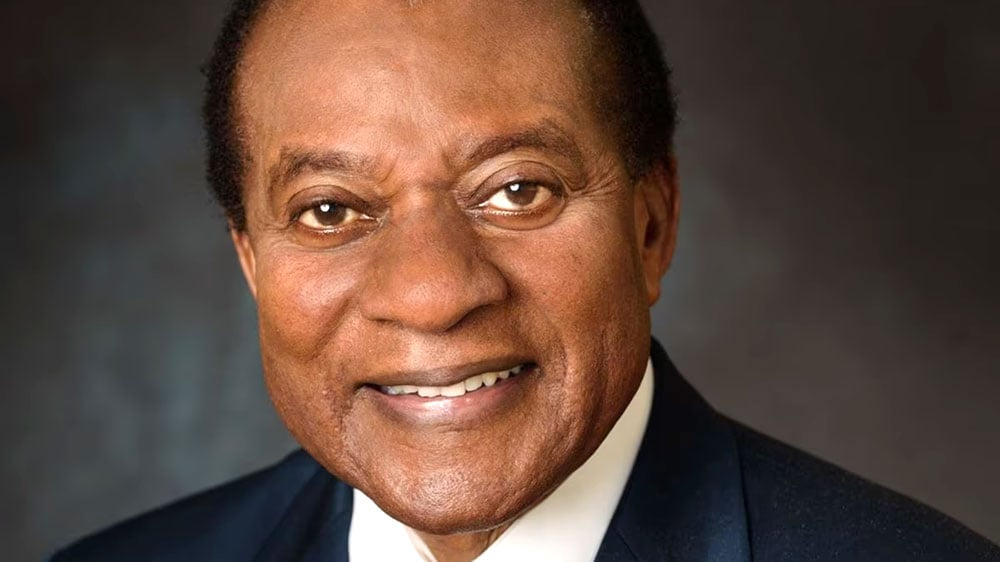
Dr. Victor Lawrence
Born in Ghana, Dr. Victor Lawrence is an Electrical Engineer who received his BSc. and PhD degrees from the University of London. He is renowned for his work in global telecommunications. He improved the transmission for the modern internet by making high-speed connections more available.
His contributions paved the way for multiple developments in broadband, DSL, HDTV technologies, and wireless data transfer and stimulated the growth of the global Internet. His work advanced data encoding and transmission, modem technology, silicon chip design, ATM switching and protocols, as well as speech, audio, and digital video technologies.
Spending much of his career at Bell Labs, he manipulated data for faster and more reliable travel over telephone lines. He streamlined signal travel while using less bandwidth, and his chipsets formed the heart of voice-band modems and DSL technologies that both use telephone lines. Dr. Lawrence helped turn the internet into a global industry useful for more than simple text-based functions.
Dr. Victor Lawrence’s work influenced AI by providing the high-speed, reliable data transmission and digital signal processing infrastructure that modern AI systems depend on for real-time communication, large-scale data transfer, and speech, audio, and video processing.
Invent.org
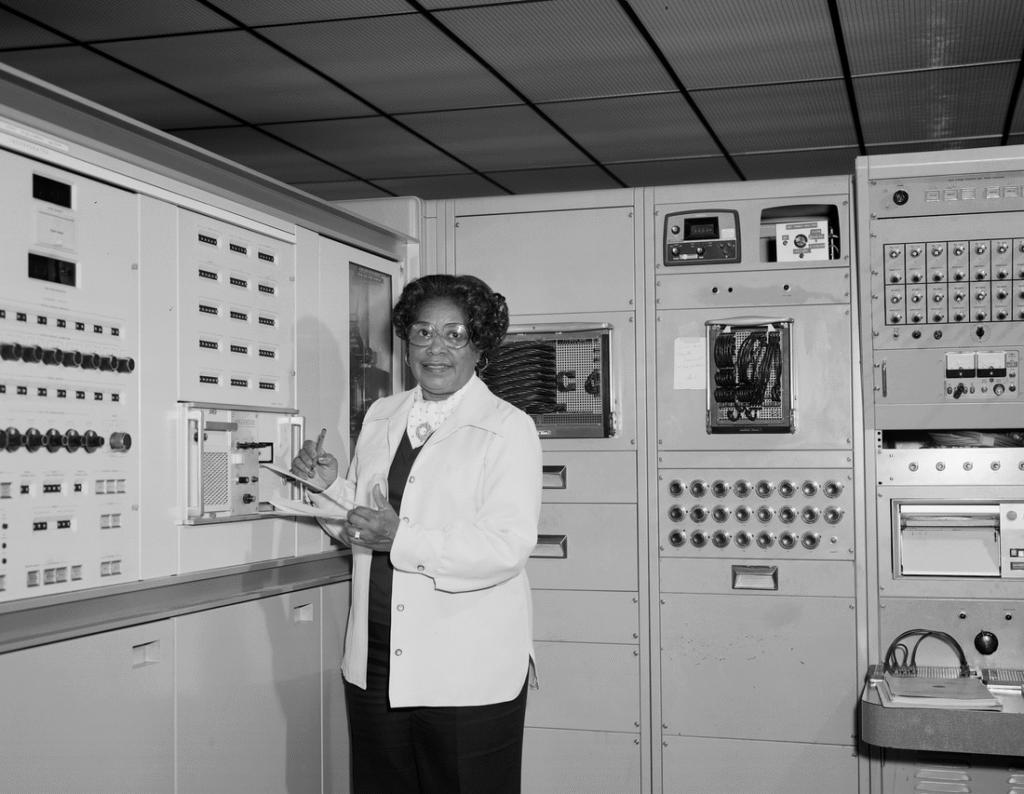
Dorothy Vaughan
Dorothy Vaughan studied mathematics at Wilberforce University and subsequently joined the National Advisory Committee for Aeronautics (NACA), a group of female mathematicians who performed complex calculations by hand. Vaughan transformed this opportunity into a 28-year career as a mathematician and programmer at Langley Research Center.
Vaughan developed algebraic methods for calculating machines and other hard-to-solve problems for which she was specifically recommended to supervise. She also specialized in flight path calculations, which contributed to the Scout Project, a solid-fuel satellite system. Vaughan also calculated flight trajectories enabling Mercury-Atlas 6, the first U.S. human spaceflight program, which sent John Glenn into orbit.
She served as the first African-American manager at the National Aeronautics and Space Administration, formally NACA. Dorothy helped to shape the space race, in addition to race and gender relations. She influenced Artificial Intelligence by helping pioneer early computer programming and algorithmic problem-solving, which form the foundation of modern automated and intelligent systems.
Scientific American
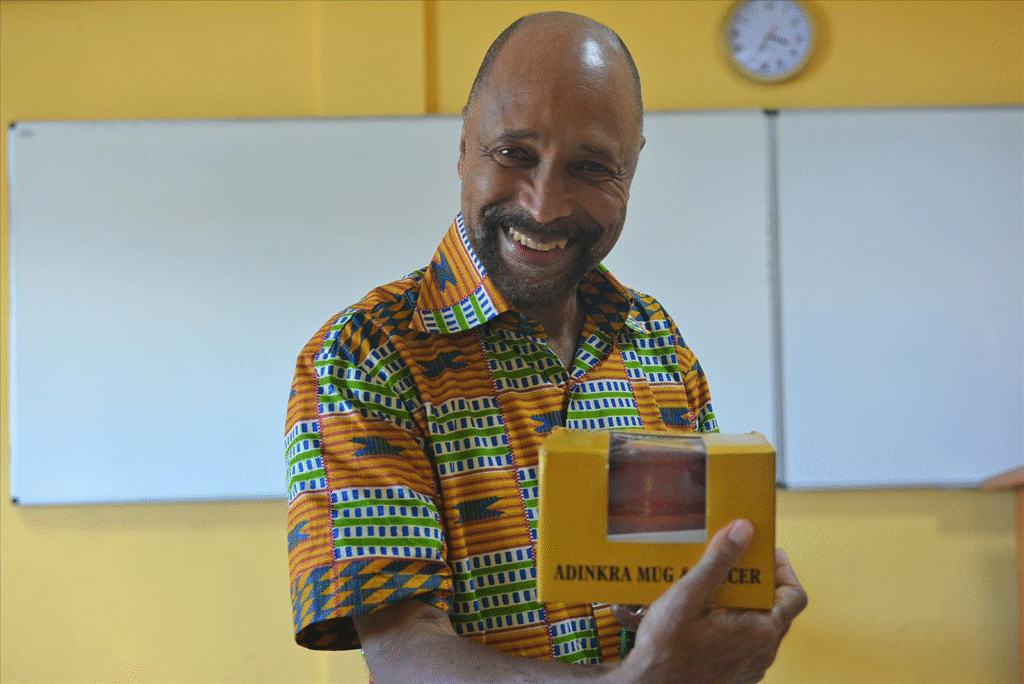
Dr. Clarence Ellis
Dr. Clarence Ellis was the first African-American to earn a PhD in computer science. He received a bachelor’s degree in mathematics and physics from Beloit College in Wisconsin, where he was the only black undergraduate.
Afterwards, Dr. Ellis enrolled in MIT for graduate school, but only stayed a short time because of his civil rights activism. He eventually attended graduate school at the University of Illinois at Urbana-Champaign, where he worked on hardware, software, and applications of the ILLIAC IV supercomputer.
Dr. Ellis held positions at Bell Telephone Laboratories, IBM, Xerox, Microelectronics and Computer Technology Corporation, Los Alamos Scientific Laboratory (now Los Alamos National Laboratory), and Argonne National Laboratory.
Dr. Ellis worked at Bell Labs from 1969 to 1972 on probability theory applied to computing. In 1972, he became an assistant professor at the University of Colorado Boulder to work on operating systems research. Afterwards, he headed a group at the Palo Alto Research Center (PARC) that developed Officetalk, the first office system to use icons and Ethernet to allow people to collaborate from a distance.
Dr. Ellis is one of the pioneers of the field of operational transformation, which examines functionality in collaborative systems. Operational transformation exists in a host of computer applications, including Apache Wave and Google Docs.
Dr. Ellis influenced AI by pioneering collaborative computing techniques that enable real-time coordination and adaptive intelligent systems.
Siebel School (UIC)
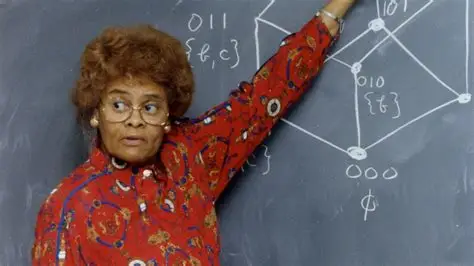
Dr. Evelyn Boyd Granville
Dr. Granville attended Dunbar High School, a prestigious African American high school in Washington, D.C. She excelled in her studies and, upon graduation, attended Smith College on a scholarship, earning her Bachelor of Arts in mathematics.
Evelyn Granville performed pioneering work in the field of computing. She was the second black woman to earn a Ph.D. from an American university. Afterwards, she joined IBM’s Aviation Space and Information Systems division, where she worked on various projects for the Apollo space program, including digital computer techniques.
Her work here played a key role in developing software for space exploration. During the height of the U.S. space race, she worked on NASA’s Project Vanguard and Project Mercury. These projects were pivotal in launching America’s first satellites and sending astronauts into space. She developed computer programs that analyzed satellite orbits and spacecraft trajectories, helping ensure the success of these groundbreaking space endeavors. Her work on these projects contributed directly to the advancement of the United States’ space program, which eventually led to the moon landing.
She influenced AI by pioneering the use of computers to solve complex mathematical problems automatically, a practice that underlies today’s data-driven systems.
University Archives and Special Collections, University of Texas at Tyler