How Hachette’s Romance Powerhouse Tracks Trends, Builds Bestsellers, And Defines The Genre’s Next Chapter





On any given day inside Hachette Book Group’s Forever imprint, the mood is part newsroom, part crystal ball. Manuscripts move across desks in real time with conversations that stretch from TikTok trends to retailer strategies, while editors quietly try to answer a question no algorithm can fully solve — what will romance readers fall in love with next?
Forever is Hachette’s commercial romance powerhouse, which is an imprint built on stories that guarantee emotional payoff, happily ever afters, and a sharp instinct for what’s capturing readers at any given cultural moment. Once anchored in mass-market paperbacks stocked in supermarkets and big-box stores, it has evolved alongside the genre itself, now publishing across formats and feeding directly into a social-media-driven ecosystem where a viral trope can reshape an entire list overnight.
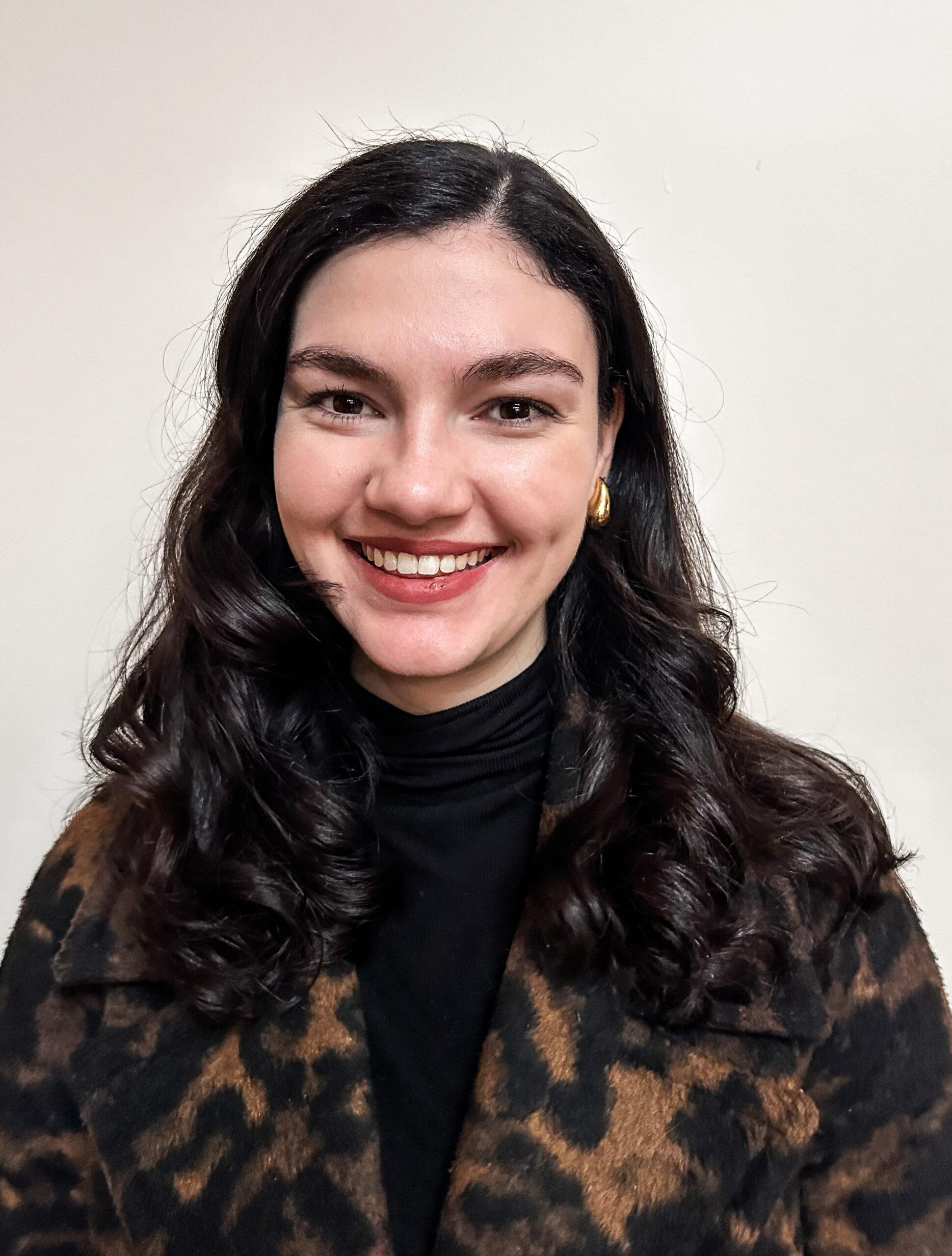
At the center of that evolution is Leah Hultenschmidt, Vice President and Publisher of Forever and Grand Central Publishing’s romance program. After thirteen years into her tenure, she sits at the intersection of editorial taste, market forecasting, and cultural timing, while working with authors not just to acquire books, but to build careers.
Her role blends the creative and the commercial, which entails identifying breakout voices, anticipating reader appetite months in advance, and shaping the kind of romance lists that can move from a debut manuscript to bestseller status in a matter of months.
Her Agenda has sat down to learn about the job that requires instinct, precision, and tracking, which stories will define the category next.

HA: How would you describe your editorial vision for Forever Today versus when you first joined?
Leah: I work on highly commercial fiction, primarily women’s romance, which is a very trend-driven category. When I first joined Hachette Book Group and the Forever imprint and Grand Central Publishing, gosh, 13 years ago now, the trends were very different.
Romance was primarily cowboys and the Regency era and small town, small mass market formats that people would buy in Walmart or Target or the grocery store. It’s funny now because some of those trends, like cowboys and Bridgerton-esque Regency romance, are still as viable as ever, but it’s a very different format, and it’s a very different audience than what we saw 13 years ago with the rise of social media, in particular TikTok.
I think it’s opened up a lot more opportunity both for authors and publishers with just the scope of what we’re able to publish. It’s been so fascinating and exciting to see the rise of the category and younger people in particular embracing these feel-good, happily ever after kind of books.
HA: Why do you think readers are especially drawn to genres now like sports romance?
Leah: Pop culture drives everything. As I said, certain categories are kind of evergreen, even 20 years ago. When I first started in publishing, we had football romance and baseball romance. It was very popular, but these trends are just like fashion. The trends are very cyclical, and something comes up in the pop culture or the zeitgeist — hockey romance is not a new thing, but suddenly Heated Rivalry takes the world by storm, and everyone wants more of it.
That’s always really exciting, to make sure that you’re well-positioned for whatever the next trend is going to be. That’s a big part of my job as a publisher, as well as diversifying so that we are not all romantasy all the time, for example, because that trend will shift too.
We’ve been through so many different trends. For instance, World War II historical romance was a big thing six years ago. Everything was also Paris-centric at one point, and we were there for that, too.
But just like any business or any stock, you have to be diversified in your list.

Speaking of sports romance, some people have also compared publishing to managing a baseball team. You have to have your players for every position to make it work and to be successful.
HA: How do you approach nurturing diverse voices in romance publishing?
Leah: It is so incredibly important to us to make sure that readers feel seen, particularly those who haven’t been represented as often in the romance space.
We’re always looking at our acquisitions to make sure that we have a broad mix and are as inclusive as possible. On the publicity side, we also do what we call prioritized reviewers, so that if a person identifies in particular with an author or character of that book, even if their following isn’t as huge as many others, they will get priority to receive an early copy for review.
We want people to have access to the books that are going to be most impactful to them. We’re always looking to make sure that when we do roundups of a particular kind of book, we’re representative across the spectrum, whether it’s authors of color, LGBTQ, neurodivergence, or disability representation — wherever we can make sure that we have a broad spectrum. It’s our goal to make sure that we have that on the list.
HA: Speaking of different authors, you’ve helped grow authors like Abby Jimenez into major bestsellers. What do you look for in a debut author?
Leah: A couple of things. For a debut author, it’s tough in a category like romance that’s so very full of huge bestsellers.
That said, there is nothing in the world more magical than being an editor or a publisher and discovering a new voice and being the person who gets to champion that to the world. As a team on the Forever editorial side, we’ll ask ourselves, ‘Is this a book we can sell?’ ‘Is it in a category that we know accounts are looking for?’
Readers want something that’s like this book that they love, but not exactly like it. We’ll ask ourselves, ‘What’s the twist that comes to play?’ It has to be really sharply written in a category that’s doing really well, and we know we can sell it, or maybe it’s just starting to burgeon a little bit and there’s more space for a new voice to come out.
I’ll also say, just really, really loving it and having the vision for what the right title of the book could be. We’d ask ourselves, ‘What’s the cover going to look like?’ Abby and I worked a lot on that with her debut, The Friend Zone, which was seven years ago now — released in 2019.
That’s when rom-coms were just becoming a thing, so there was space for it. I’m trying to remember the original title that came to me. It was not The Friend Zone, but we were talking about even back then, tropes and what the title is going to tell readers, what it’s going to be about. Just like advertising, you look at a shelf, you look at a book, and you have five seconds to make a decision.
In this case, it was a friends-to-lovers kind of trope. Luckily, even though it was her first book, she had a social media following. And because it’s such a great read, I think readers just really fell in love with the book, and then they’re going to buy anything she ever writes again.

HA: How do you identify which manuscripts have breakout potential, do you think?
Leah: It’s a combination of things. As I mentioned, we need to be able to envision ourselves selling it. We’ll look at what other books are selling in the market, what’s going on in pop culture, and what would be going on in pop culture nine to 12 months from now. We’re usually nine, 12, or even 15 months ahead from when we sign a book to when it hits shelves.
We’re also asking ourselves if it’s something that we think can work for the market. What does the author come with? Have they self-published? Do they already have some readership and some platform? Do they have a really strong social media in another vein? Or maybe they’re a complete newbie, and that’s all the strength of the voice.
HA: Forever has grown its profitability five times in four years. What were the key strategic decisions behind that growth?
Leah: Going way back, romance was always a volume game.
There was not a lot of profitability because the books were like $7.99. They needed to be mass-market books. Coming from a business standpoint, you’d have to publish around three mass markets, and you still wouldn’t have the same profitability as a hardcover. Just like a $28 hardcover, right? For mass markets.
Previously, it had been very much a volume game. Then, as the readership started to change, and we realized we can do more trade paperbacks, which are the larger format paperbacks, and we could start getting $15.99 for these books, or $17.99 for these books. Suddenly, you can concentrate a little bit more on the marketing side of that and give a stronger push.
We call it tent-pole publishing. Rather than being straight volume, identify the biggest opportunities, go hard on those. And Abby Jimenez is a fantastic scenario to have fewer titles with some massive sales.
Callie Hart’s Quicksilver is another great example. Kennedy Ryan is another brilliant example of this. Julie Soto, Natasha Lester, I could go on.
They have massive sales as opposed to a broad list that has more mid-level sales, let’s say. Of course, there are always levels within those, but the levels that we were getting and the profitability that we were getting were vastly different. And now we’ve branched into hardcover as well, and have had massive success with higher price points.
That’s really been a lot of the drive into the growth, as well as recognizing what readers want, staying on top of the trends, being nimble, being able to change and pivot very quickly in an industry that is not known for necessarily doing anything quickly.
When I first acquired Quicksilver, that deal was done in August of 2024, when they signed the contract, and those books were on shelves by December 5th. So four months versus what I was saying is traditionally, at least a 12-month process; we’ve really hustled to make that happen, to capitalize on the momentum that the self-pub edition was doing.
SOURCE: PEXELS
HA: You previously mentioned staying on top of trends with TikTok and everything else. How do you stay on top of these trends and identify them?
Leah: I think it’s trickier now than it was six years ago with the saturation of the market and with so much content happening because everyone’s into romance, and it’s a cash boom. Publishers recognized it, authors recognized it, and now everybody’s trying to get in on it.
It takes a team. So I talk about the diversity on our publishing list, but I also want to talk about the diversity that we have within the editorial and marketing team.
As a leader, it’s about listening to everybody and making sure that we have people who have diverse tastes and that everybody has a voice at our editorial meetings to say what they’re reading, what they’re seeing. I’m not getting any TikTok algorithms because I’m only on it to look up to see how many likes does this author have every time I have to do a fact sheet.
I need to be attuned to the people who are in that space, listening and trusting their voices and their opinions, and then bringing in my experience on the dollar side and market to come up with something that’s going to work and sell. There’s no way I can do that by myself.
HA: Why do you think the romance category has gone through such a renaissance in the last couple of years?
Leah: I think people are always looking for feel-good reads, something where they know there’s going to be a happily ever after, even if it puts them through the wringer to get there.
A new generation started reading, and now it’s suddenly cool. They can brag about it on social media, especially if they have that physical copy.
And what had been kind of stigmatized and almost like a closet thing has become like an insider’s club. For example, they know what one bed means or the term morally gray.
It has developed its own language in its own club in a very cool way.
Many people tell me they could never read a romance that they’re all the same. And I always answer, saying you haven’t found the right romance for you yet.
I think it’s a category where there’s truly something for everyone.
HA: After 13 years at Forever, what continues to excite you the most about the work that you do?
Leah: I really love the strategy of publishing — getting the right mix on our list, predicting what the next trend is going to be, talking with an author. This is my favorite part, talking with an author about their hopes and dreams and then coming up with the strategy to try to make that dream a reality.
That is the most satisfying and exciting thing because it’s always different. It’s different for the author. It’s different for the book.
It’s different for the time. What worked for Abby in 2019 isn’t going to work for a debut author in 2026.
For example, when we were strategizing with Kennedy Ryan, we were doing This Could Be Us, the second book in her Skyland series. We had a big goal to hit the New York Times bestseller list because there hadn’t been any black romance author on that list in over two years at that point. And so we strategized, thinking ‘How many pre-orders do we need?’ ‘How are we going to get to those pre-orders?’ ‘What do we need for first week sales?’ ‘How are we going to do that?’ ‘How do we partner with accounts like Barnes and Noble or Target to make sure that they’ve got the copies that could see this happen?’
When the list came out, I was at the London Book Fair at the time.
So it’s like 10:30 at night there, and I’m at dinner with an agent. And I saw the list, and I burst into tears. I was so happy for Kennedy and so proud.
She’s just so inspiring to begin with. But to be able to deliver that for an author so that they can say New York Times bestseller on their books for the rest of their lives is like, gosh, I get emotional thinking about it now, especially with her. But it’s just huge.