How Hybrid Work Is Reshaping Career Growth For Millennials




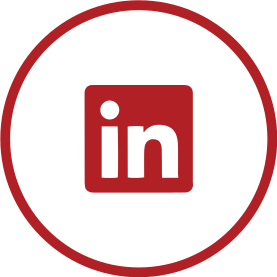
Hybrid work, where employees split time between the office and remote locations, has rapidly shifted to a mainstream work model. For millions of workers, particularly Millennials (born roughly 1981–1996), hybrid arrangements offer new ways to balance professional progress with personal life.
Yet this shift is reshaping not just where Millennials work, but how their careers grow. According to Robert Half, both opportunities and challenges are tied to hybrid work, impacting mentorship, visibility, job satisfaction, and long-term career trajectory.
Hybrid Work Has Become a Dominant Preference

SOURCE: PEXELS
Hybrid work arrangements now dominate workforce preferences across age groups. According to HR Review, hybrid work is the most popular choice among jobseekers, with a majority preferring a mix of office and remote work over fully remote or fully in-office models. This preference reflects Millennials’ desire for flexibility while still accessing collaboration and visibility that in-person work often enables. The trend highlights hybrid work as a defining feature of modern career growth expectations.
For Millennials, this means traditional career structures are evolving. Instead of following the linear “office presence equals career advancement” model, hybrid work encourages a blended approach that blends autonomy with strategic in-office engagement.
Flexibility Strengthens Work-Life Balance and Engagement
Hybrid work’s appeal among Millennials is largely tied to work-life balance. Flexible schedules reduce commuting time and provide greater control over daily routines, enabling workers to manage caregiving, personal development, and professional responsibilities more effectively. Most employees believe flexible work improves quality of life and enhances career prospects, especially when they can choose how, when, and where they work, as per CIPD.
For Millennials, who often juggle mid-career ambitions with family planning, financial pressures, and ongoing education, this flexibility reshapes career growth. Rather than seeing flexibility as a perk, many view it as essential for sustained performance and long-term engagement.
Hybrid Work Can Influence Advancement Opportunities

SOURCE: PEXELS
However, hybrid setups also bring challenges to career progression. Research indicates that workers in hybrid or remote roles may feel overlooked for promotions compared to their in-office peers. A study tracking flexible workers in the UK and US found that a significant share of Millennials feel they have missed advancement opportunities due to hybrid working arrangements.
This highlights the risk of proximity bias, where employees physically present in offices receive more informal mentoring, networking, or leadership visibility. For career‐driven Millennials, who value both autonomy and growth, navigating this tension is critical. Organizations and leaders must intentionally design hybrid policies to avoid disadvantaging remote or hybrid employees in performance reviews and promotions.
Hybrid Work Impacts Connection And Organizational Integration
Millennials often emphasize professional growth through collaboration, feedback, and learning from more experienced colleagues. Yet hybrid work can make informal interactions less frequent. According to People Management, younger staff, including those under 35, are more likely to feel less connected to their organization under hybrid arrangements compared with older colleagues.
This weakening connection may limit opportunities for mentorship, spontaneous idea sharing, or rapid problem-solving — elements that historically accelerate career growth. Employers must address these gaps by creating structured hybrid practices that nurture belonging and informal learning, such as intentional mentoring programs or hybrid team norms.
Millennials Still Value In-Person Interaction For Career Development
Despite flexibility’s popularity, many workers believe that some office presence still matters for career progression. According to Workplace Journal, time in the office is often linked to increased learning, collaboration, and visibility with leadership, which are key ingredients in promotions and skill growth.
For Millennials, who generally seek both flexibility and meaningful advancement, hybrid models must strike a balance. Office days can be leveraged strategically for networking, team alignment, coaching, and professional visibility. Younger professionals often report that time with colleagues helps them sharpen skills, build trust, and grow reputations in ways remote work alone may not fully support.