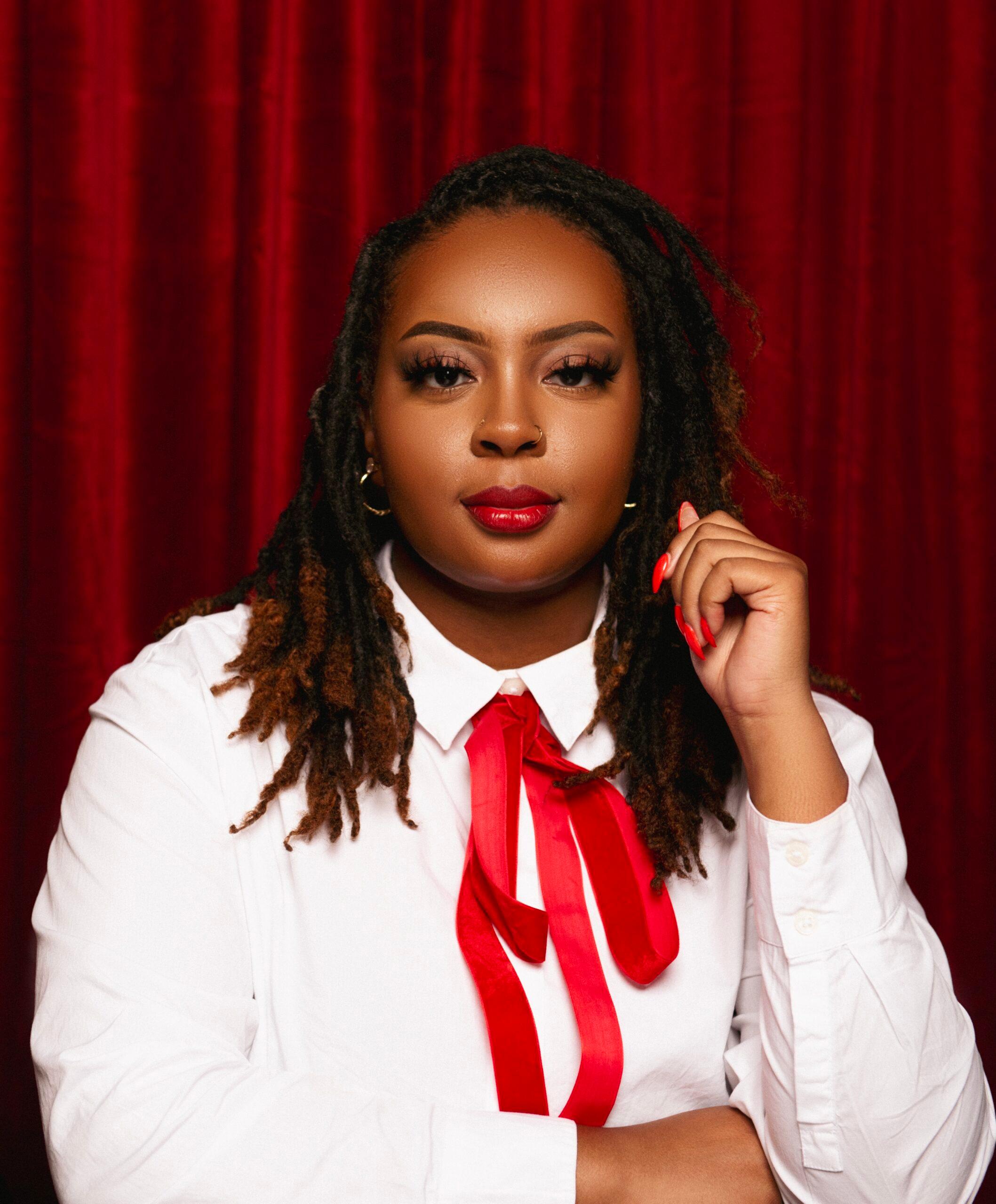
How Mimi Brown Brings Hard News To The Breakfast Club And Owns Her Ambitious Era

From the high-stakes politics of Capitol Hill to the glitzy red carpets of Hollywood, Mimi Brown has navigated every corner of the media landscape. But for the Emmy-nominated journalist and current Breakfast Club Front Page News correspondent, the true measure of success isn’t found in the fame but in the impact. From the high-stakes politics of Capitol Hill to the glitzy red carpets of Hollywood, Mimi Brown has navigated every corner of the media landscape. But for the Emmy-nominated journalist and current Breakfast Club Front Page News correspondent, the true measure of success isn’t found in the fame but in the impact. After seven years covering the entertainment world, Mimi made a decisive return to her hard news roots, driven by a desire to tell the stories of everyday people. Whether she is informing millions on a nationally syndicated morning show or documenting the resilience of a wildfire-ravaged community in her podcast To Altadena, With Love, Mimi proves that an ambitious woman never has to pick a single lane. In this candid conversation, we discuss her path through Howard and American University, why being a producer made her a better anchor, and her refusal to shrink in a “pick a lane” culture.




From the high-stakes politics of Capitol Hill to the glitzy red carpets of Hollywood, Mimi Brown has navigated every corner of the media landscape. But for the Emmy-nominated journalist and current Breakfast Club Front Page News correspondent, the true measure of success isn’t found in the fame but in the impact.
After seven years covering the entertainment world, Mimi made a decisive return to her hard news roots, driven by a desire to tell the stories of everyday people. Whether she is informing millions on a nationally syndicated morning show or documenting the resilience of a wildfire-ravaged community in her podcast To Altadena, With Love, Mimi proves that an ambitious woman never has to pick a single lane.
In this candid conversation, we discuss her path through Howard and American University, why being a producer made her a better anchor, and her refusal to shrink in a “pick a lane” culture.

Her Agenda: You started on the red carpets of the Oscars and Grammys and moved into producing for major networks like NBC and FOX. Was there a specific moment or story that made you realize you wanted to pivot your career?
Mimi Brown: I did the red carpets and the Hollywood glam for about seven years, and it was so much fun. But I have a background in hard news, I worked on Capitol Hill, and did political coverage for Good Morning America during grad school. When I thought about the pivot, I started thinking about what is really happening in the world. Affecting change, policy, and people’s everyday lives is so important. I wanted to see where the impact of my journalism was taking shape.
HA: How do you feel your education prepared you for the specific pivots and decisions that you were going to have to make in your career?
Mimi: So you know, I went to Howard University, and Howard is an amazing school, and it teaches you so much. And it was one of those places where you learn real-world experiences in school, which taught me so much about learning how to pivot, learning how to juggle multiple things, learning how to survive in this ever-changing world, this ever-changing media.
It taught me that the world is so much bigger, and that’s kind of how I even got into storytelling. So once I left Howard, I went to American, and I got a graduate degree in journalism. I did a rigorous nine-month course, which was like no sleep ever. And so that also really prepared me. It taught me the ever-changing landscape of news and how things will be one way today and be one way tomorrow, because anything could be thrown at us.
HA: And speaking of just using your background in education, your background as a TV producer, how did that influence the news anchor that you are today, and how you tell stories and bring forth a story?
Mimi: I’ll tell everybody, my background as a producer is the only reason I think that I am surviving today. So I’ll just say this: when I started out in news, I taught myself everything there was to know in the newsroom. So not only do I produce, but I also write and edit. Whatever you need, right? I can operate a chiron, which is like the lower thirds that pop up on the screen. I taught myself all of those things because, in order for me to do what I do today and to be able to feed an audience, I think you need to know what that audience wants and what serves them.
And that was the most valuable job ever. I know a lot of times people are trying and rushing to get in front of the camera, or in front, but if you can do everything behind the scenes, just knowing how things work will make your job in front of the screen so much better, so much easier, because you have a working knowledge of both.
HA: How do you balance the signature reporting style that you developed over time with the sort of unfiltered nature that is on the Breakfast Club?
Mimi: Well, you know what, I’m there to tell the news, right? I am there to bring you the headlines. I am there to tell you what is happening in the world of politics. I am there to give you the consumer news that you need to know. And I’m just there to inform the audience. I’m there to inform the public.
So I think that what I do and what they do, they mesh really well because the Breakfast Club has been around for 14 or 15 years, and they already have a built-in audience. And all I do is I come in, and I inform that audience in a way that maybe they’re not used to. But also, it’s a very important opportunity to make sure that a group of people who are listening, who are watching, are very informed.
I’m there to literally let you know what you need to know about how this policy change is going to affect your life, how it’s going to affect your family, and if you need to know something about your health care, about student loans. They also come in well prepared to have this very important dialogue with me.
HA: What advice do you have for people coming into a new position, and how to kind of meet the level the company, or like the Breakfast Club, is already at?
Mimi: Do your research, make sure that you know the audience that they serve, right? If you’re coming in as a newbie, make sure you are assisting where they are and bringing something that will make it better. I think a lot of times, people may come in and think that they have to assimilate to be like them. I just came in as myself. And it’s what’s really great about that is that they were open and receptive to me just being me and being able to share the news in the way that I do. So I would definitely say do your research, make sure you know your audience, make sure you know the brand that you are stepping into.
HA: [Referring to To Altadena, With Love] What inspired you to zoom in so closely to this one community and their tragedy?
Mimi:Altadena, With Love is a very, very dear project to me. In Southern California in January of 2025, we had crazy wildfires. They were in Malibu, they were in the Palisades, and they were in Altadena. Now if you know anything about California, Malibu was really rich, Palisades was really rich, but Altadena is this historically black neighborhood that most people hadn’t heard of. And historically, when you look back at things that happened to black neighborhoods, they don’t always bounce back the way that other neighborhoods do. And so I wanted to use my platform, whatever I could do, to tell their stories.
I went there for one story just to kind of report on what was happening with the fire, the devastation that was happening. And I ended up just seeing people who look like me, someone who could be my grandmother, my uncle, or my grandfather. They lost everything. People had lived in their homes for 50-60 years. Homes that were now gone. And I wanted to know more about Altadena because I knew about it, but I didn’t know about it. And I learned so much. learned, you know, most of the black people that got there, they were there due to redlining. They weren’t allowed to live in other places. I learned that a lot of those homes have been passed down, and people were house-rich, right? Like, you may be living in a $2.5 million home, but that doesn’t mean that you have $2.5 billion to replace it.
And so for me, for Altadena, I just wanted to tell their story, but I wanted them to tell it through their viewpoint. Each episode tells a different story. If you dig deep enough, you’ll listen and hear how the white side of town received a little bit more coverage and help than the black side of town. People on the west side of Altadena feel like they had to save themselves, and the fire trucks didn’t show up for them. So it’s just kind of letting people see what I saw when I went there and hoping that that will just shed some light and help a community, a town, recover even better than it was before the fire and the destruction.

HA: How did you kind of navigate the thin line between getting the story as a journalist and also being a member of the community and helping them heal and find a nice, calm space to tell their stories?
Mimi: It’s funny because I think I took on this story as a journalist, you’re there to report, you’re not supposed to become part of the story. But I consider myself like an honorary resident of Altadena at this point. It was hard to separate what was happening from what I was reporting on. Because I think sometimes for me storytelling is my activism. It was just very important to kind of feel what they were feeling so that I could report it in the way that hopefully would tug heartstrings and require people to act. So I don’t know if there was a separation for me, like sometimes, how I can in other stories.
HA: Many women are told to “pick a lane” to be successful.How did you fight that pressure to minimize yourself?
Mimi Brown: Don’t think that you have to shrink. Don’t think you have to minimize yourself. I think you can go after all of it, right? I want it all. I want to do it all. And I don’t think that people always ask the other question: how do you balance it all? I don’t think there is balance. I think that you have to find within yourself what you can do and what you can’t do. You have to believe in the power of no, you have to believe in what is not going to work for you, and be able to accept that. But I don’t think that you have to limit yourself.
I always tell people I follow my passion. And if you look at some of the things that you just named, they’re mostly all with they’re in the same lane. And so they become naturally. But I think, you know, when you’re ambitious, and you want to be able to do multiple things to juggle most of the multiple things, I’m also a mom, I have a 12-year-old son, and so add that layer to it. It is not easy, but it is worth it.
This interview has been edited for brevity.