
How To Survive Natural Hair Microaggressions In The Workplace





There are unspoken rules and norms in corporate America. Navigating office politics and how people perceive can be tricky, but even more so as a woman, where people are more likely to judge your appearance than your work. When it comes to hair, curly-hair discrimination is real, especially if you have afro-textured hair. According to research done by the 2023 CROWN Workplace Research Study, a Black woman’s hair is twice as likely to be perceived as unprofessional, and over 50% of Black women are more likely to feel they have to wear their hair straightened in a job interview to be successful.
D, who is 27 years old and wished to remain anonymous because of her current employer, described a time during pharmacy school when a nurse touched her, saying it was “nice” while she was working. She’s also received comments about her hair looking more professional in certain styles than in others.
“My preceptor said my head wrap looked more professional than the wig I wore the day before,” said D.
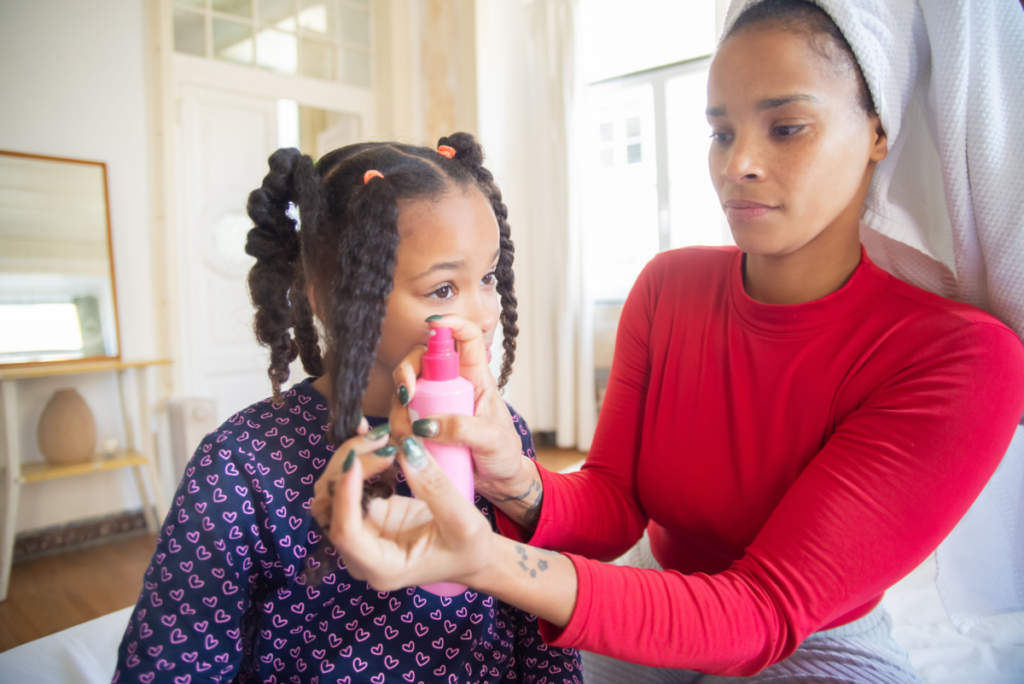
Historically, Black hair has always been outside the Eurocentric beauty standard of straight and wavy hair. When the relaxer was first introduced to Black Americans in 1913 by the G.A Morgan Hair Refining Company, it was marketed as a way to keep the hair “tidy,” bolstered by testimonials by influential Black Americans at the time, such as Duke Ellington. Other people in the business, such as Annie Turnbo Malone and Madame C. J. Walker, the first self-made millionaire, made fortunes from selling Black haircare products, including relaxers, and beauty salons and schools to train Black women how to use their products and do their hair.
Times have, of course, changed since then. Relaxers are out of vogue, with more Black women opting to wear their curls—but that doesn’t mean that they’re safe from flat irons or not hiding underneath hair extensions in braids or weaves in order to fit in with modern beauty standards.

Living Authentically
Whenever microaggressions happen, they can catch us off guard, second-guessing ourselves and how we walk through life. When S, a 31-year-old copywriter who asked to remain anonymous, twisted her curls around her finger out of habit, her director got angry with her and said: “Twirl that hair, girl.”
“I’m unbothered. I knew it was a him issue,” said Braswell.
Having curly hair isn’t a crime or undesirable, despite what society might believe otherwise. In a professional setting, take a deep breath before (justifiably) reacting with anger and use the moment to clarify the transgression or question it.
Keep a habit of documenting everything. The Harvard Business Review recommends noting the time, date, what was said, and who said it. If it becomes a pattern, each instance serves as evidence, backing up anything you may bring to HR or management.
It’s also important to know who your allies are. You may learn that some coworkers may already face similar treatment, but don’t assume that everyone will be on your side in a potential confrontation with HR. Whatever action you take needs to be in your best interest and for yourself only.
The good news is that 30 states in the U.S have passed the CROWN Act, which is a law that prohibits race-based discrimination in workplaces and public schools. If you live in one of these states, document the incident, and you can report it to your HR, your state, or the Equal Employment Opportunity Commission (EEOC).
As tough as it may be, don’t let the negative comments get you down. Everyone should be able to wear their crown freely and the way they want.