How Women Professionals Are Setting Realistic Health Goals For 2026





New Year’s resolutions are great in theory. In practice, they have some serious flaws. Nevertheless, as December comes to an end, the familiar “New Year, New You” trope begins to pervade every inch of media, from social feeds to gym ads. If you’ve already started plotting your 2026 goals, you’re not alone, and there’s nothing wrong with using the New Year as a grounds for a reset. In fact, it can be a powerful motivator, especially when it comes to health-focused habits.
The problem lies in how we set goals. Lofty all-or-nothing resolutions fueled by post-holiday guilt or unrealistic expectations tend to fade fast, which is why most resolutions are abandoned by February. Health goals can be harder to stick to because they demand consistency in the areas of life that tend to be disrupted first, like routines, energy levels, and time.
Before you join the overwhelming majority who fall off and forget entirely, there are a few realistic, sustainable strategies you can adopt to set realistic health goals you’ll actually stick to in 2026.

Set Goals In 12-Week Chunks
Rather than planning goals around an entire year, set your goals in 12-week chunks. The 12 Week Year method encourages breaking the year into four 12-week cycles to create a sense of urgency. Think about it: the end of 2026 sounds like a lightyear away. But April doesn’t seem so distant.
Annual goals suffer from procrastination and loss of momentum because there’s always plenty of time left. By shortening the timeline to 12 weeks, you create a sense of immediacy that sharpens focus and increases accountability. This makes the system especially effective for setting realistic health goals and lifestyle changes, where sustainable habits matter more than dramatic shifts.
“If you think of hustle as water, clarity is the funnel. Without a funnel, energy spreads and effort leaks. Nothing really fills. But with clarity to funnel your vision, your why, that same hustle gets channeled into efficiently getting things done. So, you don’t need more hustle. You need to aim it,” says neuropsychologist Tiffany Shelton Mariolle.
Lower Barriers To Entry
Small wins add up, and that’s why lowering the barrier to entry for your health goals is key to making them stick. Many resolutions fail because the starting point feels too overwhelming, time-consuming, or disruptive to daily life. When a habit requires a huge change, seemingly overnight, it creates inevitable friction. The more friction involved, the easier it becomes to skip or ditch the goal. How overwhelming would it be to go from zero weekly workouts to five at the gym?
Starting with smaller habits removes that friction and gradually builds your resilience for it. Instead of committing to five workouts a week, the habit can shift to one a week. Small actions may seem insignificant, but they build consistency and confidence over time. Once the habit feels automatic, it becomes easier to scale up.
‘Personal Rebrands’ And Vision Boards
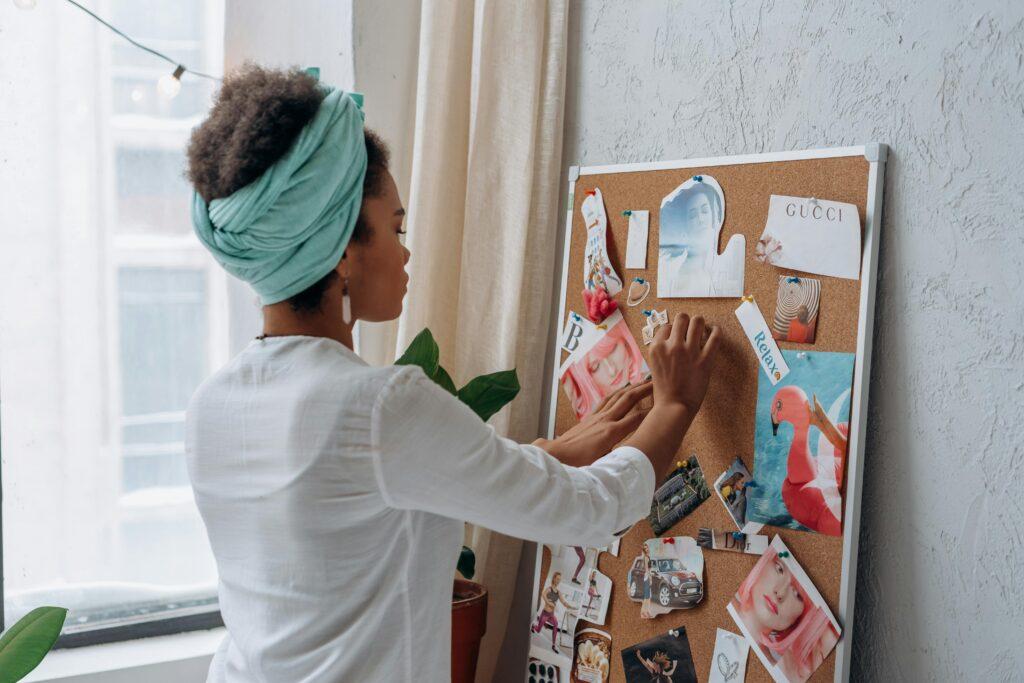
Along with keeping your goals realistic, it’s important to leave room for whimsy and fun. For example, creating vision boards never goes out of style, and for good reason. Whether you take to print or paper, they serve as visual reminders of how you want your life to feel. Out of sight, out of mind, but that’s not the case when you’ve got your vision board staring right at you.
Vision boards help translate abstract goals into something tangible, keeping motivation alive during the inevitable lulls. They also engage a different part of the brain than lists and spreadsheets, making your intentions easier to revisit, refine, and emotionally connect to over time. Researchers have even described vision boards as “a creative tool that counselors and clients can use to promote communication and identification of future goals in a strengths-based and solution-focused way.”
Personal rebrands have also taken over social media recently, reframing self-improvement as an evolving process. Personal rebrands encourage intentional change rooted in identity over outcomes Instead of asking, “What do I want to achieve?” the focus shifts to, “What kind of person do I want to be?”
When paired with realistic health goals and small, consistent habits, these creative practices are the cherry on top to make goal-getting feel exciting.