Rebuilding Trust In Media: Georgia Fort On Representation, Ethics, And Accountability

Evoto




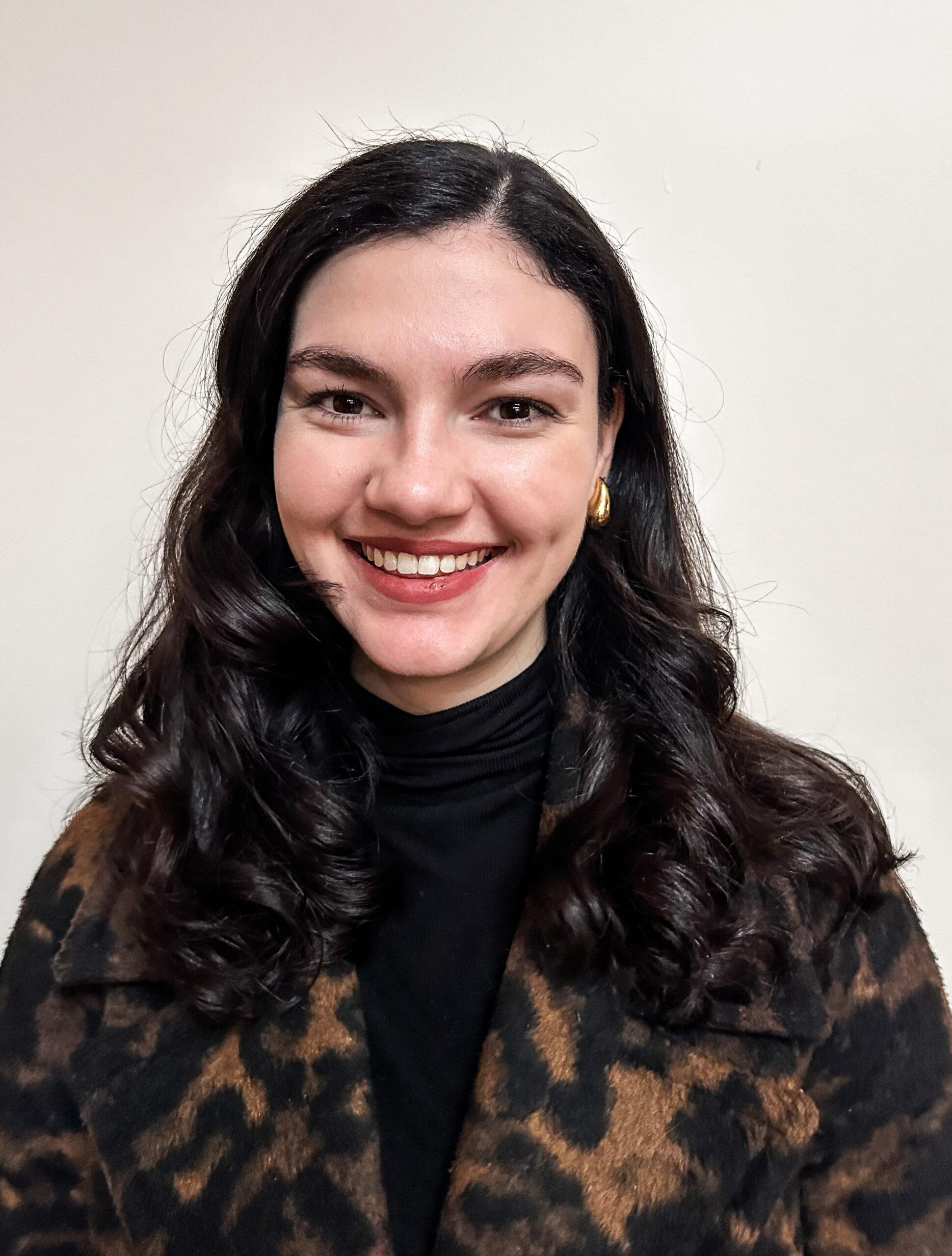
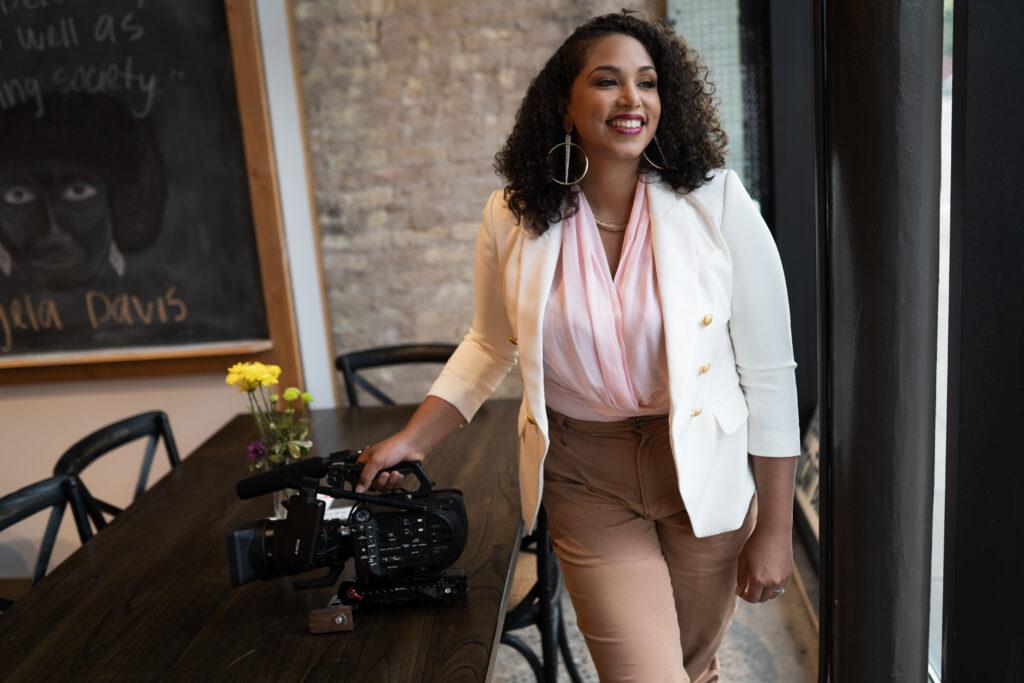
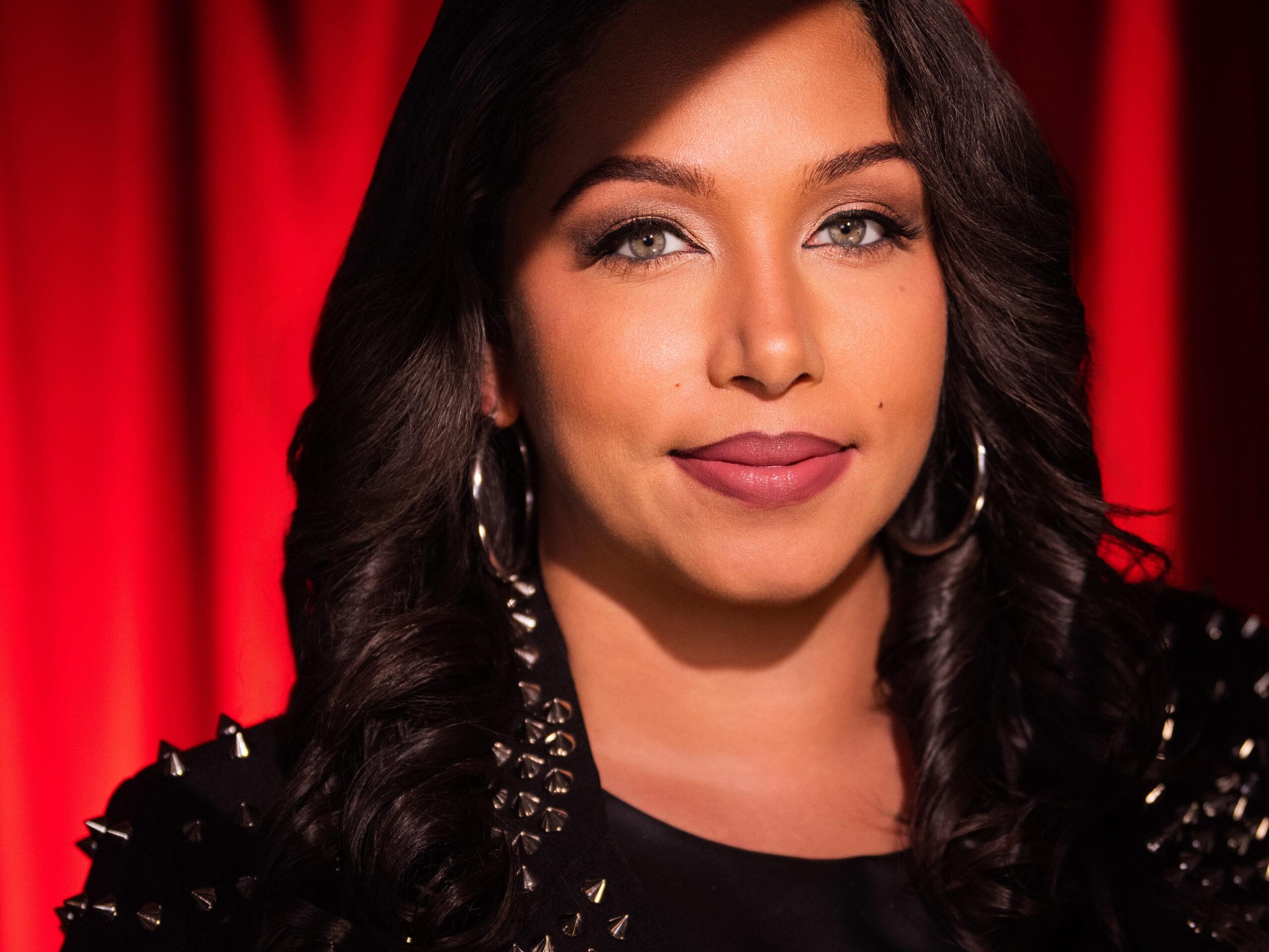
Georgia Fort stands out as a journalist who not only critiques the industry, but actively rebuilds it. A three-time Midwest Emmy Award–winning journalist, Georgia brings a rare, authoritative perspective to conversations about race, media ethics, and the future of journalism. As one of only two reporters granted access inside the courtroom during Derek Chauvin’s sentencing, she bore witness to a historic moment in American justice, reporting from a place of both professional rigor and deep community accountability.
A biracial storyteller and the founder of the Center for Broadcast Journalism, Georgia has trained and launched the careers of more than a dozen diverse media professionals, intentionally working to close the gaps she sees within traditional newsrooms. She is also the driving force behind Power 104.7 FM, a 24/7 news and music station serving the very neighborhood where she grew up, an embodiment of her belief that journalism should be rooted in, and reflective of, the communities it serves. Through her Emmy-winning program Here’s the Truth, Georgia amplifies underrepresented voices, challenges dominant narratives, and holds power accountable.

SOURCE: GEORGIA FORT PRESS TEAM
Georgia represents a new generation of media leaders who are independent, community-centered, and unafraid to question long-standing industry norms. In this conversation with Her Agenda, she unpacks where mainstream media continues to fall short, what it will take to restore public trust, and how ethical, inclusive journalism can shape a more informed, unbiased future.
Her Agenda: Your reporting often centers on race and justice. How does the media industry still fall short in covering racially charged stories responsibly?
Georgia Fort: Across the country, we are seeing newsrooms that don’t reflect the communities that they serve.
When you talk about falling short of representing our country in its entirety, in its diversity, in its full humanity, how can you do that if the staff that you have employed, if the leadership that you have employed, don’t reflect the community that you’re serving?
I absolutely think that newsrooms are still falling short of their coverage on racial justice, specifically. In addition to that, we’ve seen historically mainstream media take a posture where they prioritize and uplift the official and government narrative that is in response to critical issues of justice. When that happens, when you slant your coverage towards one side, you end up leaving out an entire aspect of a story that oftentimes is where a lot of the truth is found. What we’re seeing with our current government administration is that they’re not leading with facts, but yet and still, they are centered and prioritized in mainstream media coverage.
When you don’t balance that, if you’re not telling both sides of a story, you end up with slanted coverage. Mainstream media could be doing a better job of not just covering communities of different races, but also how they’re covering issues of justice as well.
Her Agenda: Many Americans feel the media has become polarized. What concrete steps can journalists and newsrooms take to demonstrate neutrality and rebuild public confidence?
Georgia Fort: Tell both sides of the story. When you look at the official narratives that often lead in news coverage, where are the narratives of cultural experts? Where are the narratives of community who has been impacted?
Tell both sides of the story, and then don’t be afraid if a story is nuanced and complex to go beyond two sides. Oftentimes, there are four, five, or even maybe 12 sides to a story that require you to break out this duality that often journalists get stuck in that pits people against each other and makes political issues divisive. Don’t be afraid to have five or six different perspectives represented. I’d say those are two very concrete things that newsrooms could do.
Her Agenda: Given today’s political tension and the most recent U.S. election, what do you believe is the single biggest barrier to restoring trust in the media?
Georgia Fort: I think the biggest barrier in restoring trust in the media is the government’s involvement in what is and what’s not being covered.
We’ve seen this kind of overreach of this current administration, from lawsuits that they filed against companies that own media outlets to the acquisition of outlets from folks who are very well connected to this administration, all the way to the fiasco that we saw with Jimmy Kimmel.
I think if media outlets want to regain the trust of American citizens, they need to distance themselves from government oversight and re-establish their independence with their viewers or their readers, because otherwise, I think the American public is going to continue distrusting them, but even take it a step further and start to view their publications as propaganda.
Her Agenda: What is the role of independent and mainstream media in repairing trust?
Georgia Fort: With independent journalism, I think we have begun to receive trust from people because folks are more willing to put their trust in an individual than they are in an institution.
There has been an emergence of more and more journalists going independent and connecting directly with their audience. I think we’re going to continue to see this move forward all the way up until the market becomes too saturated, and then there either has to be a consolidation or some type of coalition or network of independent journalists. I think we’re going to continue to see that area thrive.
SOURCE: GEORGIA FORT PRESS TEAM
I think that folks are going to continue to put their trust in independent journalists. In terms of what the mainstream media’s role is in rebuilding trust, they’re just going to have to prove themselves. They’re going to have to prove that they’re committed to representation.
They’re going to have to prove that they are independent of the government and that they continue to exist to hold the government accountable and really do a deep examination of what their formats are. For so long, mainstream media has just continued to do things the same way, but they’re expecting different results.
We need reform in mainstream media in order for trust to be regained from that facet of the industry. I don’t know if mainstream media is willing to do that work.
Her Agenda: You’ve trained more than a dozen diverse media professionals. What systemic changes are still needed to diversify journalism meaningfully?
Georgia Fort: I think more outlets need to hire locally. Journalism has been an industry where it’s normal for folks to move to a small market to cut their teeth, improve themselves, and then move to maybe a medium-sized market. You have to move around, abandon your family, abandon your hometown, what you’re familiar with, and isolate yourself.
It’s not really realistic for people to make that type of personal sacrifice in order to get into this career. Oftentimes, black and brown people don’t have access to the resources that are required to make that type of sacrifice. Those are the barriers for them to get into this career field.
When you talk about what systemic change is needed in order to diversify our sector, our workforce in this sector, I think that more outlets need to cultivate a pipeline of diverse journalists locally and hire people who are from the areas in which they serve.
Her Agenda: You were one of only two reporters allowed in the courtroom during Derek Chauvin’s sentencing. How did you balance community expectations with journalistic objectivity?
Georgia Fort: I will never forget the moment that I was one of two journalists inside the courtroom during Derek Chauvin’s sentencing.
It was more than a headline. It was a historic moment. The way that I was able to balance community expectation and my own journalistic objectivity was by really immersing myself within the courtroom.
This was at the time of the pandemic, and so access to the courtroom was extremely limited. I was leaning into that access that I had and being the ears and the eyes in the courtroom, observing and bearing witness and documenting things that were not allowed to be captured by cameras. There were only three cameras in that courtroom.
They could only capture three things at a time. And so there was so much that I saw, that I witnessed, that I experienced, that I was able to share with the community. And at the end of the day, when you’re independent, you are accountable to your audience, I think, in a way that’s just very different and unique from when you work in a mainstream media newsroom.
I believe that our community here really understood that and respected that. There are some ethics of our sector in journalism that I think we have to preserve to have that objectivity. There are some ethics of journalism that need to be challenged, that are outdated, that need to be reformed in order for us to start to produce results within our practice that are more holistic and equitable.
Her Agenda: What does ethical journalism look like when covering sensitive topics such as protests, police violence, or community trauma?
Georgia Fort: Consent is such a big thing. I didn’t really realize how little journalists in mainstream media practice consent until I started getting interviewed by journalists.
I was having the experience that most subjects would have. One thing that’s something we do within our practice in our newsroom is just consent — asking people for permission to record them.
I know when you’re in a public space, like at a protest, you technically don’t need people’s consent, but it really goes a long way. If you’re staying in a community and you’re going to continue to cover things that are happening in a specific area, you depend on your relationships.
There were times we saw outlets be kicked out of certain rallies or protests here locally because journalists within those stations did a terrible job of building relationships, of building trust with the people that they wanted to cover. For us, we always start with consent and really try to humanize the people that we’re covering and get to know them. I think that just that one practice really, really goes a long way.
Her Agenda: With the rise of social media, citizen journalism, and AI-generated content, what will journalism need to look like in the next decade to remain credible?
Georgia Fort: I think that there’s going to have to be some regulations in place with the way that AI can be used. The amount of artificially intelligent-generated images and videos that I’ve seen that have been postured as news stories that were inaccurate is unbelievable, and they actually look extremely real.
SOURCE: GEORGIA FORT PRESS TEAM
We are not going to be able to depend on the human eye to distinguish what’s real and what’s fake. There’s going to have to be some type of enforced regulations on the way that AI-generated video and photo is used, or on social platforms, even maybe some type of like a sticker or a warning that this is AI. I think that we’ll see that happen.
In order for news and journalists to be deemed as credible, I think there could be some certifications. At one point, we had badges. Now I think you can just buy those on certain platforms, so they don’t really have much meaning anymore. I think it’s going to be things like that that are going to have to be created in order to regulate the fact that now journalism is kind of an open market.
There are very few barriers to entry for individuals to just start reporting online, and how to fact-check, like how news consumers fact-check. The reality is, many of them don’t. I think it’d also be great if public schools start to incorporate that in their curriculum, or if colleges start to create news consumption courses, and require it.
It’s really essential to our democracy, and it is essential for the general public to have an understanding of what is real and what is misinformation.