The Sky Is Not the Limit: Girls In Aviation Day

Sam in front of plane




Every single day, thousands of commercial flights depart across the globe, but not one of them can legally take off without the physical clearance of a certificated Airframe and Powerplant (A&P) mechanic. These technicians perform the crucial overnight inspections, intricate engine diagnostics, and rigorous structural repairs required to keep global aviation safe. Yet, despite the immense job security and critical importance of the role, a massive demographic gap exists within the hangar. Women account for just roughly 3% of all certificated aircraft mechanics worldwide, and less than 6% of all pilots worldwide. September 19 celebrates Girls in Aviation Day, which introduces girls under eighteen to the aviation world as a career choice and opportunity.
The tangible impact of this kind of targeted industry outreach is embodied by Samayntha Sailele, a relatively recent graduate of the Aviation Institute of Maintenance (AIM) Phoenix campus. By completing her rigorous training a month early, Sailele made history as the first female student from her campus to earn a full FAA Airframe and Powerplant credential, going from her first day of school to a full-time career with United Airlines in under two years. To understand the aviation industry on Girls in Aviation Day, we looked at the data behind the push for diversity and learned what it’s really like to work on the tarmac.
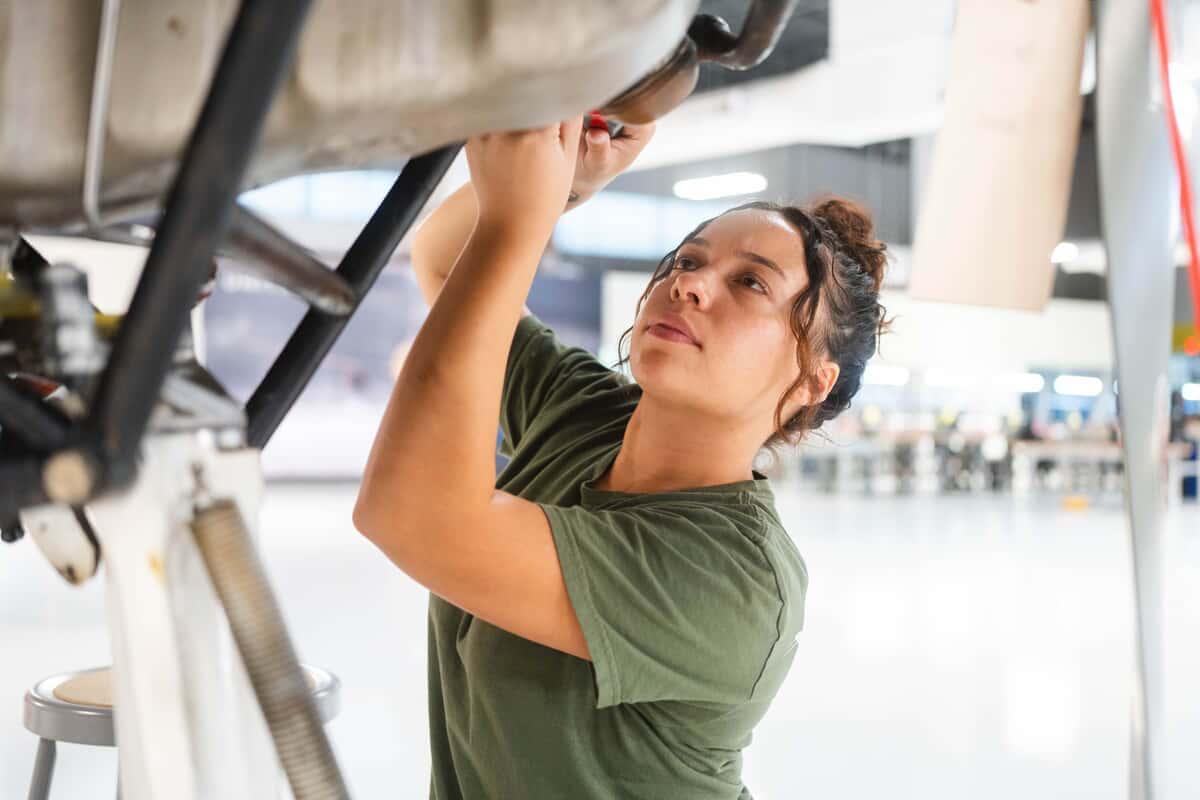
Aviation Institute of Maintenance (AIM) Phoenix opened in 2024. Samayntha “Sam” Sailele made history as their first fully licensed A&P mechanic to graduate —not just as the first woman. She has also received the Jessi Combs Scholarship from the Jessi Combs Foundation, dedicated to helping women defy boundaries in different trades. By the time she had completed her education in aviation, she was already going into interviews. Notably, fields like aviation always face labor shortages, so people consider them recession-proof. The new United contract, in effect since 2024, has raised all mechanics’ wages regardless of the current economy.
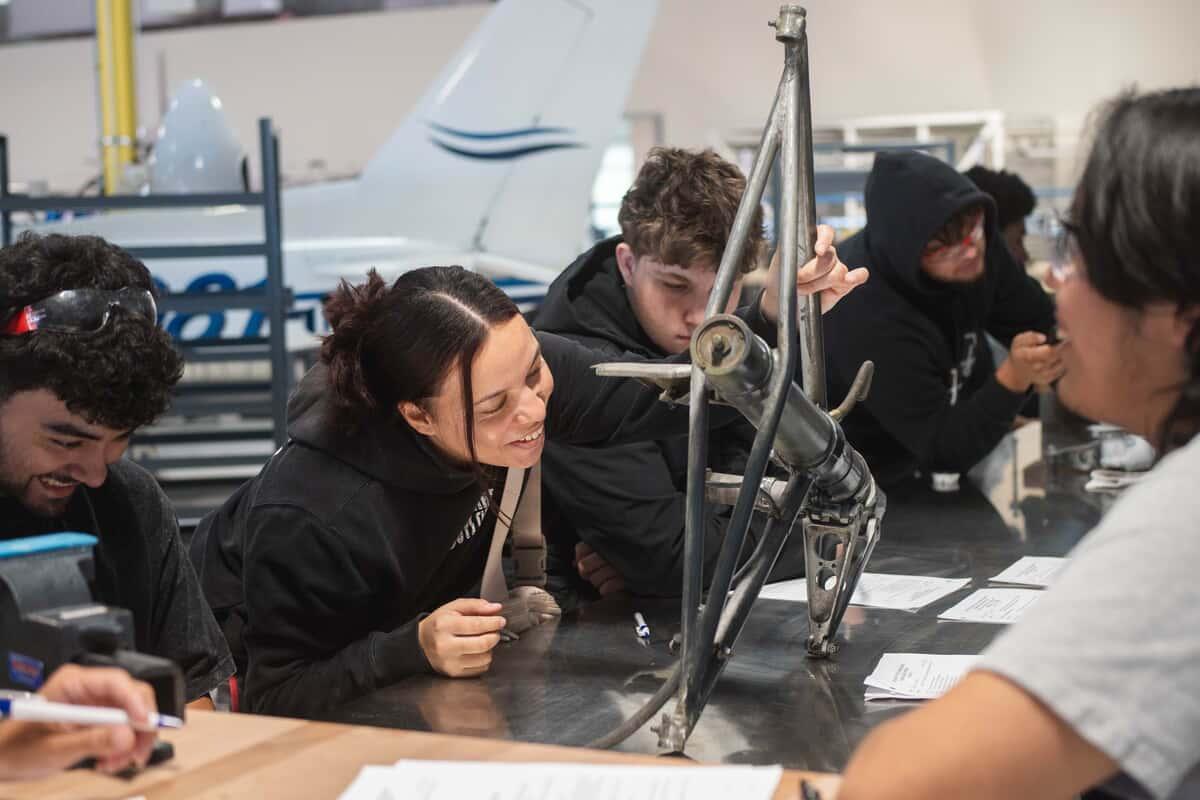
In your mind, when you picture the word “mechanic”, you might still picture a gruff man on a greasy engine, but Samayntha might spend more days of work with her iPad as her only tool to run diagnostics before physically fixing anything. “A lot of people think that we just change tires and throw heavy things around,” Samayntha notes, “but really, it’s a job where you have to utilize your mind a lot.” Her precision ensures that thousands of travelers reach their destinations safely, even if those passengers never see her work. “A lot of people call us the hidden heroes because we are not the face of aviation like a gate agent or a pilot.” She says.
There are more reasons for young girls to choose aviation as their career. Gen Z and younger are turning their focus to jobs that cannot be replaced by computers. Aircraft maintenance, of any kind, is considered an AI-resistant career. The main reason right now is that humans must sign off on all parts of aircraft maintenance legally. As Sam describes, “AI cannot troubleshoot an aircraft. And it never can; it can’t get underneath and crank a wrench or change a tire or change an APU igniter. So this is a field that you do need a physical body down there doing the job. Job security is very real in this field.” AI can write, draw, and even code, but until it can physically bend in every single way or be able to take legal accountability for crashes, no company would replace airline jobs with pure AI.
According to Sam, out of 105 mechanics in Sky Harbor, there are only four women. While she’s honored to be a part of that group, they’re always looking to expand. Achieving that growth requires trailblazers who are willing to lead the way with unwavering confidence. Sam’s own words serve as the ultimate roadmap for the next generation: “As far as being a woman in aviation, believe in yourself, bet on yourself, and be confident in your work. Because the sky is the limit when it comes to the aviation industry, and there’s so much room for us. We just gotta take up the space.”