How Trans, Non-Binary, and Gender-Non-Conforming Professionals Can Navigate Workplace Dress Codes Without Losing Their Personal Style

Pexels




Despite evolving conversations around gender identity, many workplaces still operate under dress codes built around the binary. “Business professional” and “business casual” may sound neutral enough, but in practice, unfortunately, they may still be interpreted through the expectations of what men and women are “supposed” to wear.
For trans, nonbinary, and other gender-non-conforming queer professionals, that can make getting dressed for work feel more complicated than simply choosing an outfit. It can become a daily internal negotiation battle between showing up professionally, feeling safe within the work space, and feeling like yourself. This type of back and forth before even having your first cup of coffee can be particularly uncomfortable, which is why it’s important to find ways to minimize the discomfort and promote feeling good.
According to the Williams Institute, 59% of nonbinary employees have experienced discrimination or harassment at work at some point in their lives. The same report found that 35% of nonbinary employees have changed how they dress to avoid discrimination or harassment. That’s not fair.
“When you consider that the majority of nonbinary employees are under the age of 35, their lifetime experiences of discrimination and harassment are particularly high,” said Brad Sears, Founding Executive Director at the Williams Institute.
So let’s be clear: the burden should not be on queer professionals to make outdated workplace norms more comfortable for everyone else. Employers should be creating inclusive policies. Still, for those navigating the reality of office dress codes right now, there are ways to dress for the workplace while still feeling like yourself.
Read The Policy, Not The Assumptions
The first step is separating the actual dress code from the office’s unspoken gender expectations. Does the policy require closed-toe shoes, suiting, clean lines, or “business casual” clothing? Or does it specifically divide expectations into “men’s attire” and “women’s attire”?
When possible, focus on the real requirements: formality, safety, cleanliness, and role expectations. A blazer is professional. Trousers are professional. A button-down is professional. None of those items belongs to one gender.
Fashion designer Christian Siriano, who has become known for challenging traditional fashion norms, once said, “Clothes are just clothes.” While simple, the statement speaks to a larger idea: professionalism should be determined by whether clothing meets workplace expectations, not by whether it comes from the men’s or women’s section.

Build Around Pieces, Not Departments
The way many workplace dress codes are built still relies on binary thinking. The way you move through the world may not. One way to navigate that disconnect is to stop trying to fit within their thought process and focus on pieces over gender assigned clothing. What fits? What feels good? What helps you move through the day without constantly adjusting, shrinking, or performing?
A personal work uniform can help. That might be wide-leg trousers, an oversized blazer, a crisp button-down, a knit polo, loafers, boots, or a monochrome look you can repeat in different ways.
Brands such as Wildfang, Kirrin Finch, Both & Apparel, Gender Free World, and Universal Standard offer options that can work well for professionals looking for more gender-neutral or body-inclusive pieces.
Think less “this is the one item queer people should wear” and more “this is a starting point.” A tailored blazer, structured button-up, relaxed trousers, vest, or polished knit can become the foundation of a wardrobe that feels both work-appropriate and personal.
Use The Details To Express Yourself
Not every workplace allows for full freedom of expression, and not every trans, nonbinary, or gender non-conforming person wants to dress androgynously. Some people feel most affirmed in highly feminine clothing. Others feel most comfortable in masculine silhouettes. Some prefer fluidity, minimalism, bold color, or something that changes day to day.
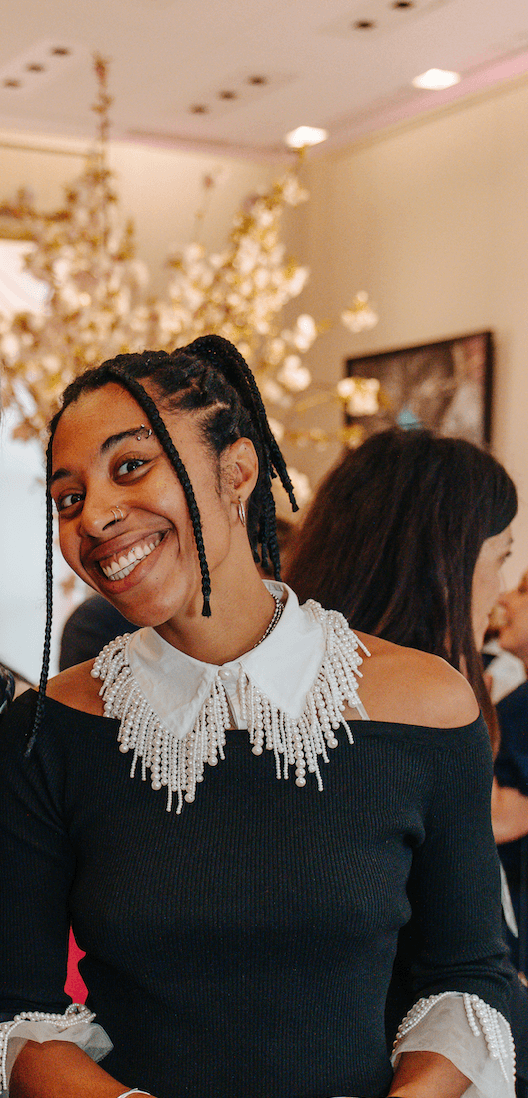
That’s why details matter. Jewelry, glasses, nail polish, socks, shoes, watches, pins, color palettes, hair, and accessories can all become ways to bring yourself into the room.
For some, that may mean a statement earring with an otherwise classic suit. For others, it may mean wearing all black, choosing a soft color, adding a tie, skipping a tie, or finding shoes that feel affirming without breaking the dress code.
As one nonbinary trans person named Scottie told Included Health, “I have had many experiences in which my work dress code was used to stifle my identity and expression.” They added that when they were pushed toward a more feminine presentation, they felt “not only exposed, erased, or hidden.”
That is exactly why clothing is not superficial. What we wear affects how we move through the world and how much energy we have left to do our actual jobs. You deserve to feel like yourself at work, and focusing on the details in an outfit that makes you can help you achieve that.

Remember That Professionalism Is Not Gender
The goal is not to disappear into someone else’s idea of professionalism. The goal is to find clothing that helps you feel grounded enough to focus on your work, your ideas, and your future. There is no single way to dress professionally while still expressing yourself, but by keeping in mind that you deserve to feel comfortable, that the corporate construct is not yours, and that the policy, not the assumptions, need to be followed, you can find a way that works for you.
Workplaces still have a long way to go, but trans and queer professionals should not have to choose between being taken seriously and being themselves. Professionalism has never belonged to one gender. It belongs to anyone showing up with care, confidence, and purpose.