Understanding Voice Bias: Samara Bay Teaches Us How To Sound Like Ourselves





“Talking about voice bias is an entry point for talking about the world we want to live in. We are really talking about how we hold power,” Professor and author of Permission Speaks, Samara Bay, said in an interview with Her Agenda.

Samara’s Background: From Acting To Voice Coaching
When Samara was 10 years old, she decided she would become a Shakespearean actress. Samara finished undergrad with an English degree in dramatic literature from Princeton University. After earning her Master’s in Acting from Brown University, she moved to New York and auditioned extensively. Narrowly missing the opportunity to perform with Shakespeare in the Park, she transitioned from the New York theater scene to become a dialect coach.
Samara worked as a dialect coach for Hollywood movie and television actors, using the power of accent to aid their transformation into entirely different people. But after the productions wrapped, as actors prepared for the whirlwind of red-carpet premieres and press-tour interviews, they suddenly struggled to sound like themselves.
Many of Samara’s clients were women, people of color, immigrants, and queer people. She explained that, especially for performers whose voices fall outside the norm of Western standard English, public speaking can be a challenge. The last thing a successful actor wants is for their point to be lost in translation simply because of American cultural stereotypes. Accent bias and racial bias contribute to a shared sentiment among actors. “My genius is not translating,” as Samara puts it.
During her experience as a Hollywood dialect coach, Samara noticed actors vocally masking: suppressing their emotions, speaking quietly, rushing through speeches, or sounding monotone. “The natural human impulse is to hide when we don’t feel totally safe. There’s a flattening effect that happens,” Samara said.
Samara has worked with a wide range of clients: high school girls, world-famous performers, and major political leaders. No matter who you are, when the stakes are high and all eyes are on you, it is easy to hide and not be fully present. When we feel unsafe or on edge, we accidentally don’t show up, and we lose ourselves.
What Does It Take To Be Fully Present?
Samara emphasized that for celebrities and the general public alike, it is an understandable impulse to suppress our true selves, whether to save energy or feel safe when safety feels uncertain. This observation is not a judgment, but a place of inquiry.
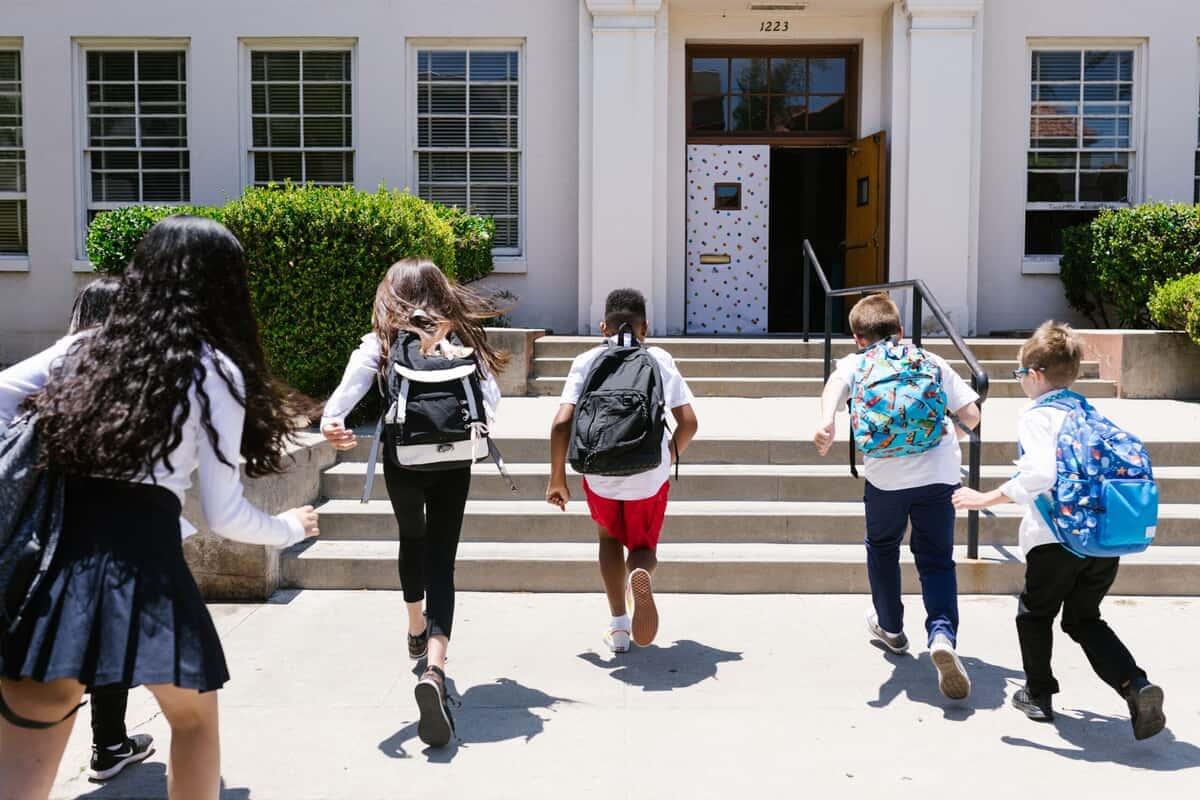
“Dead spaces” is how Samara refers to rooms, from small classrooms and meetings to large conferences and events, where everyone half-shows up. Beginning in childhood education, we often disengage when a lesson doesn’t spark our interest. For example, we learn to memorize subject-verb conjugations to pass tests, but rarely walk away able to use the language outside the classroom. According to a 2018 Babbel study, despite 93% of U.S. high schools offering foreign language courses, fewer than 1% of Americans are actually proficient in a language they studied.

More recent data suggests the gap has narrowed only slightly: according to a survey commissioned by a language-learning company, Preply, as of 2025, fewer than 1 in 10 Americans who studied a foreign language reached proficiency. Data from the Modern Language Association shows that college foreign-language enrollment dropped about 29% between 2009 and 2021, down to roughly 1.2 million students. When a skill is not embodied, taught only within the confines of an institution, and seems to serve no broader purpose or function in a person’s life, it will easily be forgotten — in any field of study.
Too often, the pattern of disengagement continues into adulthood, and workplaces become dead spaces, losing their potential to offer growth and genuine human connection. Disengagement in work environments has quietly become normalized by a society that prioritizes ever-increasing output; quantity over quality. In the United States, leaders and societal norms share the blame, contributing to a broader trust crisis.
Public Speaking Is A Social Justice Issue
While working with actors, Samara began to coach women running for office in the 2018 midterm elections. Samara witnessed firsthand that public speaking is a social justice issue. Voice coaching is not as simple as preparing an actor for a role; the profession reflects societal biases. Studies have shown that racial bias impacts voice training. For example, “De-Colonizing Listening: Toward an Equitable Approach to Speech Training for the Actor” explores culturally embedded speech standards for actors who are othered by a dominant “somatic norm” within the performing arts.
According to Samara, voice bias is a missing piece in mainstream conversations about equity. Voice is rarely named alongside race or gender in progressive frameworks, yet people are constantly judged by how they sound, compared to and defined by an unspoken “standard”. It comes as no surprise that people – especially non-white women and queer people – hide vocally when stakes are high.
Putting Theory Into Practice
Backstage in her hometown of Culver City, California, instead of donning an extravagant Shakespearean gown as her childhood self might have imagined, Samara sat on the floor of the TEDx studio in yoga pants. Minutes before going on stage, she got into pigeon pose to ground herself. Her goal was to channel the audience’s energy, to be fully present, and to take her own advice to clients.
Samara gave her TEDx Talk several months after her father’s death. His memorial was in mid-February, just a week and a half before the talk. “I wanted to fully show up for both milestones, not just muscle through them,” Samara explained.
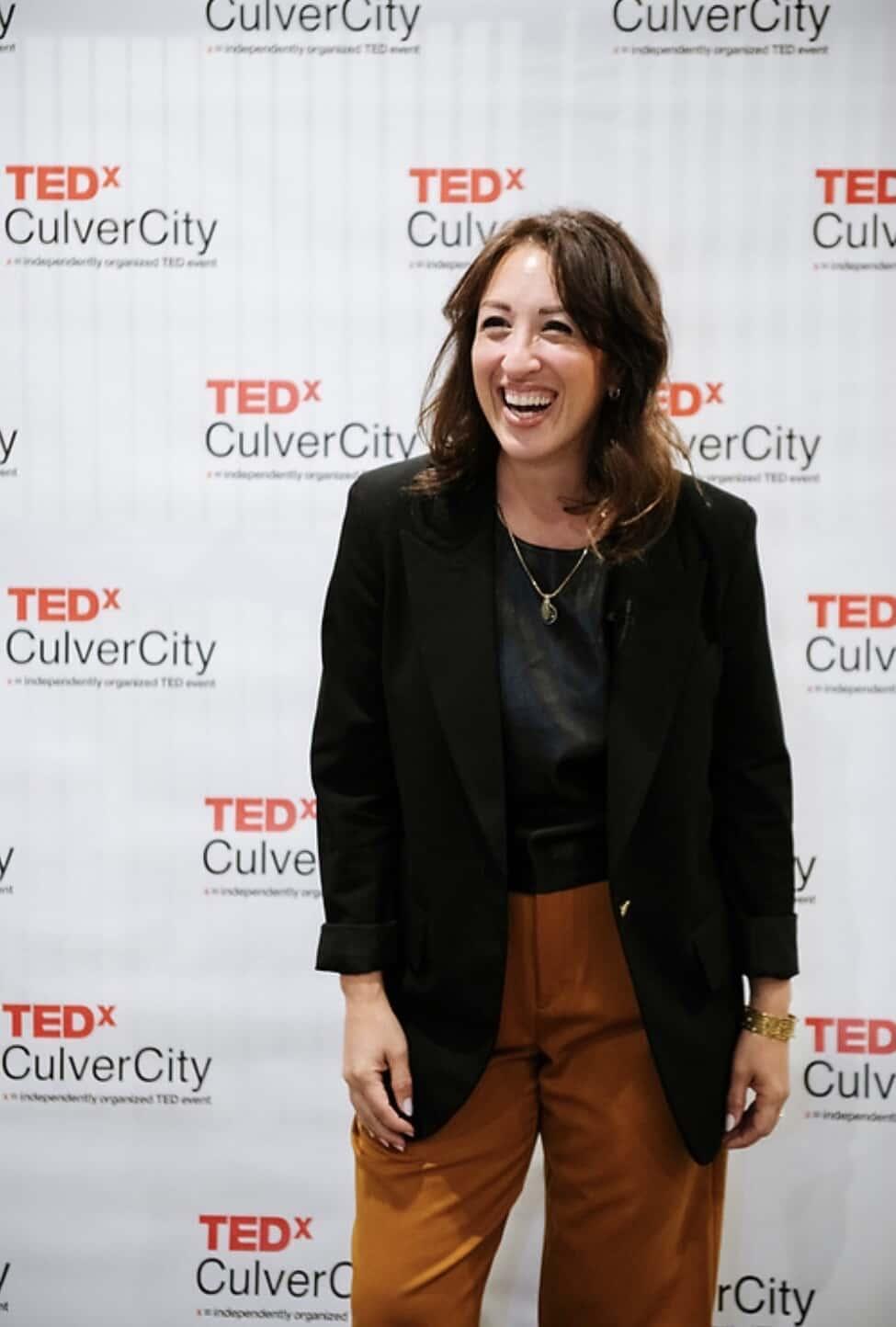
Samara’s TEDx Talk was named Editor’s Pick and will be released on July 21. “I feel really grateful because every time I step on a stage, I become a better conduit of this work,” Samara said.
Watch Samara’s TED Talk: