
Up-And-Coming Women Bandleaders In NYC’s Jazz Scene





On January 29th, 2026, the Board of Directors of Jazz at Lincoln Center (“JALC”) announced that, after nearly 40 years of visionary leadership, Wynton Marsalis will be transitioning from his current role as the artistic and administrative leader at JALC over the next two and a half years. “It’s the perfect time to identify the next generation of leadership,” Wynton, 64, said in an interview.
Luke Stewart, 37, is one of the leading voices in the next generation of jazz artists. Based in Washington, D.C., and New York, Stewart is a bassist, composer, improviser, and community organizer. Stewart is also an expert on jazz philosophy; he is knowledgeable about both the vital history of the jazz tradition and its potential future directions—offering unique insight into the post-Wynton Marsalis era. In 2020, Stewart was included among DownBeat’s “25 for the Future” as an artist who “shapes the artistic landscape”.
In an interview with Down Beat, Stewart revealed how his political ideology shapes his musical practice: “During this time, everything’s up for review—even the fundamental basis of how we perceive music, and some of the oppressive influences that have been imposed on those perceptions,” Stewart said on sociopolitical issues in 2020.
According to Stewart, the traditional philosophy espoused by jazz figureheads like Wynton Marsalis is:
1. Jazz is blues-based music that came from the Black community.
2. Improvisation is a fundamental musical form, the core heartbeat of the jazz genre.
Stewart points to the 2001 Ken Burns documentary film series “Jazz,” which expands on Wynton Marsalis philosophy. Stewart, like many emerging jazz musicians on the scene, agrees that “the core argument is probably correct”, meaning jazz as a movement is something that happened in the 1920s–Louis Armstrong, Duke Ellington—and everything that happened after is something different, is swing or bebop or another subgenre.
Stewart thinks the obvious choice to replace Wynton Marsalis is Christian McBride. McBride is already a well-respected spokesperson for jazz; he served as the Artistic Director of the Newport Jazz Festival for nine years and currently hosts NPR’s Jazz Night in America. However, one major issue being brought to light in the wake of the JALC announcement is the negative impact of what Stewart calls “Wyntonism” and the corporatization of jazz music at large.
In the 1970s and 80s, when legends like Art Blakey and Dexter Gordon were still alive, they didn’t always have steady gigs in New York, so many of them toured in Europe to make a living. That is, until the establishment of Jazz at Lincoln Center. Wynton Marsalis was able to put jazz on the same echelon as classical and Western music by developing JALC, creating a much-needed equity for jazz musicians. “Jazz isn’t this untrained, undisciplined, ‘raggedy’ music; this is what created the saying ‘Jazz is America’s classical music’”, Stewart said.

Wynton Marsalis understandably receives a lot of credit for the establishment of jazz as a serious art form in America with the original creation of JALC. Although Wynton achieved his goal, a lot of people were left out. “He instilled a dogmatic philosophy of what jazz is, which is detrimental to the music,” said Stewart. Stewart believes that real contemporary innovators of music have not received the same recognition from the institution as traditional artists. Many revolutionary jazz artists may have been recognized as innovators in their communities but couldn’t get support from JALC.
JALC and places modeled after it are what Stewart would call “Disneyland jazz”, iconic venues where people are going for the jazz experience, not necessarily going to see a specific artist, for example, The Vanguard, The Blue Note, The D’jango. Smaller, underground venues tend to attract more experimental or revolutionary artists. Stewart explains that old arguments about “inside vs. outside” traditional jazz are slowly being melted away, and musicians are playing everywhere.
“At the end of the day, it is community. It is the people and the position that make up communities. It’s very hard to get to the music in New York even if you are from here,” said Stewart. Once a jazz musician gets to New York, even playing in the underground is a privilege not accessible to most people. It’s the place that matters for musicians and affords many opportunities for dedicated, hardworking people.
Meet The Rising Stars
Tyreek McDole and Vanisha Gould are two young working musicians currently redefining NYC jazz. Tyreek recalled when he first picked up the trumpet in band class: “I was shaking in my chair. Making music looked like a superpower to me, especially improvisation,” he said.
Tyreek moved to New York after graduating from Oberlin College & Conservatory. He knew he wanted to meet Brianna Thomas and other musicians he admired: “I’d follow them around like a lost little puppy,” he said. Attending jam sessions around town is one way Tyreek and Vanisha met other aspiring jazz artists. They both play at the beloved Small’s jazz club: “Once you get that Small’s gig, bingo,” said Vanisha. The gig starts at midnight, and people hang out until around 6 am. Tyreek was there every single night, and one night he met Vanisha. “That’s big sis on the scene,” Tyreek affectionately described Vanisha.
Tyreek met Wynton Marsalis when he was 18 years old. “He was there to globalize jazz. He created an institution specifically for jazz,” Tyreek said of Wynton. Tyreek acknowledges the opportunities that JALC has afforded him. Through the JALC, Tyreek has been able to travel and play around the world. Recently, Tyreek was on Réunion Island off the coast of Madagascar. “That’s the closest I’ve ever been to Africa. I learned a new language; I got to see more of the world through art,” said Tyreek.
Vanisha Gould: Bandleader & Female Jazz Vocalist
Vocalist, composer, and bandleader Vanisha Gould is in many ways the opposite of Wynton in terms of jazz philosophy. Raised in Simi Valley, California, Vanisha’s practice aligns with the Stewartism of the future, favoring experimental production strategies and innovative storytelling. Vanisha recently collaborated with Wynton’s younger brother, drummer and vibraphonist Jason Wynton, at Dazzle in Denver, Colorado.
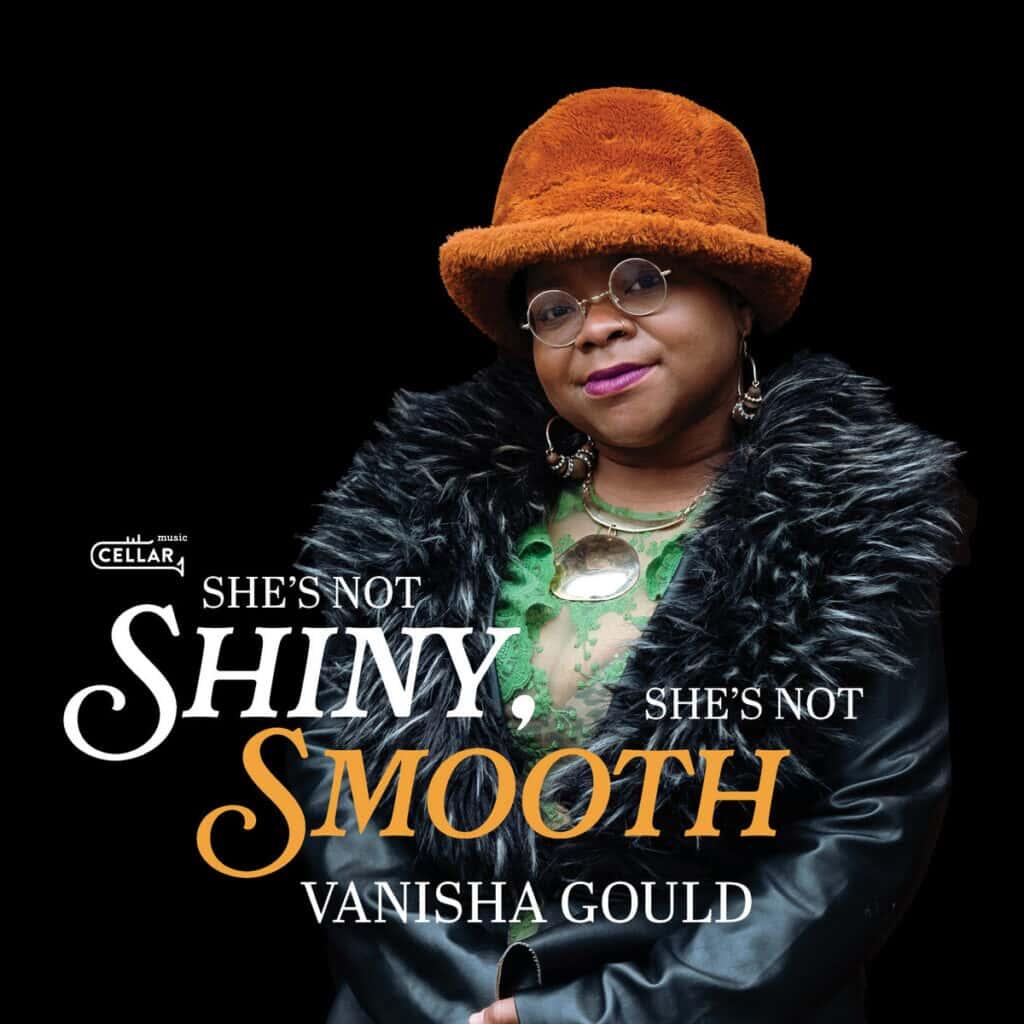
Vanisha weaves poetry and spoken word into her set lists. “I love stuff intended for the audience to hear the lyrics,” said Vanisha. Recently, her journal entries have informed her work, allowing her to build long-form stories and character arcs through the music. Although she loves The Great American Songbook, Vanisha is not afraid to break tradition. Vanisha’s debut album is called She’s Not Shiny, She’s Not Smooth, an ode to imperfection. “That’s my baby,” said Vanisha.
Perhaps what makes Vanisha so refreshing is the accessibility of emotion in her work. Her lyrics are easy to relate to as she speaks to universal human experiences: love, pain, loneliness, forgiveness, regret, longing, and growth. Vanisha’s jazz philosophy cannot be summarized in a bullet-point list because her musical storytelling is not restricted by pre-established standards of what jazz should be.
Vanisha’s creative process is inspiring to say the least. The way she talks about creating makes it feel like the most magical, wonderful thing in the world. Vanisha improvised a melody mid-interview as if she couldn’t keep it inside anymore. “It’s like throwing ideas up in the sky and seeing what comes down,” said Vanisha. Vanisha also speaks on the significance of being taken seriously as a female jazz vocalist: “There was a room full of guys listening to me. I’d say ‘let’s start with the baseline,’ and we did!”