Why Being Afraid Of AI Is Rational And What To Do With That Fear

Pexels




Yes, AI has redefined the modern professional landscape. Many fear it is “coming for” their jobs, but it isn’t, at least not necessarily. Re-framing AI as a tool to help you in your career, rather than one trying to replace you, can help put you at ease and focus on what truly matters: what you can bring to the table. 71% of Americans fear AI could cause permanent job loss. Yet, the World Economic Forum sees the shifting global trends in tech and other industries as sources of opportunities. In fact, they anticipate the creation of 78 million new jobs by 2030. They do state that upskilling will be needed to prepare the workforce.
A recent National Bureau of Economic Research survey found that around 70% of firms actually use AI, but 80% of them report no clear business benefit from doing so. Additionally, you may be surprised to find that out of the two-thirds of leaders who use AI, they only do so for an average of 1.5 hours a week.
It is estimated that nearly13,000 jobs were lost to AI in 2024. Scary, I know, but it’s also estimated that nearly 120,000 jobs were created by AI that same year. You’re not wrong to be scared by AI; everything is telling you to be, and you may benefit from looking at the facts and practicing intentional professional practices to ensure you advance with the times rather than being left behind by them.
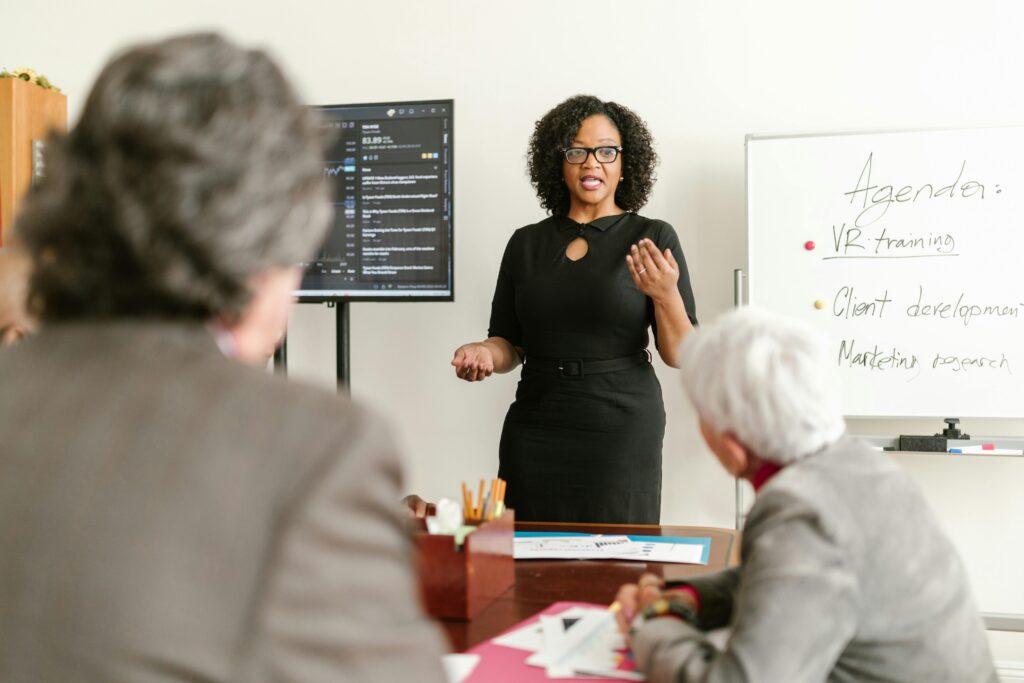
Here are some things you can do to stay on top of the AI fear:
Recognize That Soft-Skills Are Some Of The Most Valued In 2026
A recent Forbes article pointed out that while AI will continue to gain significance, the skills employers are placing the most importance on in 2026 are soft ones, such as “interpersonal communication, empathy, creativity, teamworking, and leadership.” That’s a great sign because these are skills only humans can develop and cultivate. Read our article to learn more.
Learn How To Direct AI, Not Compete With It
“What will be the difference between a person who becomes more capable and powerful with AI versus those who will be withered and consumed by it? Curiosity,” said Mark Schaefer, globally recognized keynote speaker, educator, business consultant, and author, “If you’re a curious person, AI is an intellectual wonderland. It will feed that curiosity and help you bloom into a bigger, bolder, wiser person.”
As we saw above, even leaders are using AI, but they are doing so sparingly. Finding the line between relying on AI and utilizing it to speed up certain tasks in order to free up space and time can help improve your productivity and creativity.

Shift From Fear To Agency
Fear is natural, especially when it comes to something as broad and relatively unknown as AI. One of the best things you can do to combat this fear is to match it with your adaptability and resilience. Any major technological advancement in the past has brought some level of fear along with it: think the printing press, the industrial revolution, the personal computer, the internet, and even ATMs. Now think of all the things these advancements have brought us: mass literacy, mass production, process automation, access to knowledge, and bank tellers being able to focus on customer service. History reminds us that disruption is not new. Each wave of innovation eliminated certain roles while simultaneously creating entirely new industries.
Those who thrive during technological shifts experience fear, of course, but their response to it is what distinguishes them from the rest. Instead of running away from or ignoring change, they learn, they experiment, they adjust.
“Artificial intelligence is not a substitute for human intelligence,” said Fei-Fei Li, Co-Director of the Stanford Institute for Human-Centered Artificial Intelligence, “it is a tool to amplify human creativity and ingenuity.”
AI is no different than any other major advancements. It may automate repetitive tasks. It may reduce the need for certain roles. But it also increases demand for judgment, creativity, oversight, and human connection. It raises the value of distinctly human capabilities. By realizing this, you can change your fear into a catalyst for adaptability and benefit from the changing times.