








With over three decades working in the media industry, entrepreneur, screenwriter, author, and former entertainment executive Lorisa Bates is a storyteller first. Her innate creativity and passion for entertainment led her to a successful career as a senior executive at some of the most notable television media companies, overseeing the greenlight, development, and production of over 85 movies, TV series, short films, and music specials. But as her professional journey took shape, Lorisa’s love for writing and storytelling never wavered.
“Creativity has always been a part of my DNA.”
Lorisa’s professional experience in greenlighting film and TV projects and helping writers and producers develop their content ideas, along with her eye for great storytelling, became the foundation for the next chapter of her career. Lorisa is the Founder and CEO of Batesville Media LLC, her boutique entertainment and media technology company. Batesville Media LLC houses her film and series production company, Route 693 Productions™, and her suite of digital products, B-Ville Media™. The latest addition to her business, the B-Ville Launch Pad Suite™, will launch as a suite of AI-powered products aimed at helping independent filmmakers, producers, and creators through the development process. This end-to-end platform, set to launch in late 2026, walks creatives through the full development lifecycle, from a raw idea to a project ready for distribution, backed by her decades-long professional experience and lifetime of personal passion for storytelling,
Lorisa discusses her career journey as a veteran media executive, what she learned from being a key decision-maker in the greenlight and development world, her inspiration behind creating an innovative suite of products to help creators navigate the development process, and her thoughts on balancing being a creative while making a project a commercial success.
Her Agenda: What inspired your career path in the media industry and what was your own unique journey like?
Lorisa Bates: I think it really starts in your childhood. I’ve always been someone who loved media. I love entertainment, but I’ve always loved being behind the scenes. I had three other siblings, but I’m the youngest of four, so there’s a four-year age gap between my sister and I. And so, I was really a loner. During that time, growing up in a very rural area in Virginia on a farm where I spent a lot of time by myself, I used to create characters. I would come home from school and would see my mother and my grandmother watching soap operas. They would be all about the emotion, and I started observing that. They were so invested in [the show], and I thought, that is something that I really would like to do. I’m a writer, so I would also write poetry and write short stories. The best way to describe it is, I’ve always been a storyteller.
When I graduated from high school, I got into the University of Virginia, and while I was there, I had to deal with adversity. In my second year of college, both my parents passed away. One of the things that I would do is, use my creativity. I would always write. I would journal. So it has always been a part of my DNA to be able to figure out the best way to fix issues or fix problems.
While I was [in college], I wrote a play when I was taking a playwriting course, and it did really well where I actually had people that were interested in licensing it, but being a 21-year-old not having the guidance to figure out the next steps, it didn’t go anywhere, because I didn’t really know what to do, and there was no one there that could tell me how to license [the play] and how to get it into the different schools. And so that’s how I started.
I graduated from college and moved up to New York. Before I got up to New York, I had interned at Showtime Networks while I was in college for two summers, so I’d been familiar with New York and with being in the media. I ended up working [at Showtime] for about six months, but then I left and started working for Coca-Cola, but never gave up my writing creativity. So I started taking coursework at different organizations and nonprofits in Harlem, one being the Frank Silvera Writers’ Workshop, where I started to hone in on my playwriting craft. I then went to The New School University [in New York], where I got my M.A. in Media Studies with a concentration in film production, and I absolutely loved it. I got a job back at Showtime and worked full-time in the programming department and went to school full-time. I’ve always had this dual track because I never gave up my writing, but the writing then shifted from writing plays to wanting to do documentaries and produce content.
[Showtime] was producing original content and were probably producing maybe 50 movies a year and shooting them mostly in Canada. I would take these movies, research them, then review them, and I’d have to create trailers that would go to the salespeople who would go out to their clients to show them what the movies were about. Then, it expanded from there to working with the programming development team that was located in LA. I then did content strategy, and I started scheduling different projects. I was always using the creative piece in addition to doing the operations and the business, and the strategy. I was always able to use my creative side.
Her Agenda: How did you move from a programming and content strategy role in the media industry to becoming more focused on developing and crafting creative projects as a development executive?
Lorisa Bates: I worked on, during that time, the Black Filmmaker Showcase. I was one of the people that actually had Ava Devernay’s first short film. That was her very first film, and it was a part of the filmmaker showcase. It was really cool because you get a chance to see all of these different filmmakers. I had to put together the strategy, the contest, and how much money was going to be made off the [the showcase]. The winner at that time was a big deal. It was like $25,000 to do a short film, and they were to use that money for their new project and would be highlighted the following year. We then expanded [the Filmmaker Showcase] to Hispanic Heritage Month and also had one where we worked with NYU student filmmakers. We were able to create all these different initiatives. That was another added piece: being able to highlight filmmakers at the beginning of their careers.
By the time I left Showtime, I had gotten to a place where I was doing more strategy and more operations, which I loved, but I started writing, and by the time I left, I had actually written my first book. I then left Showtime and started at BET under programming. I would go down to Washington, D.C from Monday through Thursday and would work with the original programming team, sales, operations team, and the technology team, making sure that we were able to get all of the program formats consistent. There was a lot of strategy that went into that.
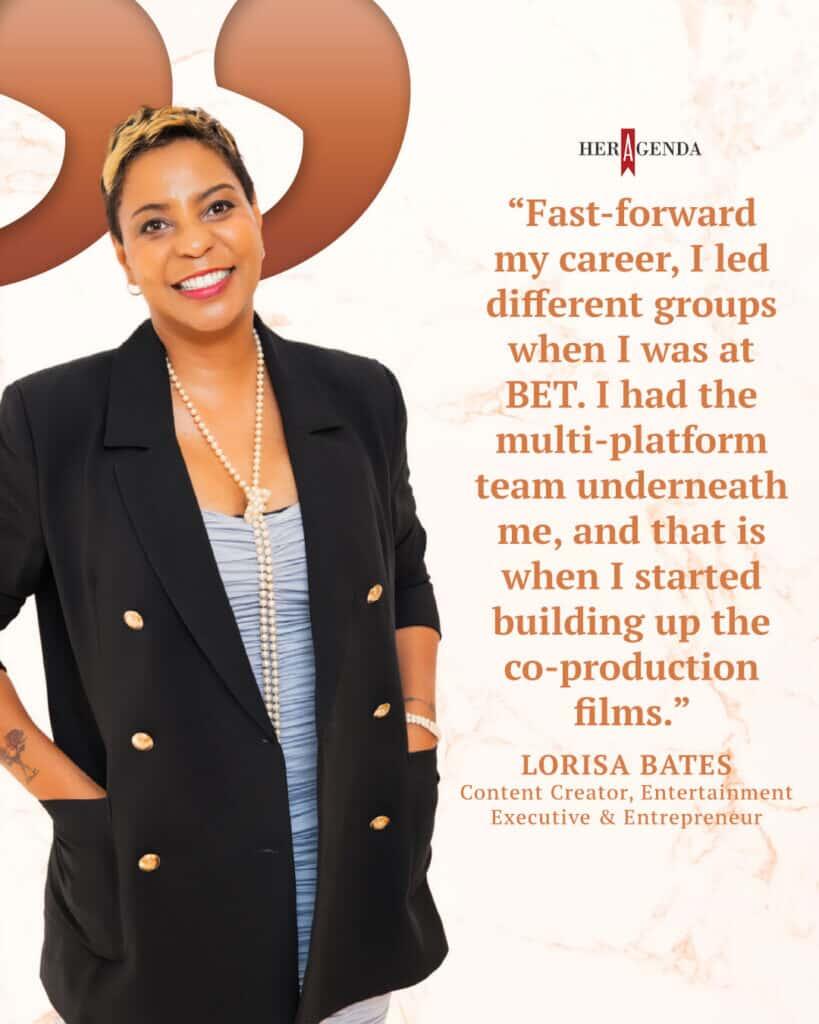
Fast-forward my career, I led different groups when I was at BET. I had the multi-platform team underneath me, and that is when I started building up the co-production films. At the time, BET really didn’t have a lot of money to put into bigger titles. Additionally, people didn’t understand the lifecycle of a project. We had to figure out a way that we could finally get these movies that would finally go through its lifecycle. I remember going to my boss at the time and saying, ‘If we put in some money and we gave [creators] a little bit of resources, we could actually create better content.’ That’s how I actually got started [working] with co-productions. [The creators] also had our resources in terms of me reading the scripts and giving them notes. And again, it goes back to my experience as a writer. When I had written books, I hired an editor, and she said to me, ‘Lisa, you think this will be good, or it could be great. What do you want?’ And I said, ‘Well, who doesn’t want great? I want great.’ So she became my development editor. I learned a lot from her working with her hand-in-hand for four or five months. That is how I used that ability to transition to being a development executive at BET. Once we launched BET+, they needed a lot of content, and I was able to do this at a very minimal cost because we spent so much time making sure that the scripts were done. A lot of the producers now have moved on, and they’re doing bigger and better things.
Her Agenda: Your multiple decades of experience in the media industry and creative passions have led you to start your own business, Batesville Media LLC. Did entrepreneurship always interest you? How have the skills you built as a former media executive prepared you for running your own business?
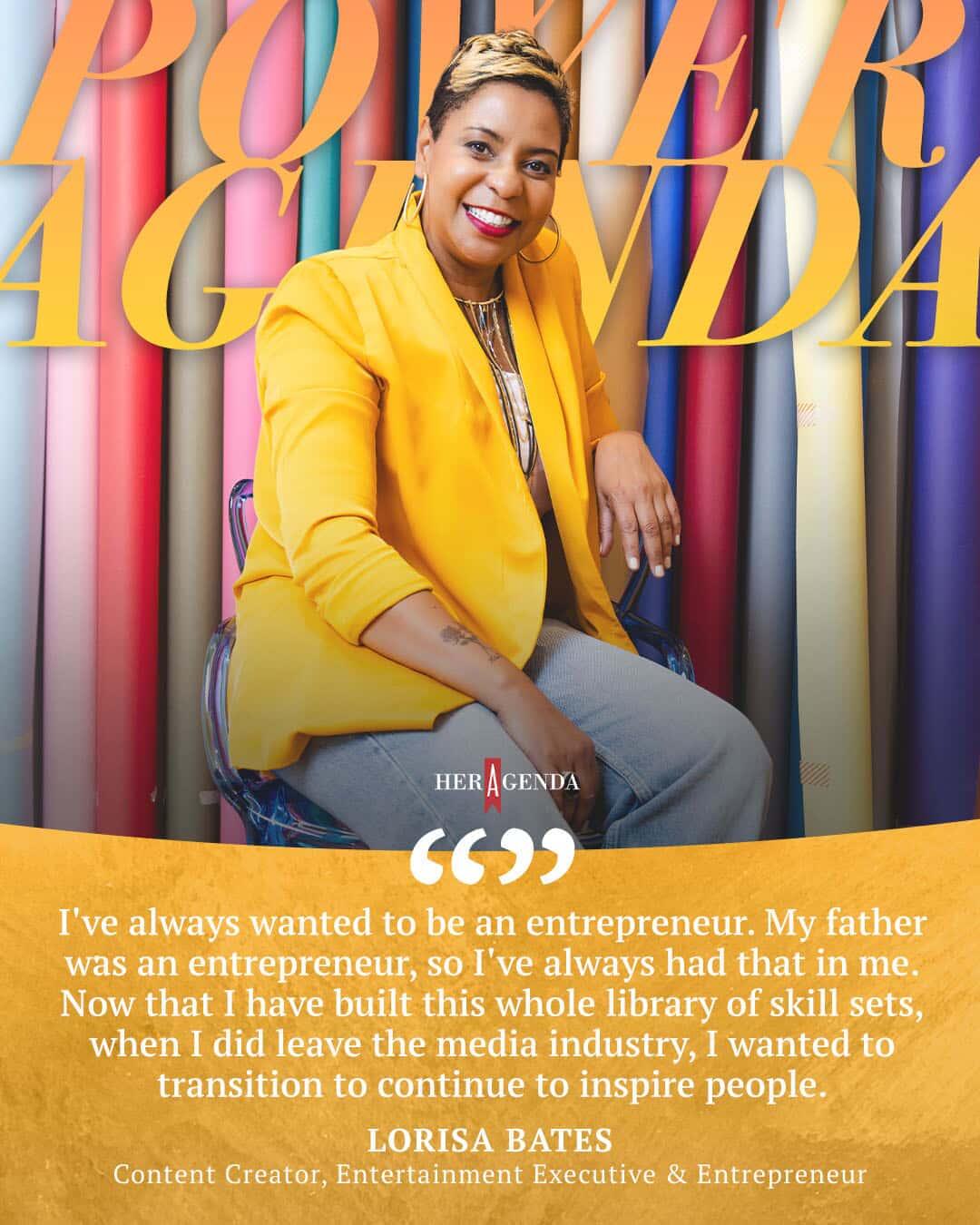
Lorisa Bates: I’ve always wanted to be an entrepreneur. My father was an entrepreneur, so I’ve always had that in me. Now that I have built this whole library of skill sets, when I did leave [the media industry], I wanted to transition to continue to inspire people, but I also wanted to continue to be in the world of media.
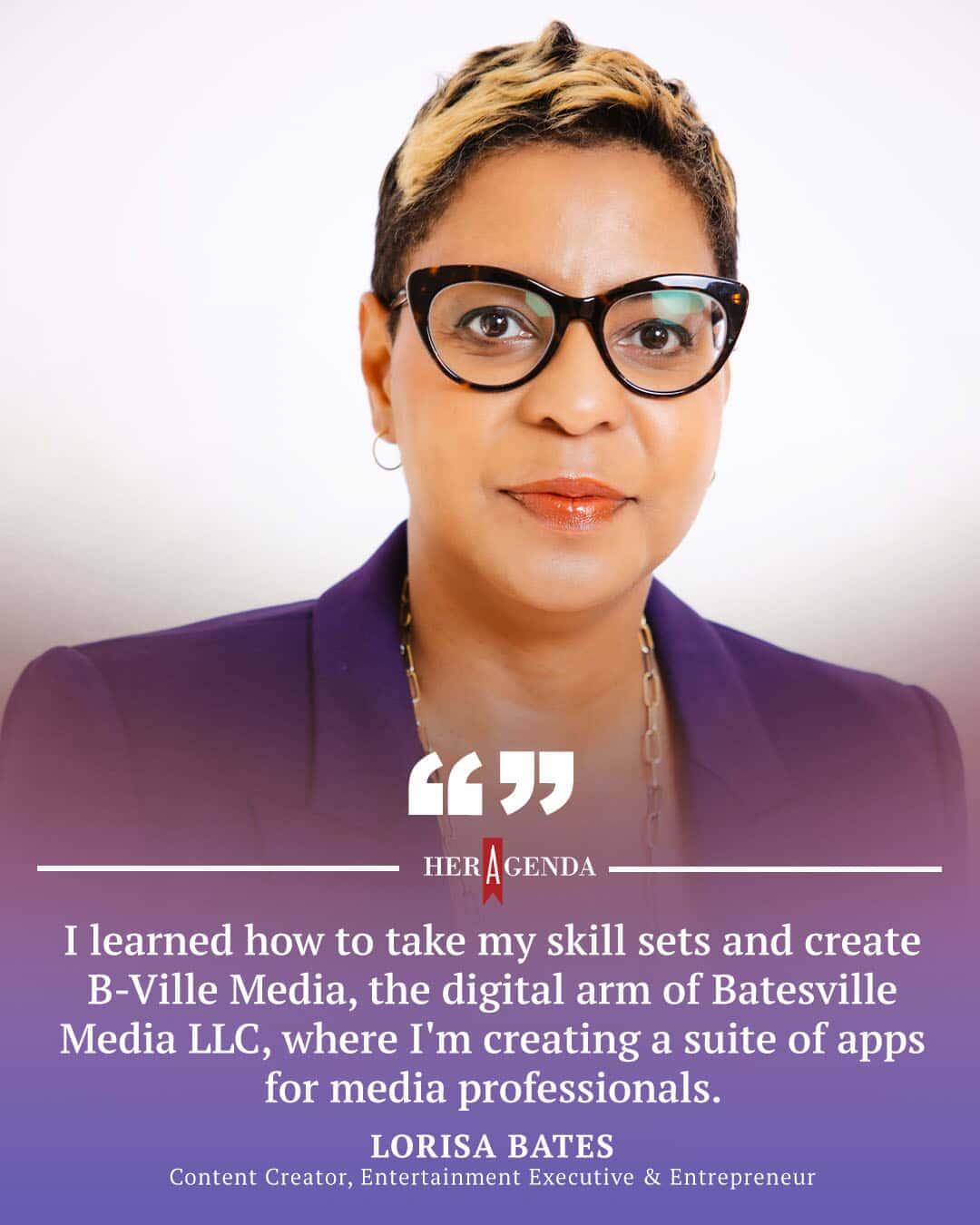
I’ve also got great partnerships. It’s all about collaboration. I also currently consult with individuals or businesses on what’s happening in the industry. I like to say I am development-agnostic. I learned how to become a vibe coder and am about to become a certified vibe coder. I learned how to take my skill sets and create B-Ville Media, the digital arm of Batesville Media LLC, where I’m creating a suite of apps for media professionals. It’s end-to-end. I’ve used my 30 years of experience and all of my personal experiences and skill sets to now incorporate that into these apps. With ChatGPT or Claude, you’re going to get something generic. I’ve created my own chatbot called Cooper. Cooper is going to help guide you through your project. It’s your collaborator to help you get to the next level without having AI take over.
Her Agenda: What are some of the biggest hurdles you’ve seen storytellers and producers face when looking to turn their idea into a developed project, and how did that inspire the B-Ville Launch Pad Suite, your new end-to-end creator platform?
Lorisa Bates: I want to help in masses where people are excited about learning [the business]. They’re taking these courses, but they don’t know the next steps. There’s so many layers to this because it’s really about the industry, and there are gatekeepers. So [the B-Ville Launch Pad Suite of products] level sets it where, if you’re really interested in learning and upgrading your craft, these are the apps that will help you to do that. The B-Ville Launch Pad Suite of products are AI tools that are going to help guide you through your process without feeling like, ‘I don’t know what else to do,’ but it’s not going to take over. You can pull from it, make the changes, run it through the system again, get you a better score, and it works. All of these processes are things I’ve seen from the industry side.
The B-Ville Launch Pad Suite is a tool to use to help you get to the next level. That is one of the reasons why I want to help as many people as possible. You’ll have this set of tools where, if you spend the time to use it, you will see your work improving. AI is not going anywhere, but you as the creator can decide how you use it.
I’m using both sides of my brain: one, as a development executive asking, ‘What do I want to see from this output?’ and then two, as a creative, ‘What do I want to see from the information I’m getting back?’ I’m using both and putting them together in order to now have a product backed by 30 years of experience. I also have the marketing process and the strategy [in the suite of apps], all these things that you need to make [your project] profitable, sellable, and commercially appealing.
Her Agenda: What are you most excited about regarding the upcoming launch of your B-Ville Launch Pad Suite of products?
Lorisa Bates: The Launch Pad Enhancer. I’m most excited about that [feature] because if you already have a project that you just need help developing, it has all of the elements that you need to be able to create a kick-ass project. If you have a project, you can upload it and you’ll be able to get coverage on it. You can get a project assessment scorecard so you can easily look at that and say, ‘Okay, my character development needs work, but my world building is on fire.’ I love the fact that [the Launch Pad Enhancer] has a whole development lab that’s there. If you are an author and you want to convert your project to another format, it will give you an adaptation map. It tells you the hard truth and the areas that need to be developed. It will give you the real deal.
It also helps with the actual packaging, so it’s end-to-end. So I think out of all of [the apps in the suite], the Launch Pad enhancer is really the most exciting of all of them to me, because you can develop a project even from a concept.
Her Agenda: What does it look like to balance the creative and business side of the development process, and what personal and professional advice would you give a storyteller looking to balance their creativity as a filmmaker with the business of making their project commercially viable?
Lorisa Bates: It is very important as a creator to ask the question, ‘Who is your audience?’ That is going to dictate how you move forward. If you are someone that just wants to create a very abstract project, it might be the most beautiful thing in the world, but it’s not going to be commercially viable at all. You have to think about why you’re doing this and what’s the purpose behind it. Do you just want a proof of concept to show that you’re creative and that you can be the best writer or the best director, etc., or are you creating this because you want to sell it? I think it’s really important to prioritize the why.
You have to research and find out some of the things that the development executives are looking for. That’s very easy to do. You can look at any particular network, and you can see what their top 10 projects are. If you’re looking at the streaming world at Hulu and Amazon and at Netflix, even if you don’t do any other research, you could go there and figure out the top 10 or the top 20 [shows] that keep popping up. This is what people want to see. You’ve got to give your audience what they want.
What is your driver? What’s driving you to create? Talk about the why and figure that out. Once you do that, you then work with people that know their craft. You have to know what’s happening right now in the industry and how it is shaping. Right now, this is a creative’s market. You don’t need to have Hollywood to tell you that you’re good or not. You can go directly to the people, direct-to-consumer. But you also have to research and figure out who your consumer is. You have to be able to answer that as you move forward and navigate through this industry.
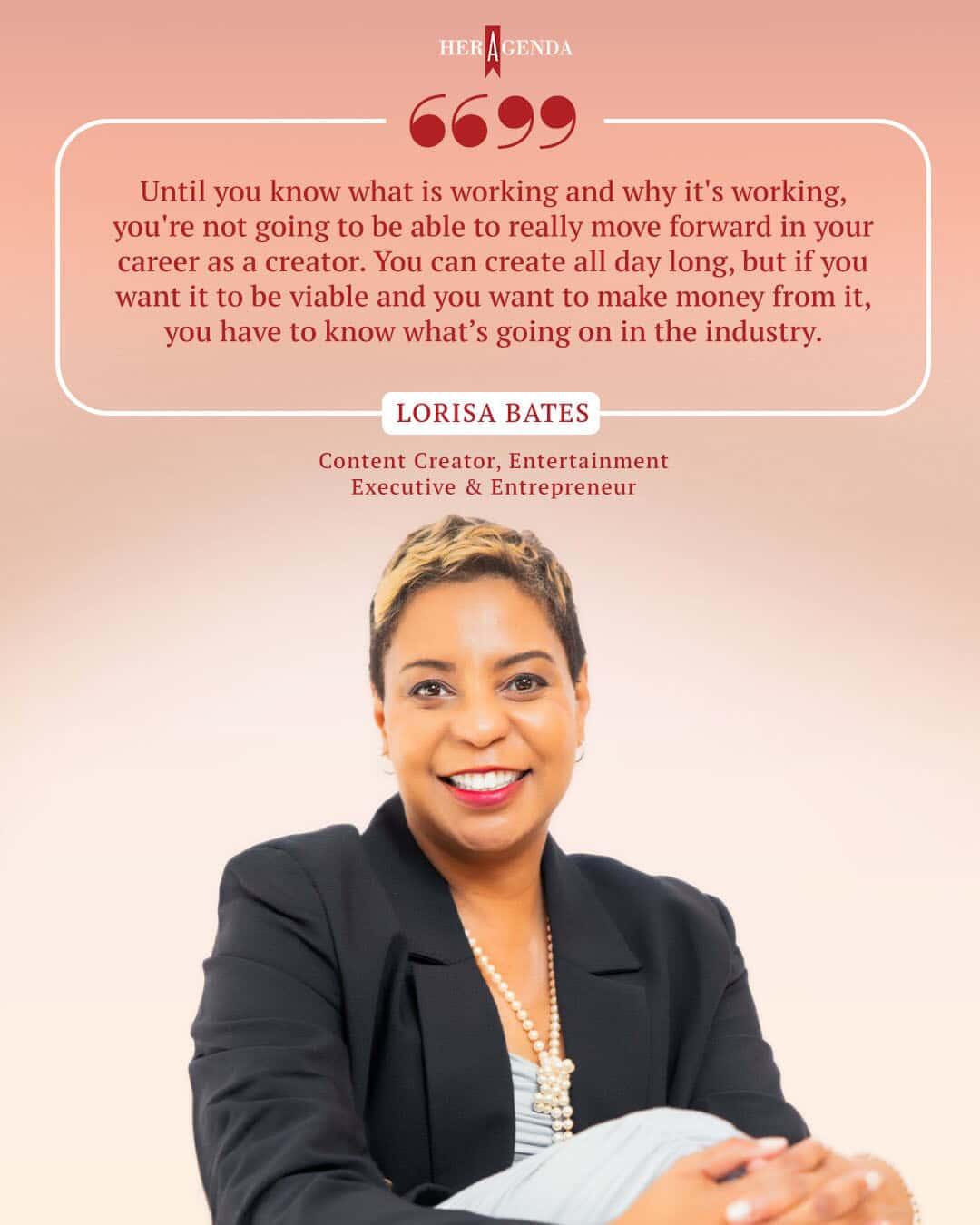
People say it’s a tough market because you still have people who want to have their movies in the theater. They want to see it on streaming. They want to see it on different networks. But until you know what is working and why it’s working, you’re not going to be able to really move forward in your career as a creator. You can create all day long, but if you want it to be viable and you want to make money from it, you have to know what’s going on in the industry.
You don’t have to do it by yourself. That’s why you have people building these tools like the B-Ville Launch Pad Suite. They’re making it easier to be able to create some really great projects.
[Editor’s note: This interview has been edited for length and clarity.]