How Peer Mentorship Circles Can Strengthen Support Networks





Traditional mentorship looks like asking for guidance to better yourself from someone who is usually older and more established, based on hierarchy. It spans across academic careers, professional careers, and even personal development. But instead of dealing with power dynamics to reach another level, women are throwing out the traditional model. This shift has caused a rise in the desire for peer mentorships. Women are creating intentional peer mentorship circles among peers who are navigating the same questions about growth, money, career, boundaries, and next moves.
What Peer Mentorship Circles Look Like
Girl Connected founder, Lola Plaku, told Forbes that, “the relationships that they build with mentors and experts in their fields are important, but the community they build with each other is just as significant.”
Peer mentorship circles exist because women need something different than what traditional mentorship offers, which is a system of waiting for approval, access, and availability from someone more established. But it’s no longer about hierarchy level, and more about shared experiences. Today’s society focuses on relatability, and having support from someone who can relate to what you’re trying to accomplish or what you’re going through is key.
There is value in other things besides depending only on someone’s expertise. These connections make support more transparent and authentic. Whereas traditional mentorship could make one feel behind, out of place, or extremely strict. Having support networks allows women to feel encouraged, get advice from someone who might’ve recently gone through a similar situation, and have someone there to hold them accountable to their goals.

Sources: Pexels
Peer Mentorship Circles Hold Various Roles
“It really is about networking across,” says actress, writer, and producer Issa Rae in a NewsOne interview.
Support isn’t a one-sided thing. Collaboration is what drives peer mentorship circles to work, and there’s a role every woman can play to have a functioning peer mentorship circle. It really boils down to having community. Your community can form from “local [community] clubs, volunteering, participating in online groups, or simply meeting in person.”
There are some key roles that every peer mentorship circle should have as a foundation. There’s often the “teacher,” someone who models the goal or life you’re striving for, who can give you wisdom along your journey. Then you usually have the “trusted companion,” someone who listens to you and can hold you accountable and encourage your elevation. And you typically have “mentee,” where you can guide and support one as they develop. All of this is a reminder that no matter what stage you are in your professional or personal life, there’s value you can bring to any setting.
Why Women Are Turning to Peer Support Now
The “American Dream” that was once sold to Millennials and Gen Z’s, according to a Wall Street Journal-NORC poll, shows that “46 percent of respondents answered the American dream once was true but not anymore.”
Women are navigating between lay-offs, career pivots, and jumping into entrepreneurship, which reflects a bigger reason for the need for peer mentorship circles. The workforce has become unpredictable with a tough job market, experiencing burnout, and job security is hard to sustain. There is no straight, cookie-cutter path to follow anymore, and women need support in real time as major things are happening in their lives that affect each other.
Research from social psychologist Shalom Schwartz defines “values as emotionally charged beliefs expressing specific or general interests developed in all human societies to satisfy three fundamental needs of individuals and communities.” The fundamental needs Shalom references are relationship building, taking care of your individual well-being, and being there for others in your collective. This suggests that women are highly motivated by support systems and not a hierarchy level when it comes to making sense of their professional and personal choices. It’s not only shared experiences, but it’s trust and collective growth amongst each other.
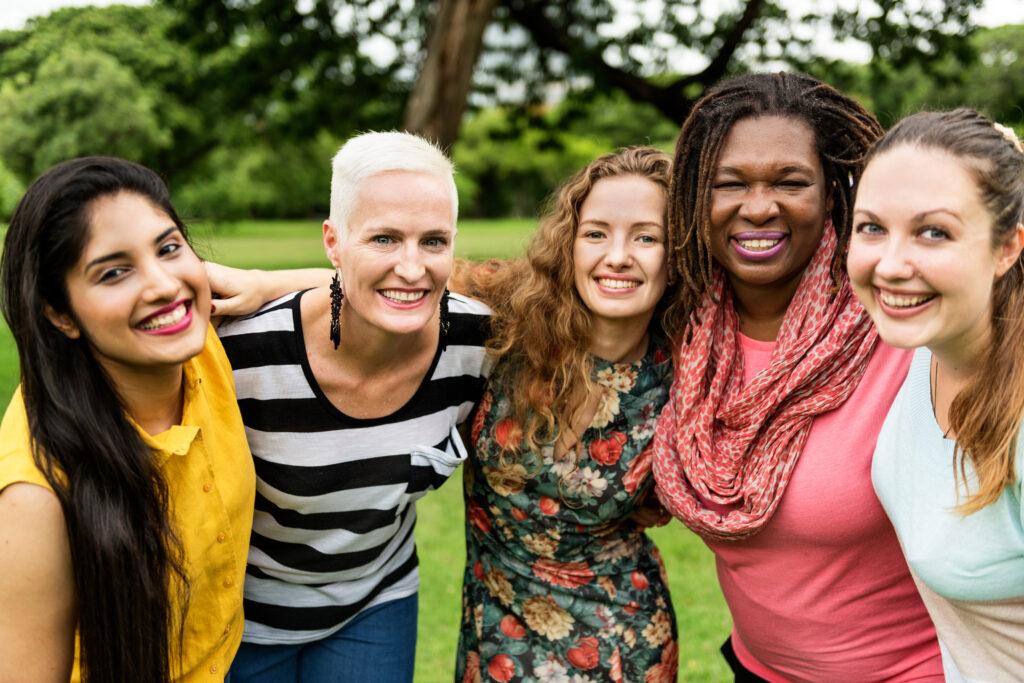
Group of Women Socialize Teamwork Happiness Concept
Mentorship Has Always Been About Access
Whether women follow the traditional mentorship model or gravitate towards the popular alternative of peer mentorships, the same thing remains: mentorship represents access. Before, it was all about getting close to higher-ups for career growth, like a promotion, or having inside knowledge and open doors that not everyone can access. The difference with peer mentorship is that instead of waiting, women are creating. These mentorship circles are a support system where women share job opportunities, referral recommendations, share knowledge, and connect others whom they might’ve come across if they went through a traditional route.
Peer mentorship doesn’t replace traditional mentorship. It fills the gap where women can emotionally and practically navigate their way through their life’s journey with authentic, genuine support and encouragement.