Sistas In Sales Summit 2026: Top Takeaways For Businesswomen





Community. A word that describes what attendees of the Sistas in Sales ninth annual summit in New York City on September 21st say they came to build while gaining knowledge to help them further their careers.
“When I first came to the Sistas in Sales summit about six years ago, I was almost about to leave sales because I was feeling so discouraged. I didn’t see anyone like me,” summit attendee Ethel told Her Agenda. She said she continues to come back to the event to be inspired and connect with other Black women in the discipline, and learn how to better leverage new technologies to advance her career.
Sanya, an account executive at BET Networks, echoed that sentiment. “It’s nice to be in the room with like-minded women,” she said. “I think that we’re leaving with actual steps and things that we can take into the future.”
Beyond networking, attendees of the Sistas in Sales summit gathered to hear from industry leaders on topics including AI, career upskilling, and personal branding and reinvention. As well as some of the harsher truths about success from model, actress, and entrepreneur Eva Marcille, who was the keynote speaker at the event.
When asked what the highest cost was for her career by Sistas in Sales’ founder and CEO Chantel George, Marcille said “loneliness.”
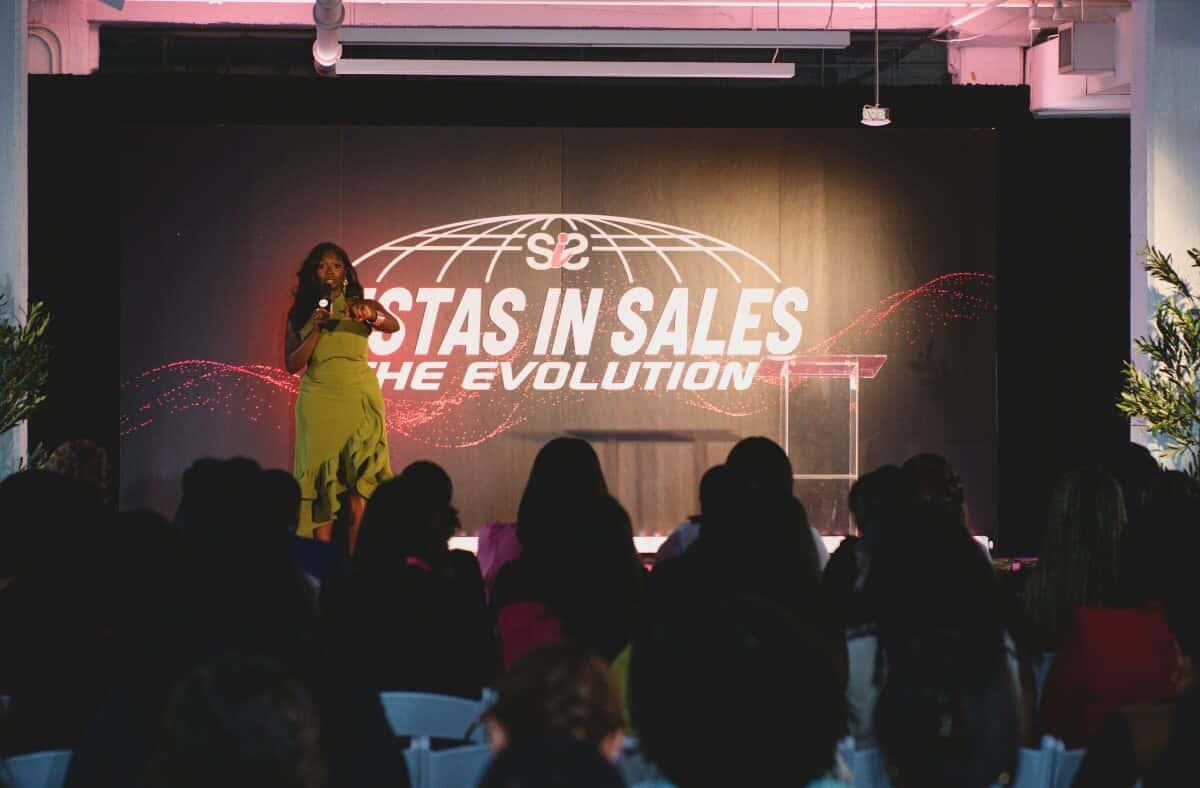
“Not everybody can go where you are meant to go. So sometimes you’re scared to go there because you want your people with you, because that’s your comfort,” she said. “But your comfort isn’t necessarily your destiny, and understanding that you have to get out of your comfort to get to where you’re destined is a very difficult place to rationalize.”
I attended the summit, and here are some takeaways from my favorite panels.
1. ‘The Evolution: AI & the Next Era of Sales’
This panel dove into the buzzword that the world can’t seem to escape: AI. But one thing was clear from the conversation: While AI can help streamline certain parts of a seller’s process, panelists believe that it will not replace the impact of human connection on closing a deal.
Companies are “looking for people with the emotional intelligence to get in front of customers,” Zach Ciliotta-Young, Chief Revenue Officer at Slack, said on the panel. AI, he said, should “take away the things that you hate doing, so you do things that you actually enjoy doing at work. Which for many salespeople is actually being in front of the customers.”
Another example of how to leverage AI that fellow panelist Kay Malcolm, Vice President of Product Management at Oracle, gave was how she made an AI work bestie out of her own agent and how she leveraged that invention in conversations with clients.
“What if I could build an agent that could manage my life, right? Read all of my emails, help me draft replies, but then I send the actual email, help me run my content,” she thought to herself after a work trip. Now, that very agent that she coded is a conversation starter between her and technology and information officers for brand, and helps her to further her career.
“I started using AI fluency as a way to get in,” she said. “If you are that person, that trusted advisor who can help [clients] along that journey, they will pick up your phone call every single time.”

2. Influence Is The New Pipeline: Selling The Creator Economy
This panel touched on the intersection of personal branding, professional knowledge, and business impact.
“Brands are no longer crossing their fingers, hoping for a post to go viral. They’re looking for measurement layers,” panelist Danielle DuPreé, who is the VP of brand partnerships at marketing technology firm IZEA, said. “So even if you’re like a baddie on IG and you’re a mega or a nano influencer, they’re looking to understand how you’re going to drive their business outcome.”
Professionals who are looking to cross over into content creation should do a few things on their journey:
- Develop a habit of posting about a topic to build your authority outside of your job title;
- Make sure your personal social media accounts display what your business or area of expertise is; and
- Create content around brands that you actually use in your everyday life to help develop relationships with them and their competitors. This also creates trust among your followers by showing them that the brands you partner with are also ones whose products you genuinely consume.
3. Selling The Game: Sports, The Next Billion-Dollar Frontier
This panel dove into the art of “casting creators” and the benefit of not forcing athletes into roles that are inauthentic to them.
“Thinking beyond transactional partnerships” is imperative for sellers and brands Marinda Yelverton, the Group Director of Influencer & Creator Marketing at marketing agency DEPT, said on the panel.

Brands that are aiming to show up in the world of sports should align themselves with creators, influencers and athletes that can act as an extension of the brand they partner with, she said.
“There’s an art and science when it comes to casting, casting creators,” Marinda said.
The keys to success lie in:
- Understanding the metrics and insights;
- Knowing what that creator can drive;
- Understanding the creator’s tone of voice; and
- Understanding the creator’s interest.
“Most creators that I try to work with, there’s at least some sort of established relationship where I’m going into it knowing that they already are a solid fit for the brand,” Marinda said. “And I think if you nurture those relationships, usually that deal and negotiations and the life cycle of the campaign is not only seamless, but usually has positive impact.”