The Rise Of Queer Women In Agri-Tech: 5 Femmes Leading The Farming Industry





In the past few decades, agriculture has used technology to improve the efficiency and sustainability of farming systems. This increases yields, reduces resource use, and enhances the resilience of these systems.
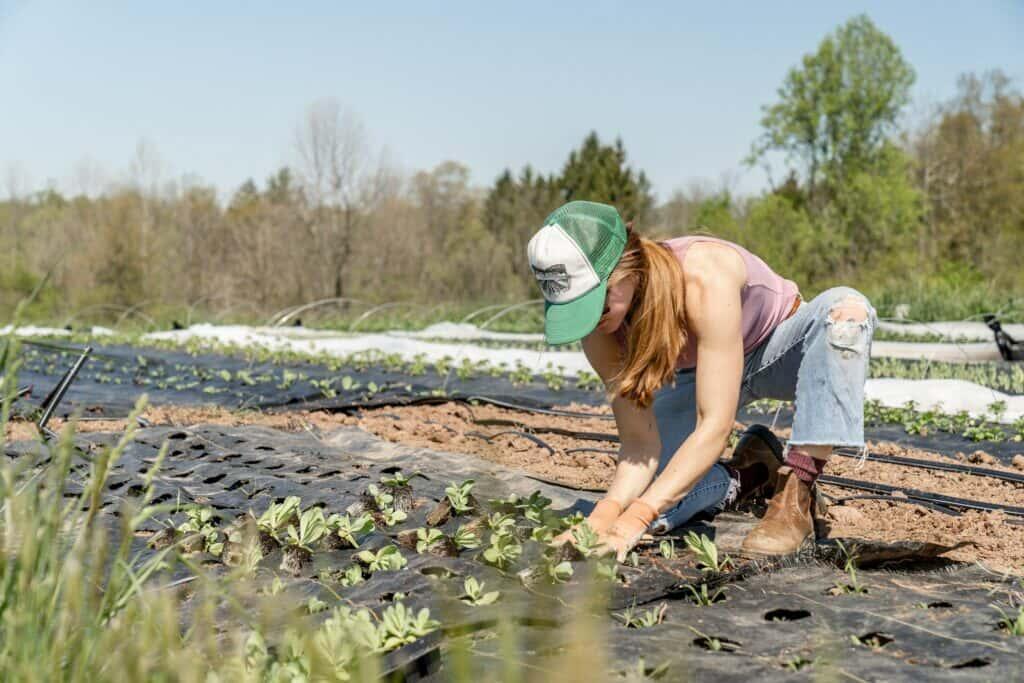
LGBTQ+ farmers are strengthening this system by queering agriculture. This means challenging and reimagining the traditional practices and structures within the agricultural sector through a queer lens, including elements that can benefit humans and the earth. It also means celebrating LGBTQ+ people and making agricultural spaces safe and inclusive for all.
Additionally, this includes farmers changing their relationship with the land, being in community, and challenging exploitative practices. Women have led and influenced their community with their careers in farming and agriculture.
Unsplash: Zoe Richardson
Lauren Anderson
Lauren Anderson is a queer farmer and herbalist. Working from a ‘radical vitalist’ perspective, she uses plants to support the body’s innate force, within a framework that is trauma-informed and body-positive. To get to this point, she self-studied for multiple years before studying Community Herbalism at the Terra Sylva School and Advanced Clinical Herbal Skills.
She owns Steadfast Herb, a small herb farm located in Pescadero, CA. They offer fresh herbs and holistic plant medicines that can be used in caring for physical, mental, and emotional health. Additionally, Steadfast creates its own community-supported agriculture (CSA) boxes, teas, salves, and topical remedies, offering nervous system and immunity support to those within its community and beyond.
To ensure Steadfast’s work is primarily and specifically for queer communities, Lauren is open about her own identity and sexual orientation, creating an immediate safe space.
Anita Adalja
Anita Adalja is a queer South Asian farmer whose path into agriculture began when they were 25 and living in Brooklyn. While working as a social worker, she needed some respite, so she developed a small rooftop farm with her neighbors. Through this, she discovered the power of growing food as a way to create community.
Afterward, Anita moved to California for a farming apprenticeship. She has now spent nearly 15 years working on non-profit, for-profit, urban, and rural farms in the United States of America. Today, she operates Ashokra, a queer, trans, and BIPOC farm in Albuquerque that focuses on growing okra. She’s creating a refuge where queer and trans farmworkers can be fully themselves.
Her heart is also focused on safety, dignity, and financial security for farmworkers. She founded Not Our Farm, a non-profit farmworker storytelling project that celebrates and shares the stories of workers on farms.
Ashlee Johnson-Geisse
Ashlee Johnson-Geisse is a Black lesbian farmer in California. She currently runs Brown Girl Farms, a Black-led, queer, multigenerational farm, along with her wife, Jen. Ashlee created this space from the belief that queer, black, woman farmers needed more representation.
Ashlee launched Brown Girl Farms just a week before the COVID-19 pandemic began. As the lockdown took effect and interest in home gardening surged, she started propagating seedlings and growing produce, delivering them to people in her community. So from a patio to land, she now tills her crops by hand, growing heritage crops like collard greens, sweet potatoes, and black-eyed peas. Brown Girl Farms also sells flower bouquets, apples, and homemade apple butter and jam to the community, with the intention of spreading love.
Unsplash: Max Kukurudziak
Allinee Flanary
Allinee “shiny” Flanary is a queer black farmer who describes herself as a medicine maker and decolonizer. She started as a teacher and librarian in higher education. Now, she runs her farm and herbal products business, Scrapberry Farm; serves as the Director of Markets at the Black Food Sovereignty Coalition; is the founder of Come Thru Market, a Black and Indigenous marketplace; and is the founding director of the Black and Brown Herb Exchange.
Located in Oregon, Scrapberry Farm grows and sells culturally-specific Community Supported Agriculture shares. They offer teas for you and your puppy, apple cider vinegar tonics, and other plant-based delights to help the whole family feel nourished and whole. She describes this as her tiny farm project of love, resilience, and liberation.
As the Executive Director at Black Food Sovereignty Coalition, she helps to ignite Black and Brown communities to participate as owners and movement leaders within food systems and economic development. She also founded Come Thru Market, a black and indigenous farmers market that supports small and emerging businesses in taking their dreams to the marketplace. Lastly, she’s a founding Director at Black and Brown Herb Exchange, where farmers are connected with buyers, learners with teachers, and where she offers business support to farmers.
She proactively works towards healing herself and her community through farming, farmers’ markets, and improved access to the marketplace for underrepresented farmers.
Hannah Breckbill
Hannah Breckbill started wanting to go into academia and mathematics, but after starting college, she was more interested in work that directly changed people’s lives. This shift led her to activism-oriented work. She discovered farming in 2009 while exploring different forms of activism and community work. Agriculture became a way for her to cultivate change in a practical and immediate sense, since food production connects directly to everyday human need.
She started with an internship as a CSA manager at World Hunger Relief. Afterward, she founded Humble Hands Harvest in Iowa, a queer-run and LGBTQIA+ friendly farm focused on regenerative agriculture and slower, more intentional farming methods. She uses the farm to reshape agricultural spaces that systems of patriarchy, white supremacy, and capitalism have historically shaped.
Part of a wider movement of LGBTQIA+ farmers working to reimagine food systems through inclusivity and care, she has helped build spaces that center queer farmers and challenge exclusion within rural agricultural communities. One of her key initiatives is the Queer Farmer Convergence, which she helped start to bring LGBTQIA+ farmers together in a supportive, affirming environment.