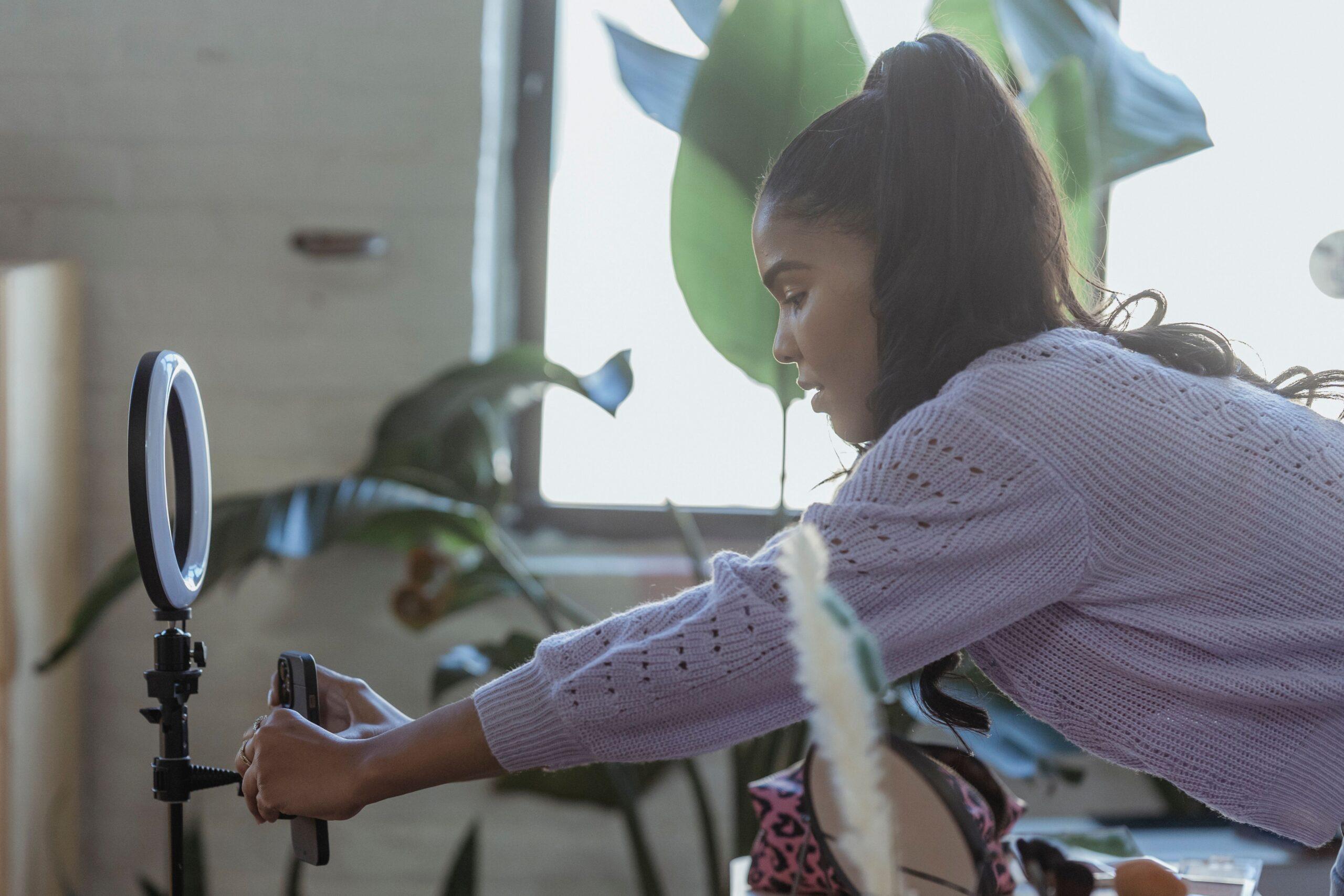
The Trad-Wife Trend And Its Impact On Gen Z Women’s Idea Of Motherhood

Photo by Andy Cat on Unsplash




If you scroll through TikTok or Instagram long enough, you may encounter a particular vision of motherhood: a woman in a flowing dress baking bread from scratch, tending a garden, caring for a houseful of children, and preparing dinner for her husband. The kitchen is immaculate, the children are adorable, and Mom rarely appears rushed, exhausted, or resentful.
Welcome to the world of the “trad wife.” Short for “traditional wife,” the term describes an online subculture that idealizes highly traditional gender roles, typically with a husband as “provider” and a wife devoted primarily to homemaking, motherhood, and serving her family. Trad wife content often takes domesticity to elaborate extremes: homemade bread, homegrown food, hand-sewn clothing, and labor-intensive meals presented through beautifully curated social media feeds.
The movement gained widespread attention in the early 2020s alongside influencers associated with the aesthetic, including Hannah Neeleman of Ballerina Farm. Researchers have since begun examining trad wife content as more than a lifestyle trend. A 2025 study of TikTok trad wives found that the content can promote patriarchal gender roles and anti-feminist ideas alongside its idyllic images of homemaking.
In 2026, the conversation became even more mainstream with Caro Claire Burke’s bestselling debut novel Yesteryear. The psychological satire thriller follows a successful trad wife influencer who promotes an idealized pioneer lifestyle to millions of followers, only to wake up in the decidedly less glamorous reality of 1855. Published in April, the novel became a No. 1 New York Times bestseller and is being adapted into a film starring Anne Hathaway.
The book’s popularity arrives at an interesting moment for Gen Z women, many of whom are now considering what marriage and motherhood might look like in their future.
The young women of Gen Z’s expectations are changing. Pew Research Center found that women ages 20 to 24 had or planned to have an average of 1.5 children in 2023, down from 2.3 in 2012. Just 66% had or planned to have at least one child, compared with 93% in 2012.
The trad wife phenomenon may complicate those feelings by presenting motherhood as an all-or-nothing proposition.
There is nothing inherently regressive about baking bread. Feminism fought for women to have choices. The problem comes when one woman’s choice is packaged as the ideal form of womanhood, or when the realities behind that choice disappear from the frame.
The glossy trad wife feed rarely emphasizes the vulnerability that can accompany complete financial dependence on a spouse, the enormous amount of unpaid labor required to maintain a household, or what happens when a marriage ends. Ironically, many successful trad wife influencers aren’t economically dependent at all: their domestic lives are also content, generating audiences, sponsorships, and income. Researchers have specifically identified this contradiction, describing trad wife domesticity as a commercialized online brand.
For Gen Z women, that distinction matters. This generation inherited rights previous generations fought for decades to secure: access to education, careers, credit, property, financial independence, and greater control over their own lives. These freedoms are recent enough that many Gen Z women have mothers and grandmothers who remember when women had far fewer options.
Yet on social media, a highly romanticized version of the world before those rights were (finally) obtained is being repackaged as aspirational. Trad wife content transforms an era when women were expected to be financially dependent on men and domestic life was often their only socially acceptable path into an aesthetic: beautiful dresses, homemade bread, spotless kitchens, smiling children, and seemingly idyllic marriages.
There is nothing wrong with choosing to bake bread, grow food, or embrace domestic life. The critical word is choosing. What makes the trad wife phenomenon troubling is the glamorization of a gender hierarchy that generations of women fought to dismantle.
That distinction is especially important as Gen Z women form their own ideas about motherhood. Becoming a mother does not mean becoming less independent, ambitious, educated, financially secure, or engaged with the world outside the home. We rarely frame fatherhood as requiring men to retreat from public life or relinquish financial independence; motherhood shouldn’t carry that expectation either.
Progress means women having more possibilities, not fewer. When social media romanticizes a period when women had far fewer rights and presents its gender roles as an ideal to reclaim, it risks erasing why those rights were fought for in the first place. Gen Z women can define motherhood for themselves without turning back the clock to a time when women weren’t afforded that same freedom.